Why a dumbbell shoulder workout belongs in your routine
A well planned dumbbell shoulder workout can build stronger, more defined shoulders without requiring a full gym. With just a pair of dumbbells, you can train all three heads of your deltoids, improve posture, and correct strength imbalances side to side. Dumbbells also let your shoulders move more naturally than a barbell or machine, which helps protect your joints and increase range of motion, as seen in multiple research based guides on shoulder training in 2023.
Because you work one arm at a time or independently, unilateral dumbbell exercises give you instant feedback on limb symmetry. Research in Medicine & Science in Sport & Exercise notes that this style of training is especially helpful for correcting muscular imbalances and managing previous injuries.
In the sections below, you will learn a complete dumbbell shoulder workout for home or gym, plus form cues and safety tips that keep your shoulders feeling strong rather than sore.
Understand your shoulder muscles
Before you start lifting, it helps to know what you are training. Your dumbbell shoulder workout should target:
- Anterior (front) deltoid: raises your arm forward and assists pressing.
- Lateral (side) deltoid: lifts your arm out to the side and creates that rounded shoulder shape.
- Posterior (rear) deltoid: pulls your arm backward and stabilizes your shoulder, important for posture.
Supporting muscles like the trapezius, rhomboids, rotator cuff, triceps, and even your core and glutes also get involved in many shoulder exercises.
A balanced plan includes presses plus front, side, and rear delt work so you do not overdevelop one area and ignore another. This balance is key for both aesthetics and injury prevention.
Benefits of dumbbells for shoulder training
Using dumbbells for your shoulder workout offers several advantages over machines and barbells.
More natural movement and range of motion
Dumbbells allow your arms to move independently. You are not locked into a fixed path like you are on many machines or with a barbell. This:
- Increases range of motion, which can enhance muscle growth and mobility.
- Lets your shoulders find a comfortable path that suits your joints.
- Helps avoid abnormal shoulder forces that can show up in behind the neck barbell presses, according to 2025 guidance from the Jacksonville Orthopaedic Institute.
Better joint friendliness and injury prevention
Experts from JOI note that dumbbell shoulder presses are generally safer than barbell presses behind the neck because they help maintain healthier shoulder positioning and balanced loading. Properly performed dumbbell presses and lateral raises that keep your thumbs pointing up can also minimize rotator cuff pinching, which may reduce the risk of shoulder tendonitis and rotator cuff injuries in the long term.
Improved symmetry and muscle activation
Dumbbells require more stabilization than a barbell. Studies summarized in a 2023 shoulder workout guide show that dumbbell overhead presses provide greater muscle activation and a larger range of motion than their barbell counterparts. Plus, working each arm independently:
- Highlights left right strength differences immediately.
- Helps you build a more balanced physique.
- Can be useful in rehab or post injury training under professional guidance.
Safety and form essentials
Strong shoulders are great. Cranky shoulders are not. Keep these guidelines in mind throughout your dumbbell shoulder workout.
When to avoid overhead pressing
Overhead presses, including dumbbell shoulder presses, are not recommended if you:
- Have an active rotator cuff injury.
- Recently had a rotator cuff repair.
- Have been told by a physical therapist or orthopedic specialist to avoid overhead loading.
Physical therapy specialists in 2025 specifically warn that overhead pressing can aggravate existing rotator cuff issues. If this sounds like you, get clearance from a qualified professional before doing this or any other shoulder routine.
Shoulder friendly technique basics
For most exercises in this dumbbell shoulder workout, you will protect your shoulders more effectively by:
- Keeping a thumbs up position on raises instead of turning your thumb or palm downward. JOI experts explain that thumbs down positions can increase compression of rotator cuff tendons under the bony arch of the shoulder.
- Avoiding behind the neck pressing, which can put your shoulders in extreme external rotation and increase impingement risk, especially if your mobility is limited.
- Controlling the lowering phase of the movement for 1 to 3 seconds to maintain tension and protect your joints.
If any exercise causes sharp or pinching pain, stop it, then modify the range of motion or choose a different movement.
How to warm up your shoulders
Your dumbbell shoulder workout will feel better and be safer when you take 5 to 10 minutes to warm up.
- General warm up, 3 to 5 minutes
- Walk briskly, use a light cardio machine, or do marching in place to raise your heart rate.
- Dynamic mobility, 2 to 3 minutes
- Arm circles forward and backward.
- Shoulder rolls.
- Scapular wall slides or band pull aparts if you have a band.
- Light activation sets, 2 to 3 minutes
- Use very light dumbbells or no weight at all for:
- Shoulder presses to about eye level.
- Lateral raises to about 45 degrees.
- Perform 1 or 2 sets of 10 to 15 smooth reps.
Once your shoulders feel warm and your range of motion is comfortable, you are ready to move into the main workout.
Complete dumbbell shoulder workout
This workout focuses on strength, muscle growth, and shoulder balance. You can do it in a home gym or commercial gym with a bench and a pair of dumbbells.
Recommended sets and reps
A 2015 study referenced in a 2023 Garage Gym Reviews article suggests performing 3 to 5 sets of 8 to 12 reps per dumbbell shoulder exercise to promote strength, endurance, and hypertrophy in the upper body. You will use this range for most of the exercises below.
Exercise list overview
Here is how your dumbbell shoulder workout will look:
- Dumbbell shoulder press (standing or seated)
- Arnold press
- Dumbbell lateral raise
- Dumbbell front raise
- Bent over reverse fly or rear delt raise
- Optional finisher variations like push press or face pulls
You do not need to include every option in one session. Start with the first five and add a finisher once you are comfortable and your shoulders tolerate the volume.
1. Dumbbell shoulder press
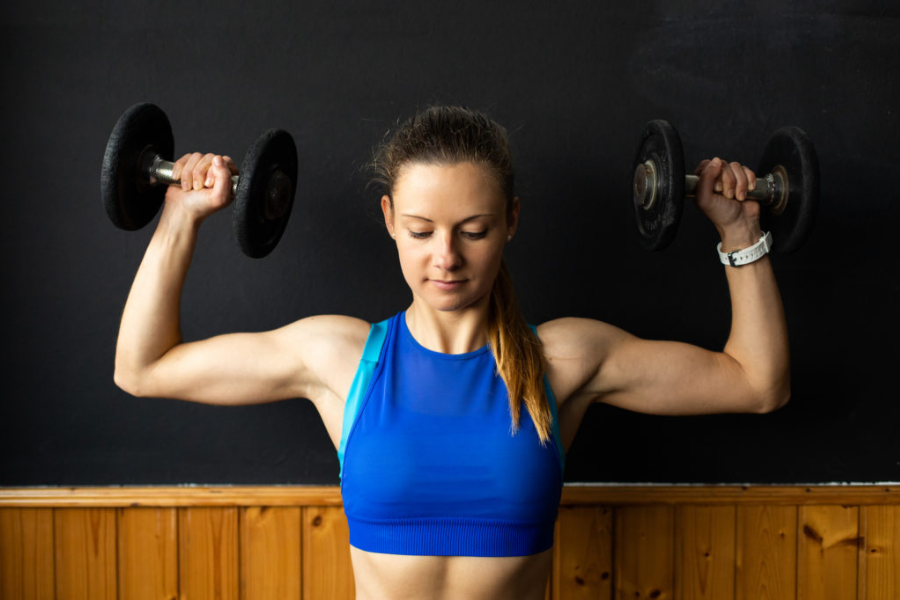
The dumbbell shoulder press is a foundational move in any dumbbell shoulder workout. It primarily targets your front deltoids and triceps, with help from your lateral delts, upper traps, and core.
You can perform it either standing or seated.
Standing vs seated presses
- Standing dumbbell shoulder press
- Activates the front deltoid about 8 percent more, lateral deltoid about 15 percent more, and rear deltoid about 24 percent more than seated pressing according to research summarized in 2023 training guides.
- Requires strong bracing from your core and glutes to prevent arching.
- Seated dumbbell shoulder press
- Lets you lift roughly 10 percent heavier weights than standing.
- Limits leg contribution and lower back involvement so you can better isolate your shoulders.
- May be a better long term choice for shoulder size development if heavy standing presses bother your lower back.
Choose the variation that feels stable and allows you to keep good form.
How to do the dumbbell shoulder press
- Sit on a bench with back support, or stand with your feet about hip width apart.
- Hold a dumbbell in each hand at shoulder level with your palms facing slightly forward or inward and your elbows slightly in front of your torso at about a 45 degree angle, not flared straight out to the sides.
- Brace your core by gently pushing your stomach outward as if you were preparing for a bodycheck, then squeeze your glutes. This helps protect your lower back.
- Press the dumbbells upward in a smooth arc until they are above your head, but do not slam them together or lock your elbows completely. Keep a slight bend in the arms.
- Pause briefly at the top, keeping your shoulders down away from your ears.
- Lower the weights slowly over 1 to 3 seconds until your hands return to about ear or shoulder level.
Sets and reps: 3 to 5 sets of 8 to 12 reps
Rest: 60 to 90 seconds between sets
Avoid using your legs to bounce the weight up. Make it a strict shoulder movement unless you are intentionally doing the push press variation later.
2. Arnold press
The Arnold press is named after Arnold Schwarzenegger and is a classic for overall shoulder development. It involves rotating your hands as you press so you hit all three heads of your deltoids through a large range of motion.
Why include the Arnold press
- Trains the front, side, and rear delts due to the rotation and full arc.
- Increases time under tension, especially when you use moderate weight for higher reps.
- Challenges your coordination and shoulder stability, so it is usually better once you have some basic pressing experience.
How to do the Arnold press
- Sit on a bench with back support or stand tall with a stable stance.
- Hold two dumbbells at about chest height with palms facing your body and elbows in front of you, as if the bells were almost touching your chest.
- Brace your core and squeeze your glutes.
- Start the movement by pressing the dumbbells upward while simultaneously rotating your palms so they face forward at the top of the movement.
- Finish with the weights above your head and your arms close to straight, keeping a slight bend at the elbows.
- Reverse the movement on the way down, rotating your palms back toward your body as the dumbbells return to the starting position.
Sets and reps: 3 to 4 sets of 8 to 12 reps
Rest: 60 to 90 seconds
Common mistakes include using momentum, arching the lower back, or letting one arm press noticeably higher than the other. Use a weight you can control and keep the tempo deliberate rather than rushed.
3. Dumbbell lateral raise
The lateral raise is your main move for building the side delts, which create shoulder width and roundness. It is usually done with lighter weights and strict form.
Thumb position and shoulder safety
Experts at Jacksonville Orthopaedic Institute explain that doing lateral raises with your palms or thumbs turned down increases compression of the rotator cuff tendons against the bony surface of the shoulder. Over time this can contribute to irritation.
To keep your shoulders safer:
- Aim for a thumbs up or neutral grip.
- Imagine pouring water out of a pitcher is not the goal here. Instead, think of keeping your thumb slightly higher than your pinky.
How to do the lateral raise
- Stand tall with a dumbbell in each hand, arms hanging by your sides and palms facing in.
- Slightly bend your elbows and keep that bend fixed throughout the movement.
- Brace your core and keep your torso still, avoid swaying.
- Raise the dumbbells out to your sides in a wide arc until your hands are about shoulder height. Keep your thumbs slightly higher than your pinkies.
- Pause briefly at the top without shrugging your shoulders.
- Lower the weights slowly over 1 to 3 seconds until your hands are back at your sides.
Sets and reps: 3 to 4 sets of 10 to 15 reps
Rest: 45 to 60 seconds
If you notice yourself swinging the weights or using momentum, they are probably too heavy. Drop the load and make the muscles do the work.
Lean away lateral raise option
Leaning your body slightly away from the working arm can keep tension on the lateral delt across a greater portion of the range. This variation:
- Reduces the role of the supraspinatus, a rotator cuff muscle that is active early in the raise.
- Forces the side delt to stay engaged longer.
You can hold onto a rack, door frame, or sturdy post with one hand and lean your body slightly outward while raising the other arm.
4. Dumbbell front raise
The front raise isolates your anterior deltoid and can complement your pressing work. Since presses already hit the front delt hard, you do not need huge volume here.
How to do the front raise
- Stand tall holding a dumbbell in each hand in front of your thighs, palms facing your body.
- Keep a soft bend in your elbows and a neutral spine.
- Lift the dumbbells straight in front of you to about shoulder height.
- Pause briefly, then lower under control back to the starting position.
You can also perform this exercise one arm at a time if you prefer.
Sets and reps: 2 to 3 sets of 10 to 15 reps
Rest: 45 to 60 seconds
Focus on slow, controlled reps rather than heavy weights since your front delts are already getting plenty of work from presses and Arnold presses.
5. Bent over reverse fly or rear delt raise
Many people undertrain their rear delts compared with their front and side delts. Rear delt work improves shoulder balance, posture, and your overall upper back shape.
You can hit the rear delts with reverse flyes or a rear delt focused row.
Option A: Bent over reverse fly
- Stand with your feet hip width apart and hold a dumbbell in each hand.
- Hinge at the hips until your torso is roughly at a 45 degree angle, keeping your back flat.
- Let the dumbbells hang under your shoulders, palms facing each other.
- With a slight bend in your elbows, raise your arms out to the sides until they are in line with your torso.
- Squeeze your shoulder blades lightly, then lower the weights slowly back down.
Sets and reps: 3 to 4 sets of 10 to 15 reps
Option B: Rear delt dumbbell row
Research based recommendations note that rowing with your elbows moving away from your sides increases rear delt activation and decreases lat involvement.
- Hinge at the hips as above, or lie face down (prone) on an incline bench set around 30 to 45 degrees.
- Hold the dumbbells with palms facing each other.
- Row the dumbbells up by driving your elbows out at about a 60 to 90 degree angle from your torso, not tucked tightly by your sides.
- Pause briefly at the top, then lower under control.
Sets and reps: 3 to 4 sets of 8 to 12 reps
Choose the version that feels best on your shoulders and allows you to clearly feel the rear delts working.
6. Optional finishers: push press and face pulls
Once you are comfortable with the core exercises in this dumbbell shoulder workout, you can occasionally finish with one of these options for extra challenge.
Dumbbell push press
The push press lets you overload the pressing movement by using leg drive on the way up and focusing on a slow lowering phase.
- Stand with your feet about shoulder width apart and hold dumbbells at shoulder height.
- Dip your knees slightly by bending them and your hips a few inches, keeping your torso upright.
- Drive through your legs to help press the dumbbells overhead.
- At the top, do not lock your elbows aggressively.
- Lower the dumbbells slowly over 3 to 4 seconds, emphasizing control.
Use this sparingly and only if your shoulders are healthy. The long eccentric phase can be very effective for muscle building, but it also increases fatigue.
Incline dumbbell face pulls
Face pulls on an incline bench can strengthen your rear delts, rotator cuff, and mid and lower traps.
- Set an incline bench to about 30 to 45 degrees and lie face down with a dumbbell in each hand.
- Start with your arms hanging straight down, palms facing each other.
- Pull the dumbbells up toward the sides of your face, bending your elbows and externally rotating your shoulders so your forearms end up roughly vertical.
- Keep your wrists neutral and avoid arching your back off the bench.
- Lower the weights slowly.
Use relatively light dumbbells and focus on precise movement.
Sets and reps: 2 to 3 sets of 10 to 15 reps
Sample weekly shoulder plan
How often you perform this dumbbell shoulder workout depends on your overall training schedule. Here is a simple way to structure your week.
If you train 3 days per week (full body)
Include 2 to 3 of the key shoulder exercises per session:
- Day A: Dumbbell shoulder press + lateral raise
- Day B: Arnold press + rear delt exercise
- Day C: Lateral raise + front raise + rear delt exercise
If you train 4 or more days per week (split routine)
Use a dedicated shoulder or push day:
- Pressing focus: Dumbbell shoulder press, Arnold press, front raise.
- Lateral and rear focus: Lateral raise, reverse fly or rear delt row, optional face pulls.
Aim to hit your shoulders twice per week with at least 48 hours of rest between intense sessions.
Choosing the right weight and progression
You should feel challenged at the end of each set without your form falling apart.
- For 8 to 12 reps, choose a weight that leaves you with 1 to 2 good reps in reserve.
- If you can easily perform more than 12 reps with perfect form, increase the weight slightly.
- If you cannot reach 8 reps without swinging or arching, reduce the weight.
Track your workouts in a notebook or app. Gradually add a small amount of weight, an extra rep, or another set over time to keep progressing.
Common mistakes to avoid
A smart dumbbell shoulder workout is not just about what you do, it is also about what you avoid. Watch out for these pitfalls:
- Using momentum in lateral raises, Arnold presses, or front raises instead of controlled lifting.
- Pressing unevenly, where one dumbbell moves higher than the other. This can signal imbalances or poor focus.
- Lifting too heavy especially on bent over raises, which can shift tension away from the rear delts and strain your lower back.
- Shrugging constantly, which shifts work from your delts to your traps and may irritate your neck.
- Ignoring pain signals, particularly sharp or pinching sensations at the front or top of your shoulder.
Focus on smooth reps, steady breathing, and tension in the target muscles. Your shoulders should feel tired, not tweaked.
When to seek professional guidance
If you have a history of shoulder dislocation, rotator cuff tears, or persistent shoulder pain, it is wise to:
- Speak with a physical therapist or sports medicine doctor before starting this or any dumbbell shoulder workout.
- Ask for exercise modifications that respect your current limitations.
- Get help with form if you are unsure, especially for overhead pressing.
Specialists at organizations such as the Jacksonville Orthopaedic Institute provide shoulder specific advice and emphasize the importance of proper technique in preventing injuries.
Bringing it all together
With a pair of dumbbells and some floor space, you can build a complete dumbbell shoulder workout that:
- Trains all three deltoid heads plus supporting muscles.
- Uses joint friendly movement patterns and thumb positions.
- Prioritizes controlled reps and good form over ego driven weights.
- Fits easily into home or gym routines.
Start with one or two sets of each exercise if you are new to shoulder training, then build up gradually. As your confidence grows, you can experiment with standing versus seated presses, lean away lateral raises, or rear delt focused rows.
Most important, listen to your body, progress patiently, and treat your shoulders as joints you want to keep strong for life, not just for your next workout.
About the Author