Why dumbbells build chest mass so well
If you want a dumbbell chest workout for mass that actually delivers, dumbbells are a smart place to start. They let each arm work independently, which helps correct strength imbalances and makes it easier to find a joint friendly position for your wrists and elbows. Compared to barbells, you also get a larger range of motion so you can lower the weight deeper, create more stretch, and generate more tension in your chest muscles for growth.
According to guidance from Mayo Clinic, a simple dumbbell chest press helps strengthen the muscles on the front of your chest and can improve sports performance by building pushing power and upper body stability. When you combine presses with a few targeted fly and isolation movements, you get a complete routine that can add noticeable size to your chest in a matter of weeks.
Below, you will find a clear, beginner friendly plan and an advanced option, along with form tips and rep schemes to help you feel stronger fast without wasting time in the gym.
Key principles for chest mass
Before you pick up a single dumbbell, it helps to know what actually drives chest growth. This way you can adjust any routine to fit your schedule, equipment, and experience level.
Focus on the right rep ranges
For muscle hypertrophy, your dumbbell chest workout should live mostly in the moderate rep zone. The research summary you are working from suggests:
- Around 5 to 10 reps per set to build strength
- Around 10 to 30 reps per set to build muscle size, using weights heavy enough that the last few reps feel challenging
For most people trying to gain mass, 8 to 15 reps is a reliable sweet spot. You can occasionally include some heavier sets of 6 to 8 reps on your main press for extra strength, which then lets you use heavier weights later in the workout.
Choose 2 to 4 quality exercises
You do not need a long list of movements to grow your chest. In fact, a typical dumbbell chest session works best with just:
- 2 or 3 compound presses
- 1 or 2 isolation exercises like flyes or pullovers
Guides from Gymreapers recommend starting your workout with heavier compound pressing movements and then finishing with isolation exercises to fully fatigue the chest fibers.
Train your chest twice per week
Training frequency matters. The research notes that if you train your chest about two times per week with dumbbells, you are likely to see:
- Performance improvements within 3 to 4 weeks
- Visible physical changes in chest mass after roughly 8 to 12 weeks, assuming your nutrition and sleep are in a good place
You can repeat the same workout twice, or use one heavier day and one slightly lighter, higher rep day.
Progress a little each week
Mass comes from consistent progression. You can progress your dumbbell chest workout for mass in three simple ways:
- Add 1 or 2 reps per set with the same weight
- Increase the weight once you hit the top of your target rep range
- Add an extra set once the workout feels too easy
Gymreapers recommend using small weekly changes like these to keep your muscles under increasing tension and to avoid plateaus over time.
Best dumbbell chest exercises for mass
You do not need every chest exercise ever invented. Instead, you can build your routine around a handful of proven movements, then adjust angles and grips for variety.
1. Dumbbell bench press
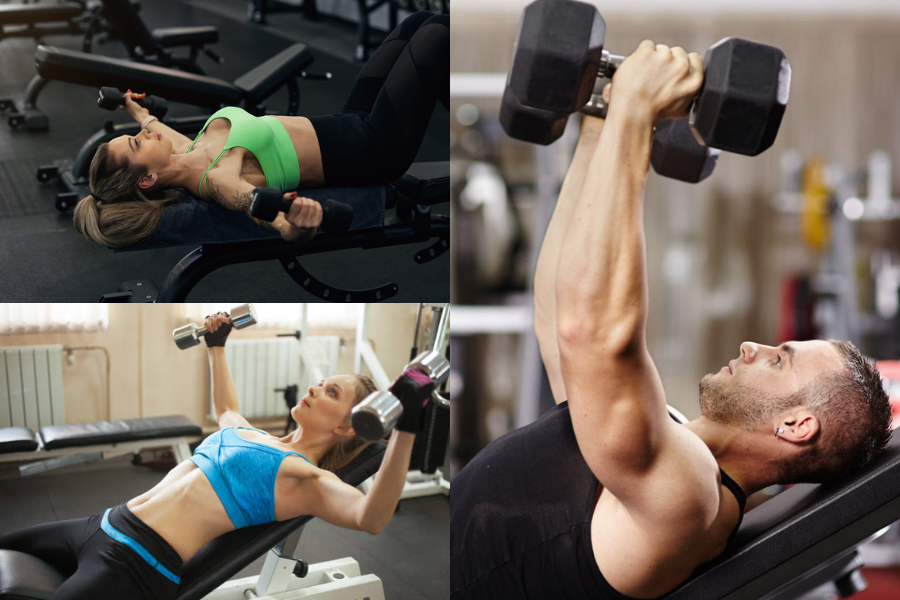
The dumbbell bench press is one of the best chest exercises for building muscle and strength. It hits your mid chest and triceps and engages stabilizer muscles that might not work as hard with a barbell.
How to do it
- Lie on a flat bench with a dumbbell in each hand, feet flat on the floor.
- Hold the dumbbells at chest level with your palms facing forward.
- Press the weights up until your elbows are almost straight, keeping tension on your chest.
- Lower slowly until your upper arms are just below parallel to the floor, then press back up.
Guidelines from the research recommend 3 to 4 sets of 6 to 8 reps for effective mass gain. The relatively low rep range lets you use heavier weights, which is excellent for strength and size.
2. Incline dumbbell press
This variation targets your upper chest and front deltoids by changing the angle of the bench. If you feel like your chest lacks upper fullness near the collarbones, this is the movement to emphasize.
How to do it
- Set a bench to a low incline, around 15 to 30 degrees.
- Lie back with dumbbells at chest level, palms facing forward.
- Press up until your elbows are near straight, then lower slowly with control.
The research suggests 3 to 4 sets of 8 to 10 reps to build upper chest mass. This rep range keeps tension in the muscles long enough to drive growth while still allowing decent load.
3. Dumbbell floor press
If you do not have a bench, or your shoulders feel cranky when you press deep, the floor press is a smart alternative. The floor stops your elbows from going too low, which can reduce stress on your shoulders.
Factory Weights note that the dumbbell floor press effectively targets the chest, triceps, and shoulders and is especially useful for people with wrist or elbow issues when bench pressing.
How to do it
- Lie on your back on the floor with knees bent, feet flat.
- Hold dumbbells just outside your chest, elbows resting lightly on the ground.
- Press the dumbbells up until your arms are nearly straight.
- Lower until your upper arms gently touch the floor, pause, then press again.
Aim for 3 sets of 8 to 12 reps.
4. Dumbbell chest fly
The dumbbell chest fly is an isolation exercise that emphasizes chest adduction, or the motion of bringing your arms toward the center of your body. This hits the chest fibers in a way presses cannot fully match.
Guidelines from the research recommend 3 sets of 10 to 12 reps for optimal hypertrophy.
How to do it
- Lie on a flat bench with a dumbbell in each hand, palms facing each other.
- Start with the weights above your chest, arms slightly bent.
- Slowly open your arms wide in an arc, stretching your chest as you lower the weights.
- Stop when your elbows are about level with your torso or just below, then bring the weights back together above your chest, leading with your elbows and keeping that gentle bend.
Keep the movement slow and controlled to protect your shoulders and keep tension on the chest.
5. Incline dumbbell fly
If you want more upper chest detail, you can swap or add the incline fly. It combines the stretch of a fly with the upper chest focus of the incline press.
Use a similar setup to the incline press, but move your arms in a wide arc instead of pressing straight up. Stick with 3 sets of 10 to 12 reps.
6. Single arm dumbbell press
Unilateral exercises like the half bench single arm press engage your core more and help correct side to side imbalances. The research recommends 3 sets of 10 to 12 reps per side.
You can perform this on a flat or incline bench. Keep your non working hand free or holding the bench for balance and focus on keeping your torso from rotating as you press.
7. Reverse grip dumbbell press
The reverse grip dumbbell press uses an underhand grip to activate more of the upper chest and may reduce shoulder pressure. This can be helpful if traditional pressing bothers your shoulders.
You will hold the dumbbells with your palms facing you, then press up and slightly in. Use lighter weights at first until the grip feels secure.
8. Crush grip or hex press
In the crush grip or hex press, you press two dumbbells together as you lift. This continuous inward pressure increases activation of the inner chest and triceps while often lowering stress on the shoulder joint.
Use hexagonal dumbbells if possible since the flat sides make them easier to press together.
Sample dumbbell chest workout for beginners
If you are newer to lifting or just new to training chest with dumbbells, you can start with two or three exercises per workout using lighter weights. The research notes that varying repetition schemes and avoiding early specialization can reduce injury risk while you build a base of strength and endurance.
Here is a simple two day per week beginner routine. Rest 60 to 90 seconds between sets.
Workout A
- Dumbbell bench press
- 3 sets of 8 to 10 reps
- Dumbbell chest fly
- 3 sets of 10 to 12 reps
- Dumbbell floor press
- 2 sets of 10 to 12 reps
Workout B
- Incline dumbbell press
- 3 sets of 8 to 10 reps
- Incline dumbbell fly
- 3 sets of 10 to 12 reps
- Single arm dumbbell press
- 2 sets of 10 to 12 reps per side
Alternate these two sessions each week. For example:
- Monday: Workout A
- Thursday: Workout B
Once you can hit the top end of the rep range on all sets with solid form, increase the dumbbell weight slightly and work your way back up.
Advanced dumbbell chest workout for mass
If you already have a strength base and want to focus on size, you can move toward slightly heavier sets and more total volume without going overboard.
Try this routine once or twice per week, resting 90 to 120 seconds between compound sets and 60 to 90 seconds between isolation sets.
Mass focused routine
- Dumbbell bench press
- 4 sets of 6 to 8 reps
- Incline dumbbell press
- 3 to 4 sets of 8 to 10 reps
- Crush grip dumbbell press or hex press
- 3 sets of 8 to 12 reps
- Dumbbell chest fly
- 3 sets of 10 to 12 reps
- Optional finisher: Dumbbell pullover
- 2 sets of 12 to 15 reps
You do not have to include every exercise every session. If time is tight, drop the finisher or one of the pressing variations. The key is to push your working sets close to fatigue while keeping technique sharp.
How to perform the chest press safely
Whether you press on a bench or the floor, a few simple adjustments can keep your shoulders and elbows safe while you focus on building mass.
Set up your body correctly
For a standard dumbbell chest press, Mayo Clinic suggests you:
- Lie on your back holding a dumbbell in each hand
- Position your upper arms perpendicular to your torso and forearms perpendicular to the floor
- Press the weights upward slowly until your elbows are almost straight, creating tension across your upper chest
As you do this, pay attention to these cues adapted from their advice:
- Avoid locking your elbows at the top
- Do not push with your feet to bounce the weights up
- Keep your head neutral and relaxed on the bench or floor
- Do not let your elbows drop significantly below the line of your body to protect your shoulders
Control the range of motion
Using dumbbells allows a deeper stretch than barbells, which can be great for muscle growth but only if you stay in a safe range. Lower the dumbbells until you feel a strong but comfortable stretch across your chest, then press back up with control.
If you feel pinching in your shoulders, shorten the range slightly or try a neutral grip, where your palms face each other, which often feels more natural.
Weekly plan and progression guidelines
To turn these exercises into a true dumbbell chest workout for mass, put them into a clear weekly structure and track what you do.
Example weekly layout
- Day 1: Heavier chest day
- Dumbbell bench press
- Incline dumbbell press
- Crush grip press
- Day 4: Moderate chest day
- Single arm dumbbell press
- Dumbbell fly
- Incline fly or pullover
You can pair chest with shoulders or triceps if you like, just watch overall volume so your joints recover between sessions.
Progressing safely over 8 to 12 weeks
Based on the referenced Gymreapers guidance for hypertrophy:
- Use 2 to 5 sets per exercise
- Stay between 5 and 30 reps depending on your specific strength or size goal
- Increase either reps, weight, or sets gradually from week to week
If you train your chest twice per week and steadily progress, you can expect:
- Noticeable strength improvements in 3 to 4 weeks
- Visible mass changes in roughly 8 to 12 weeks, especially if your nutrition supports muscle gain
Practical tips for better results
Small details can make your dumbbell chest sessions more effective without adding extra time.
Use a full but comfortable range
Let the dumbbells travel slightly below chest level at the bottom of presses if your shoulders tolerate it. This extra stretch increases muscle fiber recruitment and tension. Just avoid bouncing or dropping the weights quickly.
Pay attention to your grip
- A traditional overhand grip targets the mid chest
- A neutral grip, with palms facing each other, often feels easier on the shoulders
- A reverse grip, underhand, emphasizes upper chest and can reduce shoulder pressure
If standard pressing bothers your joints, experiment with grip and angle before giving up on the exercise altogether.
Breathe with the movement
Exhale as you press the weights away from you and inhale as you lower them. Proper breathing will help you stay stable and avoid unnecessary tension in your neck and lower back.
Keep your ego in check
Mass building is about quality tension, not impressing people with how heavy your dumbbells look. Pick weights that allow you to finish each set with one or two good reps left in the tank. Grinding through sloppy reps will only reduce chest activation and raise injury risk.
Bringing it all together
A well planned dumbbell chest workout for mass does not have to be complicated. If you:
- Train 2 times per week
- Base your routine on a few proven presses and fly variations
- Use mostly 8 to 15 reps with progressive overload
- Respect your joints with smart technique and angles
you give your chest everything it needs to grow.
Choose one of the sample routines, write down your starting weights, and commit to following it for the next 8 to 12 weeks. With consistent effort, you will feel stronger pressing in daily life and start to see thicker, fuller chest muscles in the mirror.
About the Author