Intermittent fasting vs keto at a glance
If you are comparing intermittent fasting vs keto to lose weight and feel better quickly, you are not alone. Both approaches can help you change how your body uses energy, but they do it in different ways and come with different tradeoffs.
Before you overhaul your meals, it helps to understand what each option really does in your body, where the benefits come from, and when the risks start to outweigh the rewards.
Understand what intermittent fasting is
Intermittent fasting focuses on when you eat, not exactly what you eat.
You cycle between periods of eating and periods of not eating. There are a few common patterns:
- Time restricted eating, such as the popular 16:8 plan
You fast for 16 hours and eat within an 8 hour window each day. - Alternate day fasting
You alternate a day of very low calories with a day of normal eating. - Periodic fasting, such as the 5:2 method
You eat normally 5 days per week, then eat very few calories on 2 non consecutive days.
In all of these, you are shrinking your eating window. That naturally makes it easier to eat fewer calories, which is one of the main reasons intermittent fasting supports weight loss (Culina Health).
How intermittent fasting boosts health
When you fast for long enough, a few useful shifts can happen:
- Your body dips into stored fat between meals.
- Blood sugar and insulin can become more stable in some people.
- Your gut gets more time to rest and digest.
- You may notice fewer mindless snacks and cravings simply because the kitchen is “closed” during your fasting window.
A review from 2019 found that intermittent fasting leads to about the same weight loss as traditional daily calorie restriction when total calories are matched (Culina Health). In other words, the benefit mostly comes from eating less overall, not from a magical timing trick.
Potential downsides of intermittent fasting
Intermittent fasting is not effortless. You might run into:
- Hunger and irritability while your body adjusts.
- Fatigue or brain fog if fasting windows are too long for your current lifestyle.
- Possible issues with blood sugar control in some groups, such as people with diabetes, depending on medication and meal timing (Culina Health).
If you have any medical conditions, especially diabetes or a history of disordered eating, you should talk with a healthcare provider before trying any fasting schedule.
Understand what keto really means
The ketogenic diet, usually shortened to keto, focuses on what you eat rather than when you eat.
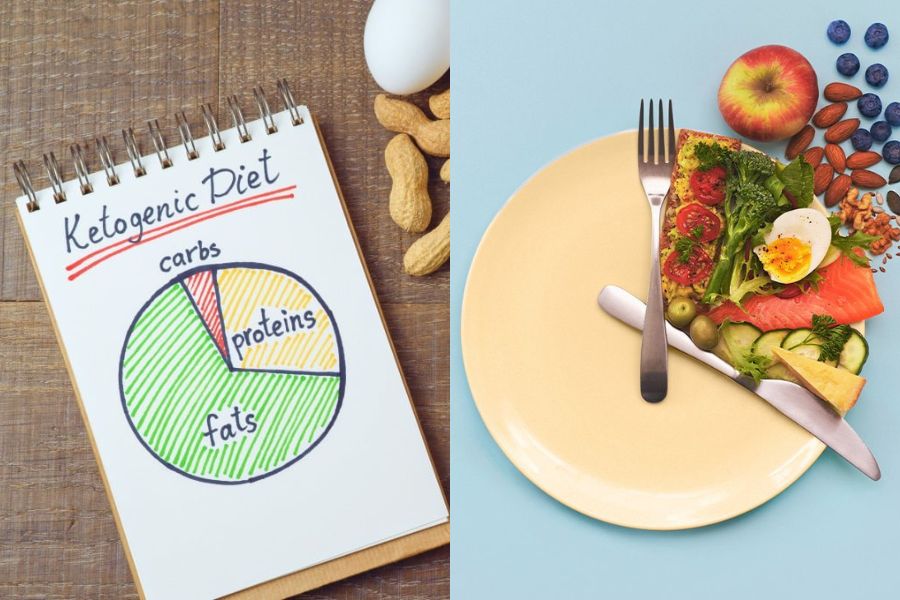
You eat very few carbohydrates, a moderate amount of protein, and a lot of fat. A typical keto breakdown looks like:
- 70 to 80% of calories from fat
- 10 to 20% of calories from protein
- 5 to 10% of calories from carbohydrates
To get your body into ketosis, you usually need to stay under about 50 grams of carbohydrates per day (Cleveland Clinic). For most people, this means removing or strictly limiting:
- Bread, pasta, rice, and most grains
- Sugary foods and drinks
- Many fruits and starchy vegetables
What ketosis does in your body
In ketosis, your body switches from depending mainly on glucose (carbs) to using fat and ketones as its primary fuel. Ketones become a major energy source for your brain as well as your muscles (Cleveland Clinic).
This shift can lead to:
- Reduced hunger for some people
- Greater burning of visceral fat (the fat around your organs)
- Steadier energy and focus once you are fully adapted
However, getting into ketosis is not instant. It can take several days of very low carb eating before ketones rise high enough to count as true nutritional ketosis.
Short term side effects of keto
When you first start keto, you may feel the so called “keto flu”:
- Headache
- Nausea or upset stomach
- Fatigue or low energy
- Dizziness
You can also notice:
- “Keto breath,” a fruity or metallic odor from acetone, one of the ketones
- Constipation if your fiber drops because you are eating fewer fruits, vegetables, and whole grains
These side effects often improve as your body adapts, but for some people they are a sign that the diet simply does not feel sustainable or balanced enough (Cleveland Clinic).
Longer term risks of keto
Keto can be powerful, but it is not risk free. Reported concerns include:
- Kidney stones and nutrient deficiencies over time if the diet is poorly planned (Culina Health).
- Changes in cholesterol and possible weaker bones according to animal studies (UC Davis Health).
- Challenging long term adherence that makes weight regain more likely once you return to previous habits (The American Journal of Case Reports).
There are also more serious risks for specific groups. For example, a case report described a 60 year old man with type 2 diabetes who followed strict keto plus prolonged fasting and developed starvation ketoacidosis, a dangerous condition that required hospital care (The American Journal of Case Reports).
If you have diabetes or other health issues, you should never start a ketogenic diet without medical guidance.
Intermittent fasting vs keto: how they compare
It is easy to assume that keto melts fat faster while intermittent fasting is simply “skipping breakfast.” The reality is more nuanced.
Here is how intermittent fasting vs keto stack up on key points.
How each approach drives weight loss
Both intermittent fasting and keto usually work for weight loss because they help you eat fewer calories.
- With intermittent fasting, you naturally have fewer hours to eat, so snacks and extra portions tend to drop. A 2019 review found that intermittent fasting and continuous calorie restriction produced similar changes in body weight and body fat when calories were matched (Culina Health).
- With keto, you cut out major carb sources, including many processed foods, so your total calorie intake often falls. Studies show that most weight loss on keto comes from reduced calories. The rapid drop at the beginning is largely water weight, due to the diuretic effect of ketones, not pure fat loss (Culina Health).
You might lose faster in the very first weeks on keto because of water loss. Over the longer term, if calories are the same, weight and fat loss are usually similar on higher carb diets and keto diets (Culina Health).
Effects on metabolism and energy
Both strategies change how your body handles fuel.
-
Intermittent fasting
-
Lowers insulin for part of the day.
-
Gives your digestive system and cells a break from constant eating.
-
Allows your body to start producing some ketones toward the end of a long fast, although usually not as high as full keto levels (UC Davis Health).
-
Keto
-
Puts you in a more continuous state of ketosis, where ketones are your main fuel.
-
Can improve metabolic flexibility in some people by training your body to burn fat more efficiently.
-
In animal studies, ketogenic diets improved muscle mitochondria, physical endurance, brain learning, memory, and lifespan, although these were mice, not humans (UC Davis Health).
Intermittent fasting gives you some of the benefits of ketones without fully replicating the high ketone levels of a strict ketogenic diet (UC Davis Health).
Risks and side effects side by side
You also need to weigh the potential downsides.
-
Intermittent fasting risks
-
May negatively affect blood sugar regulation in some individuals.
-
Can be hard to combine with certain medications that must be taken with food.
-
Might encourage overeating during non fasting periods if you feel overly restricted (Culina Health).
-
Keto risks
-
Short term problems like nausea, headache, fatigue, constipation, and keto breath (Cleveland Clinic).
-
Longer term issues such as kidney stones and nutrient deficiencies if not planned carefully (Culina Health).
-
Serious complications, including ketoacidosis, electrolyte problems, hypoglycemia, acute pancreatitis, and dyslipidemia, especially in people with type 2 diabetes or other medical conditions (The American Journal of Case Reports).
If you have any chronic conditions or take prescription medications, professional medical guidance is essential before you commit to either approach.
Can you combine intermittent fasting and keto?
You might wonder if pairing intermittent fasting vs keto into a single plan will turbocharge your results.
In some situations, this combination can help you enter ketosis faster. The Cleveland Clinic notes that intermittent fasting, especially patterns like 16:8, may help you reach ketosis more quickly than keto alone (Cleveland Clinic).
At the same time, stacking both strategies also stacks the potential risks:
- Deeper ketosis for longer periods
- Greater chance of dehydration and electrolyte imbalances
- Higher risk of dangerous ketoacidosis in vulnerable people, for example those with type 2 diabetes (The American Journal of Case Reports)
Unless you are under close medical supervision, it is usually safer to choose one primary strategy, then apply gentle improvements around it, such as:
- Slightly shortening your eating window without extreme fasts, or
- Lowering your intake of refined carbs without going into strict keto ranges.
Where exercise fits in
You may be tempted to ignore food and just try to “out run” your diet in the gym. Research suggests this is rarely effective on its own.
UC Davis molecular exercise physiologist Keith Baar points out that it is much easier to eat 100 calories than to burn 100 calories by running a mile (UC Davis Health). In other words, nutrition does more of the heavy lifting for weight management than exercise does.
This does not mean exercise is unimportant. Movement supports:
- Heart health
- Muscle maintenance
- Mood and mental health
However, for weight change, your daily eating pattern, whether that is intermittent fasting vs keto or a more traditional balanced plan, is the primary driver. Exercise works best as a partner, not a replacement.
A more balanced middle ground
You do not have to choose between only intermittent fasting vs keto. There is a middle path that may fit your life better.
Research from UC Davis suggests that a balanced diet that includes carbohydrates, protein, and fat, combined with either:
- A modest calorie restriction of about 10 percent below your needs, or
- A time restricted eating pattern with around 17 hours of fasting per day,
can lower baseline activity of a cellular pathway called mTOR, which is linked to insulin resistance and chronic inflammation when it is continuously high (UC Davis Health).
Lowering mTOR at rest may help your body become more metabolically flexible, so you can handle challenges like infections or skipped meals with less strain (UC Davis Health).
For everyday life, that might look like:
- Eating mostly minimally processed foods.
- Including vegetables, fruits, whole grains, lean proteins, and healthy fats.
- Keeping portions slightly smaller than your usual.
- Choosing a gentle overnight fasting window, such as finishing dinner by 7 pm and having breakfast around 10 am, if that suits your schedule and health needs.
This kind of approach can give you some of the metabolic benefits associated with both intermittent fasting and lower carb eating, but in a way that is often easier to maintain.
How to choose the right approach for you
When you look at intermittent fasting vs keto, the best choice is the one that:
- Feels realistic with your work, family, and social life.
- Respects your health conditions and medical history.
- Lets you eat in a way that feels satisfying, not miserable.
Here are a few questions to ask yourself:
- How do you feel when you skip a meal?
- If you get shaky or unwell, long fasts may not be a good fit without medical support.
- How attached are you to carb rich foods like bread, fruit, or grains?
- If you enjoy them daily, strict keto will probably feel very restrictive.
- Do you prefer clear daily rules or more flexibility?
- Intermittent fasting offers a simple “eating window” rule.
- Keto requires constant attention to carb counts and food lists.
- What is your main goal right now?
- If you want steady, moderate weight loss with flexibility, a gentle intermittent fasting schedule or modest calorie reduction with balanced meals may be enough.
- If your doctor has recommended keto for a specific medical reason, such as certain seizure disorders, you should follow their guidance closely.
Whatever you choose, it is wise to discuss your plan with a healthcare professional, especially if you take medications, have diabetes, or are managing other chronic conditions.
Simple next steps
You do not need to overhaul your entire life overnight. You can start with one small, safe experiment and see how your body responds.
You might try:
- Moving your last snack earlier in the evening so your overnight fast is a little longer.
- Swapping highly processed carb foods for more whole food options, such as fruit instead of candy or whole grains instead of refined bread.
- Tracking how you feel, not just what the scale says. Energy, sleep, and digestion are part of the picture too.
Over time, you can adjust, add structure, or seek professional guidance if you want to explore stricter intermittent fasting vs keto strategies.
Your eating pattern should support your health, not fight against it. By understanding how intermittent fasting and keto work, you can choose the path that aligns with your body, your goals, and your everyday life.
About the Author