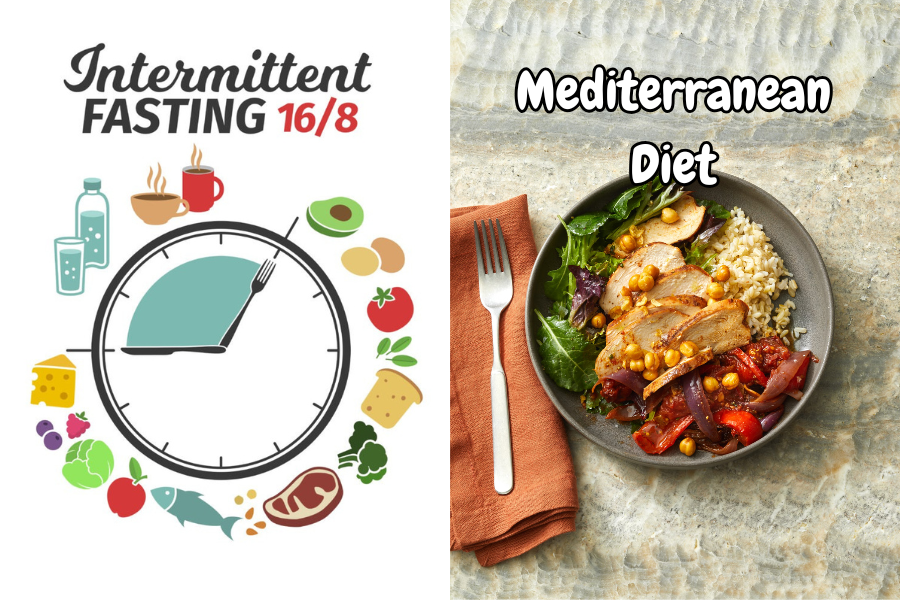
Understand intermittent fasting vs Mediterranean diet
If you are comparing intermittent fasting vs Mediterranean diet to lose weight and improve your health, you are really looking at two very different approaches. One focuses on when you eat. The other focuses on what you eat.
Both can support better blood sugar, heart health, and body weight, but they are not equal in every situation. Especially if you have or are at risk for type 2 diabetes, the differences matter.
A recent review of 22 randomized controlled trials in adults with type 2 diabetes found that both intermittent fasting and the Mediterranean diet improved blood sugar, cholesterol, and body measurements. However, the Mediterranean diet showed more consistent and sustainable benefits over time (PubMed).
What intermittent fasting actually is
Intermittent fasting (IF) is an eating pattern that alternates between periods of eating and periods of fasting. You focus on when you eat, not necessarily on detailed food rules.
Popular approaches include:
-
16:8 method
You fast for 16 hours per day and eat within an 8 hour window. For example, you eat from 12 p.m. to 8 p.m. and fast the rest of the day. -
5:2 method
You eat normally 5 days per week and on 2 nonconsecutive days you significantly reduce calories, often to about one small meal. -
Time restricted eating
You consistently shorten your daily eating window, for example 10 hours of eating and 14 hours of fasting.
Because intermittent fasting is about timing, it can feel flexible. You might find it easier to decide, “I eat between 11 and 7,” than to count calories or track every bite. According to Prolon, this timing focus is one reason intermittent fasting can be an effective option for weight loss for many people (Prolon).
Potential benefits of intermittent fasting
Based on the research you have, intermittent fasting can:
- Improve blood sugar control in the short term
- Help reduce body weight and waist size
- Improve some lipid markers, such as cholesterol and triglycerides, at least for a period of time (PubMed)
These effects can be especially appealing if you want faster changes or you struggle with traditional daily calorie restriction.
Important cautions with intermittent fasting
Intermittent fasting is not risk free, especially if you have diabetes or take medications that lower blood sugar.
The randomized trial review in adults with type 2 diabetes found that while intermittent fasting improved many markers, it also carried:
- A higher risk of hypoglycemia, or low blood sugar
- More challenges with adherence, meaning it could be harder to stick with consistently over time (PubMed)
You might also notice:
- Headaches or irritability in the early weeks
- Overeating or cravings when your eating window opens
- Social challenges when meals do not line up with family or work situations
If you take diabetes medication, have a history of eating disorders, are pregnant, or have a chronic condition, you should speak with your healthcare provider before trying intermittent fasting.
Where prolonged fasting fits in
Beyond standard intermittent fasting, some people explore prolonged fasts that last longer than 72 hours and are done a few times per year. Prolon notes that this kind of prolonged fasting may support deeper benefits like cellular rejuvenation, sustained weight loss, and longevity, but it is also more intense and demanding (Prolon).
Because long fasts can stress your body, they should be supervised by a healthcare professional, especially if you have existing health issues.
Prolon’s 5 Day Fasting Mimicking Diet (FMD) is designed to imitate many of the metabolic effects of fasting while still allowing you to eat. This can make fasting feel more manageable and may help support weight loss and metabolic health without complete food restriction (Prolon).
What the Mediterranean diet actually is
The Mediterranean diet is a plant forward, whole food based way of eating modeled on the traditional dietary patterns of countries that border the Mediterranean Sea.
According to Prolon, this approach emphasizes:
- Vegetables and fruits
- Whole grains like oats, barley, and whole wheat
- Legumes such as beans, lentils, and chickpeas
- Nuts and seeds
- Healthy fats, especially extra virgin olive oil
- Moderate amounts of fish and seafood
- Smaller amounts of poultry, eggs, and dairy
- Limited red meat and highly processed foods (Prolon)
You do not count every calorie. Instead, you build meals around plants, healthy fats, and lean protein.
Health benefits of the Mediterranean diet
In the review of 22 randomized controlled trials in adults with type 2 diabetes, the Mediterranean diet:
- Improved glycemic control
- Improved lipid profiles
- Supported healthier body weight and other anthropometric measurements
Most importantly, these benefits were more consistent and sustainable over time compared with intermittent fasting (PubMed).
Researchers attribute the superior long term effects to the diet’s:
- Rich antioxidants from fruits, vegetables, and olive oil
- High dietary fiber content
- Healthy unsaturated fats, especially from olive oil and nuts (PubMed)
Beyond diabetes, the Mediterranean diet is widely recognized as a heart healthy pattern and is often recommended as a long term lifestyle approach rather than a temporary diet (Prolon).
Why the Mediterranean diet is easier to sustain
You may find the Mediterranean diet easier to maintain long term because:
- You eat at regular mealtimes, which can fit more naturally with family and social life
- There is a wide variety of flavors and foods, so meals rarely feel repetitive
- You do not have long daily fasts that might trigger hunger or low energy
- It is flexible enough to adapt to different cultures, budgets, and cooking skills
In the long run, a way of eating that feels realistic and enjoyable typically supports better health than something strict that you abandon after a few weeks.
Intermittent fasting vs Mediterranean diet: how they compare
You can think of intermittent fasting vs Mediterranean diet as a comparison between schedule and structure.
Here is a simple overview:
| Feature | Intermittent fasting | Mediterranean diet |
|---|---|---|
| Main focus | When you eat | What you eat |
| Typical goal | Weight loss, metabolic health | Heart health, metabolic health, overall longevity |
| Evidence in type 2 diabetes | Improves blood sugar and lipids short term | More consistent, sustainable improvements long term (PubMed) |
| Key strengths | Simple timing rules, may give faster early results | Flexible, food based, strong long term evidence |
| Main concerns | Hypoglycemia risk, adherence challenges | Requires ongoing food quality choices, cooking or planning |
| Best described as | Short term tool or pattern | Long term, heart healthy lifestyle |
What the research suggests for long term health
Across the randomized controlled trials in adults with type 2 diabetes, researchers concluded that:
- Both intermittent fasting and the Mediterranean diet can help improve blood sugar, cholesterol, and body measurements
- The Mediterranean diet is preferable for long term management of type 2 diabetes
- Intermittent fasting may serve as a complementary short term strategy, but more research is needed for firm comparative recommendations (PubMed)
In practical terms, if you are thinking long term health and disease risk, the Mediterranean diet currently has the stronger, steadier track record.
If you are hoping for an initial boost in weight loss or metabolic changes, intermittent fasting may help, as long as it is appropriate for your medical situation and you can follow it safely.
Choosing what fits your life and health
When you decide between intermittent fasting vs Mediterranean diet, you do not have to think in either or terms. You can choose one as your foundation and add elements of the other in a way that works for you.
When intermittent fasting might suit you
You might lean toward intermittent fasting if:
- You prefer simple rules like “I eat between 11 and 7” instead of tracking portions
- Your schedule allows you to skip breakfast or eat an earlier dinner without stress
- You do not have a history of disordered eating
- You do not take medications that significantly lower blood sugar, or your healthcare provider has cleared you
If you have type 2 diabetes, talk with your care team before starting. They may want to adjust your medication or watch your blood sugar more closely to reduce the risk of hypoglycemia.
When the Mediterranean diet might suit you
You might prefer the Mediterranean diet if:
- You want a long term, heart healthy way of eating that can last for years
- You enjoy cooking or are open to simple home cooked meals
- You like variety and do not want to feel restricted by time windows
- You are managing type 2 diabetes or are at high risk and want the approach with more consistent evidence over time
You can begin with small steps, such as:
- Swapping butter for extra virgin olive oil
- Adding a vegetable side to lunch and dinner
- Eating fish once or twice per week instead of red meat
- Choosing whole grain bread and pasta over refined options
Blending both approaches safely
If you are interested in both patterns, you can combine them thoughtfully.
For example, you might:
- Follow a 10 to 12 hour eating window each day rather than a strict 16:8 schedule
- Build every meal around Mediterranean diet principles, even when you use a shorter eating window
- Occasionally use a structured program like the 5 Day Fasting Mimicking Diet to capture some benefits of fasting in a more guided way, as long as your healthcare provider agrees (Prolon)
If you live with type 2 diabetes or other chronic conditions, coordination with your medical team is especially important when you adjust your eating times or calorie intake.
Taking your next small step
To unlock your health potential, you do not need a perfect plan. You need one realistic next step.
You might:
- Choose a Mediterranean style dinner tonight, with vegetables, whole grains, and olive oil
- Close your kitchen two hours earlier than usual and notice how your body feels the next morning
- Ask your healthcare provider whether intermittent fasting is safe in your situation
- Set a simple goal like “one plant based lunch per day this week”
Over time, steady changes toward a Mediterranean pattern, possibly combined with gentle timing shifts, can support better weight, blood sugar, and overall health. The best plan is the one you can live with, enjoy, and sustain.
About the Author