Understand keto vs intermittent fasting
If you are comparing keto vs intermittent fasting to lose weight or improve your health, you are really looking at two very different tools. Both can change how your body uses energy and both can help you eat fewer calories. They also come with real drawbacks and are not right for everyone, so it helps to understand how each one works before you decide what fits your life.
What the keto diet actually is
The ketogenic, or keto, diet is a very low carbohydrate, high fat eating pattern. You typically:
- Limit carbs to about 20 to 50 grams per day
- Eat moderate protein
- Get most of your calories from fat
With so few carbs, your body runs out of glucose and begins producing ketones from fat. This shift into ketosis changes your main fuel source from sugar to fat, which is why keto is often promoted for fat loss (Healthline).
Research up to 2020 suggests that ketogenic or very low carb diets can lead to short term improvements in:
- Weight and BMI
- Blood pressure
- HDL cholesterol and triglycerides
- Blood sugar and insulin markers
These benefits tend to be most noticeable in the first 3 to 12 months, and then often level off, likely because the diet can be hard to maintain over time (Cureus).
What intermittent fasting means
Intermittent fasting is not about specific foods. It is about when you eat. You cycle between periods of eating and periods of not eating or eating very little. Common approaches include:
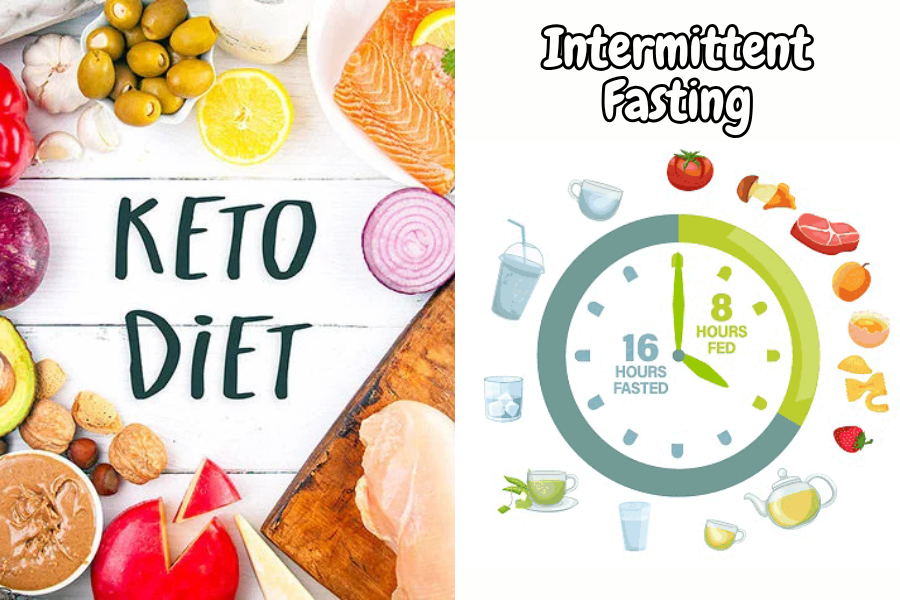
- 16/8 method: Fast for 16 hours, eat all meals in an 8 hour window
- 5:2 diet: Eat normally 5 days per week, eat very few calories on 2 nonconsecutive days
- Alternate day fasting: Alternate between days of normal eating and days of heavy calorie restriction
Fasting for at least 12 hours helps your body move from burning glucose to burning more fatty acids for energy (Mass General Brigham). During longer fasts you may produce some ketones, although usually not at the same levels as a full ketogenic diet.
You do not have to count calories with intermittent fasting, although you still need a calorie deficit for weight loss. One reason many people like it is that you focus on timing instead of tracking every bite (Mass General Brigham).
Compare benefits and drawbacks
When you line up keto vs intermittent fasting, you will see some overlap in potential benefits, but also some clear trade offs in flexibility, safety, and long term sustainability.
Potential benefits of keto
On keto, you may notice:
-
Reduced appetite
Ketosis often dulls hunger, which can make it easier to eat fewer calories without feeling deprived (Cureus). -
Rapid early weight loss
The first few weeks usually bring quick losses on the scale, mostly from water as your body uses up stored carbohydrates and ketones act as a diuretic (Culina Health). -
Improved blood sugar control
Very low carb intake can lower fasting insulin and improve HbA1c in people with diabetes, sometimes allowing reductions in medication with close medical supervision (Cureus). -
Possible metabolic benefits
Animal research from UC Davis suggests that ketogenic diets can improve muscle mitochondrial function, endurance, learning and memory, and even longevity, largely due to the ketone beta hydroxybutyrate (UC Davis Health). These findings still need more human data.
Risks and downsides of keto
You should also weigh these concerns:
-
Nutrient gaps
Keto limits or removes many fruits, legumes, and whole grains. This can lead to nutrient deficiencies if you are not careful (Northwestern Medicine). -
Side effects and “keto flu”
Headaches, fatigue, irritability, and constipation are common in the first weeks. Some people develop kidney stones or dangerously high ketone levels, a condition called ketoacidosis, which can be life threatening (Culina Health). -
Heart health questions
Meta analyses find that while keto increases HDL and lowers triglycerides, it can also raise LDL and total cholesterol compared to low fat diets, which may increase cardiovascular risk (Cureus). Northwestern experts also note that high saturated fat intake on keto can elevate blood lipids within 6 to 8 weeks (Northwestern Medicine). -
Unclear long term benefits
Studies show that weight loss and metabolic improvements often shrink after about a year, likely due to poor adherence. Many people regain weight once they transition off the diet (Culina Health, Northwestern Medicine). -
Not appropriate for everyone
Keto can be risky for people with some medical conditions and should be avoided or closely supervised in people with a history of disordered eating or certain metabolic issues (Culina Health).
Potential benefits of intermittent fasting
Intermittent fasting can offer:
-
Similar weight loss to standard calorie restriction
Reviews and clinical trials show that intermittent fasting produces about the same weight loss as simply cutting calories, not more, when calories are matched (Culina Health, Harvard Health). -
Possible improvements in inflammation and cell health
Fasting may trigger autophagy, a cell cleanup process that can reduce inflammation and protect healthy cells, although much of this evidence comes from animal or cellular studies (Mass General Brigham). -
Simpler rules for some people
If you dislike counting calories or tracking macros, focusing on when you eat, instead of exactly how much, can feel more approachable (Mass General Brigham, Harvard Health). -
Room for a balanced diet
Unlike strict keto, you can still include fruits, vegetables, whole grains, and legumes during your eating window, which may make it easier to meet your nutrient needs and maintain the pattern long term (Northwestern Medicine).
Risks and downsides of intermittent fasting
Intermittent fasting is not risk free. Some issues to keep in mind:
-
No clear advantage over eating fewer calories
A 2017 study in JAMA Internal Medicine found that after 12 months, intermittent fasting was not more effective than traditional calorie restriction for weight loss in overweight adults (Harvard Health). -
Adherence can be difficult
Studies report dropout rates around 38 percent. After a fast, your hunger hormones rise, which can lead to overeating or less healthy choices during eating windows (Harvard Health). -
Potential blood sugar concerns
Fasting can affect blood sugar regulation, especially in people with diabetes. Experts caution that intermittent fasting may not be safe without medical supervision if you have certain conditions (Harvard Health, Culina Health). -
Possible increased cardiovascular risk with tight windows
Preliminary data presented at the American Heart Association’s 2024 sessions found that people who limited eating to an 8 hour window had a 91 percent higher risk of death from cardiovascular disease compared to those who ate over 12 to 16 hours (Everyday Health). This research is early but underscores the need for caution. -
Not for specific groups
People who are pregnant, breastfeeding, under 18, or have a history of disordered eating are generally advised to avoid intermittent fasting unless a doctor suggests it and monitors them closely (Mass General Brigham, Culina Health).
Look at keto vs intermittent fasting side by side
Here is a quick comparison to help you see the main differences.
| Question | Keto diet | Intermittent fasting |
|---|---|---|
| Main focus | What you eat (very low carb, high fat) | When you eat (fasting and eating windows) |
| Primary goal | Enter and maintain ketosis | Create calorie deficit and metabolic changes via fasting |
| Food flexibility | Limited, many carb rich foods restricted | More flexible, can include most food groups |
| Need to count macros or calories | Usually yes, especially carbs and sometimes protein | Not always, some people track, others do not |
| Evidence for weight loss | Short term weight and metabolic improvements | Similar weight loss to continuous calorie restriction |
| Long term sustainability | Often difficult, benefits fade after about 12 months | Also challenging for many, high dropout in some studies |
| Typical side effects | Keto flu, constipation, nutrient gaps, cholesterol changes | Hunger, fatigue, possible blood sugar swings |
| Best suited for | People who can tolerate strict food rules and monitoring | People who prefer timing rules over food rules |
Consider combining keto and intermittent fasting carefully
You might wonder if combining keto vs intermittent fasting could give you the best of both. In theory, fasting while you are already eating very low carb may:
- Help you reach ketosis faster, since fasting lowers insulin and depletes glycogen more quickly
- Increase ketone levels further during fasting windows (Healthline)
However, the research on this combination is still limited. Experts note that:
- Both keto and intermittent fasting significantly change how your body works
- The overlap in people who should be cautious or avoid these patterns is large
- Combining them does not erase the known risks of each (Everyday Health)
Early findings highlight concerns as well. Those same American Heart Association data on 8 hour eating windows suggest that more aggressive fasting does not automatically mean better health and might even raise cardiovascular risk for some people (Everyday Health).
If you are considering both together, it is especially important to talk with your doctor before you start.
Decide which approach fits you
To choose between keto vs intermittent fasting, it helps to step back from the hype and focus on what you can actually live with, and what your body needs.
Questions to ask yourself
You can start by asking:
- Do you prefer simple food rules or specific timing rules?
- How comfortable are you with cutting out many carb rich foods, including most grains and some fruits?
- How do you feel when you skip meals? Lightheaded, irritable, or okay?
- Are you managing any medical conditions or taking medications that affect blood sugar, blood pressure, or mood?
- Have you ever struggled with disordered eating or very restrictive diets?
Your answers can point you toward one pattern, away from both, or toward a more moderate approach.
When keto might be a better fit
Keto might be more appropriate if:
- You are willing to track your food closely and plan meals in advance
- You do not mind limiting carbs to a very low level
- You feel better with fewer carbs and more fat, not worse
- You have medical guidance, especially if you have diabetes, PCOS, or metabolic syndrome
Keep in mind that weight loss on keto appears to come mostly from eating fewer calories, not from any magic effect of ketones themselves (Culina Health).
When intermittent fasting might be a better fit
Intermittent fasting may suit you better if:
- You prefer flexible food choices and find calorie counting draining
- You like a clear schedule, for example “I eat between 10 a.m. and 6 p.m.”
- You can tolerate longer periods without food without feeling unwell
- You do not have conditions or medications that make fasting risky
Remember that fasting is not a shortcut. It works about as well as any other method that helps you consistently eat fewer calories (Harvard Health, Culina Health).
When neither strict approach is ideal
For many people, the most realistic path sits somewhere in the middle. Experts from UC Davis describe how balanced diets that include carbohydrates, proteins, and fats can improve metabolic health when paired with modest calorie restriction of about 10 percent or gentle time restricted eating, like a 17 hour overnight fast (UC Davis Health).
Dietitians also emphasize that the most effective weight loss plan is one you enjoy enough to maintain, not the most extreme one you can tolerate briefly. A sustainable calorie deficit, tailored to your preferences and health needs, tends to work best over time (Culina Health).
Take safety seriously before you start
Whether you lean toward keto, intermittent fasting, or a gentler version of either, safety needs to come first.
Who should talk to a doctor first
You should check with a healthcare provider before starting keto, intermittent fasting, or a combination if you:
- Are pregnant or breastfeeding
- Have type 1 or type 2 diabetes
- Have heart disease, kidney disease, or liver disease
- Take medications that affect blood sugar, blood pressure, or mood
- Have a history of disordered eating or an eating disorder
- Are under 18 or an older adult with other medical conditions
Experts across sources, including Everyday Health, Mass General Brigham, and Culina Health, stress the importance of medical supervision for these groups because both keto and fasting can shift blood sugar, blood pressure, and other vital markers in unpredictable ways (Everyday Health, Mass General Brigham, Culina Health).
Signs you should ease up or stop
No matter which route you choose, it is important to listen to your body. You should contact a healthcare provider and consider changing course if you notice:
- Persistent dizziness, fainting, or severe fatigue
- Significant mood changes or increased anxiety
- Ongoing digestive issues like nausea, vomiting, or severe constipation
- Palpitations or chest discomfort
- Obsessive thoughts about food, weight, or restriction
Healthy eating patterns support your life, they do not take it over.
Build a more sustainable plan
In the end, the biggest difference between keto vs intermittent fasting for most people is not in how many pounds you could lose on paper. It is in how you feel day to day and how likely you are to stick with the plan for months and years, not days.
A few guiding ideas can help you build something sustainable:
- Aim for a small, consistent calorie deficit instead of extreme restriction
- Include a mix of protein, healthy fats, and carbohydrates that you enjoy
- Keep highly processed, ultra sweet foods in check, since chronic over consumption of these foods can drive insulin resistance and inflammation (UC Davis Health)
- Make movement and sleep part of the picture, not just food choices
- Consider working with a registered dietitian to tailor any approach, including keto or intermittent fasting, to your own health status and preferences (Culina Health)
You do not have to commit to a rigid label to see progress. You can experiment slowly, pay attention to how your body responds, and adjust. The best choice is the one that improves your health while still feeling like your life.
About the Author