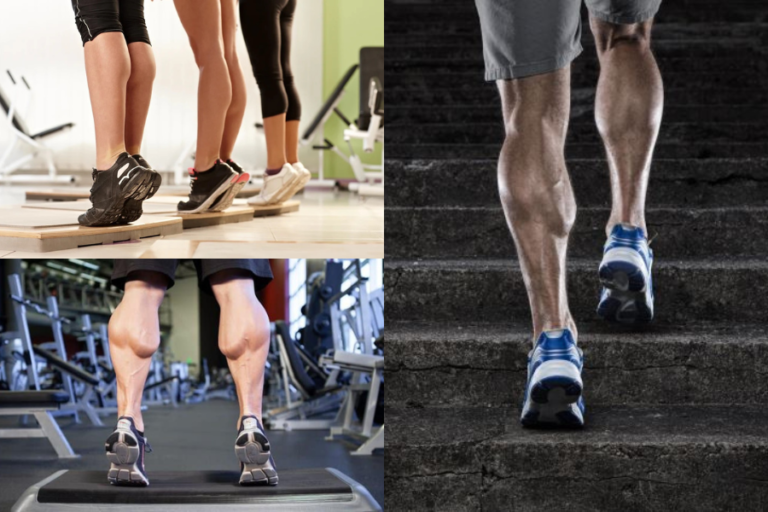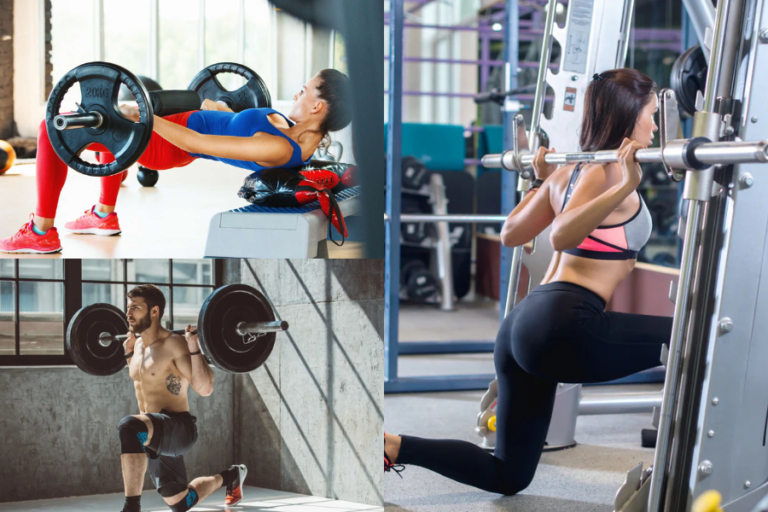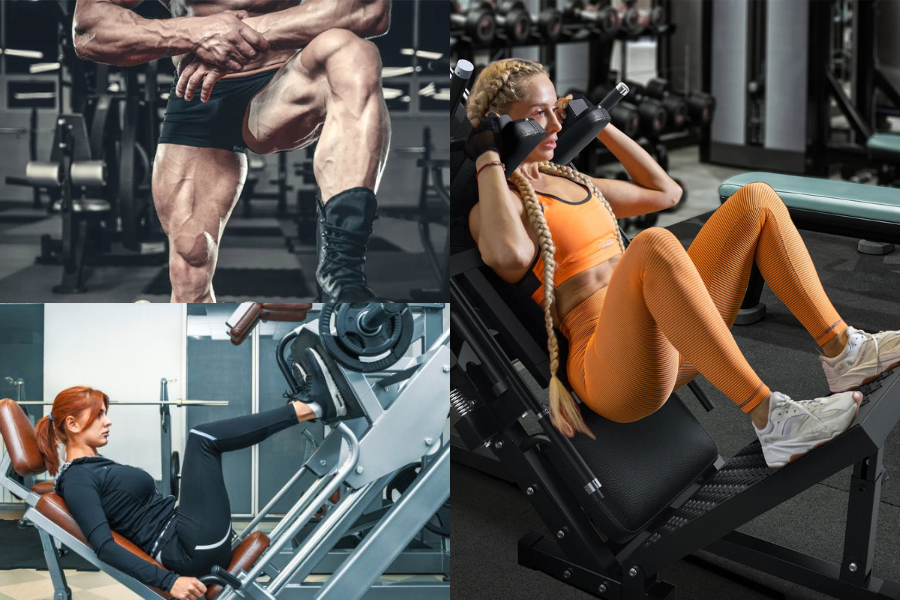
Building stronger, more defined quads is not just about endless squats and lunges. Quad isolation exercises let you zero in on your quadriceps so you can match your training to your specific strength and physique goals. By focusing on knee extension, these moves help you build size, bring up weak points, and support healthier, more stable knees.
Below, you will learn how quad isolation exercises work, when to use them, and how to choose the best ones for your goals and equipment.
Understand what quad isolation really does
Quad isolation exercises are movements where your knee is the only joint moving and your quadriceps are doing almost all the work. The classic example is the seated leg extension. Unlike squats or leg presses, your hips do not move and other muscles like your glutes and hamstrings are less involved.
This has a key benefit. Since the quads cannot hide behind stronger muscles, you get targeted tension where you want it most. That makes isolation work especially useful if you want to:
- Bring up lagging quad development
- Correct left to right strength imbalances
- Improve definition around the knee
- Add extra training volume without exhausting your whole body
The trade off is that isolation movements usually use lighter loads and have less carryover to daily or sport movements compared to heavy compound lifts. You will build muscle and local strength but you will not replace squats or split squats with leg extensions if overall performance is your main goal.
Combine compound and isolation for best results
You do not need to choose between squats and quad isolation exercises. You will get better results by combining both in the same session.
Start your leg workouts with compound lifts such as back squats, front squats, hack squats, or split squats. These multi joint exercises let you move heavier weight, recruit more muscle groups, and build full body strength. Once your main lifts are done, you can switch to isolation work to finish the quads without overly taxing the rest of your body.
A simple structure might look like this:
- Main compound lift, for example front squats
- Secondary compound or machine lift, for example leg press or hack squat
- Quad isolation exercise, for example leg extension or Spanish squat
Placing isolation work later in the workout lets you push your quads to fatigue after the heavy work is out of the way. Since isolation movements are less stressful overall, you also recover from them more quickly, which means you can often include them more frequently across the week.
Choose quad isolation exercises for your setup
You can isolate your quads whether you train in a fully equipped gym or at home with minimal gear. The key is always the same. You want knee extension as the primary action and you want your torso and hips as still and supported as possible.
Machine based quad isolation
If you have access to machines, you have some of the most effective quad isolation tools available.
Leg extension machine
The leg extension is often considered the gold standard of quad isolation exercises. You sit with your back supported, pad across your shins, then extend your knees to lift the weight. Since your body is locked in position, your quads do almost all the work.
You can tailor leg extensions to different goals:
- Muscle size and definition: 3 to 4 sets of 10 to 15 reps, with slow controlled lowering
- Strength and control: 3 sets of 6 to 10 reps, with a 1 to 2 second pause at the top
- Endurance and finishers: 2 to 3 high rep sets of 15 to 25 reps at the end of a workout
Because the rest of your body is supported, leg extensions are easier to recover from than heavy squats. Guidance from Gymshark highlights them as one of the best quad isolation exercises for maximum quad growth, as well as a tool that can be performed more frequently since they place less stress on the whole body compared to compound lifts (Gymshark, 2024).
You can also make leg extensions more challenging without adding load by using the following variations:
- Single leg extensions to even out strength from side to side
- Isometric holds at the top of the rep for 3 to 5 seconds to increase time under tension
Both strategies increase quad activation and are especially useful if you are chasing hypertrophy or symmetry improvements.
Hack squats and split squats for emphasis
While hack squats and split squats are technically compound movements, you can adjust how you perform them to place more emphasis on the quads.
On a hack squat machine, use a slightly narrower stance and let your knees travel forward over your toes while keeping your back flat against the pad. This will shift more of the load to your quads compared to a wider stance, hip dominant squat. Because the machine supports your back, you can often train a bit heavier while still focusing on the front of your thighs.
With split squats, an upright torso and a relatively short stance keep the emphasis on the front leg quad. Since each leg works independently, split squats also help correct muscular imbalances and improve hip and knee stability.
Train your quads at home without machines
No leg extension machine, no problem. You can still perform effective quad isolation exercises with a bench, dumbbells, or resistance bands.
Seated dumbbell leg extensions
This move mimics the leg extension machine without the machine itself. Sit tall on a bench or sturdy chair, place a dumbbell between your feet, and hold the edges of the seat for balance. Start with your knees bent to 90 degrees, then extend your legs until they are almost straight. Lower slowly back down.
Because you are holding the weight with your feet, you will usually work in moderate to high rep ranges. That makes this a perfect finisher after squats or lunges when you want to squeeze a bit more out of the quads.
Banded leg and Spanish squats
Resistance bands create what is called progressive resistance. The band becomes more stretched as you extend, so it gets harder the farther you move. This pairs especially well with quad isolation work.
One option is banded leg extensions. Anchor a band behind you at ankle height, loop it around your ankles, and perform seated or lying leg extensions. The band is lightest at the bottom and toughest at the top, where your quads are strongest, which helps maximize activation while staying relatively kind to your joints.
Another powerful variation is the banded Spanish squat. Anchor a thick band at knee height behind you and step into it so it sits across the back of your knees. Step away until there is strong tension, lean back slightly against the band, and then squat down while keeping your shins vertical. Because the band pulls you backward, your quads must work hard to extend your knees, but you do not need heavy loads.
Spanish squats are especially useful if you have knee pain and want to avoid heavy traditional squats or machine leg extensions. They load the quads in a more joint friendly way while still giving you plenty of stimulus.
Sissy squats and lying leg extensions
If you want a bodyweight challenge that really lights up your quads, sissy squats are hard to beat. You rise onto your toes, lean your torso back, and bend your knees forward so your body forms a straight line from shoulders to knees. Then you extend back up using your quads.
Sissy squats demand good balance and strong knees, so you might prefer to start with a more accessible alternative like lying leg extensions from a kneeling position. For that version you begin on your knees, lean your torso back as far as you comfortably can, then use your quads to pull yourself upright again. This still isolates the quads through a large range of motion, but many people find it easier to learn than a free standing sissy squat.
Match your quad training to your goals
Once you know which quad isolation exercises you can use, the next step is to tailor them to your specific goals. The way you program sets, reps, and frequency will differ slightly depending on whether you care most about muscle size, strength, or joint friendly conditioning.
For muscle size and definition
If your main goal is hypertrophy and more detail around the front of your thighs, you want enough weekly volume without beating up your joints. A practical guideline from Gymshark is to train your quads twice per week with at least two quad exercises in each session, including both compound and isolation movements, and to allow at least 48 hours between sessions for recovery.
You could use a structure like this:
- 2 quad focused days per week
- 1 to 2 heavy compound movements, such as squats or hack squats, early in the session
- 1 to 2 isolation exercises later, such as leg extensions or Spanish squats
For isolation work, spend most of your time in the 10 to 20 rep range, focusing on controlled tempo and a clear squeeze at the top of each rep. Techniques like single leg work or short isometric holds at full extension help drive extra muscle growth without needing to chase very heavy weights.
For strength and performance
If you are a field athlete or strength focused lifter, your priority is usually to keep your heavy compound lifts progressing. In this case, quad isolation exercises should support your main work, not replace it.
Use isolation movements sparingly, usually 2 to 3 sets after your core lifts, and keep the effort around moderate rather than all out. The aim is to strengthen the quads, especially through the last few degrees of knee extension, and to shore up weak links without adding so much fatigue that your squat and deadlift training suffers.
Lower rep ranges, for example 6 to 10 reps, with slightly longer rest periods will let you handle more load while still giving your joints and connective tissues time to adapt.
For joint health and rehab support
If you are coming back from knee issues or just want to keep your knees feeling solid, quad isolation can be a useful tool when used alongside professional guidance. Because exercises like leg extensions work directly on knee extension strength and the tissues around the patella, they can help support joint function and stability.
Banded leg extensions and Spanish squats are often easier on sensitive knees since the resistance ramps up gradually and you can adjust band tension to your comfort level. Isometric holds where you maintain a position without moving, for example holding the top of a leg extension, can also improve muscular control and stability around the joint.
You should always follow the advice of your healthcare provider or physical therapist, especially in a rehab setting. Quad isolation exercises are a tool, not medical treatment.
Think of isolation work as a spotlight for your legs. You point it exactly where you need more strength, size, or control, then use it to complement, not replace, your big compound lifts.
Put it all together in your next workout
To start using quad isolation exercises right away, try adding one of the following templates to the end of your next leg day:
- Gym option: Squats or hack squats, leg press, then 3 sets of leg extensions, finishing with a single leg or isometric hold variation.
- Home option: Lunges or split squats, bodyweight squats, then 3 sets of seated dumbbell leg extensions or banded Spanish squats.
Pay attention to how your quads feel during and after the session. You want a strong burning sensation and a solid pump, but your knees should feel stable and comfortable once you are done.
Over the next few weeks, you can adjust the exercises, rep ranges, and frequency to suit your body. The more intentional you are about where and how you use quad isolation, the better it will support your strength, symmetry, and long term leg health.
About the Author