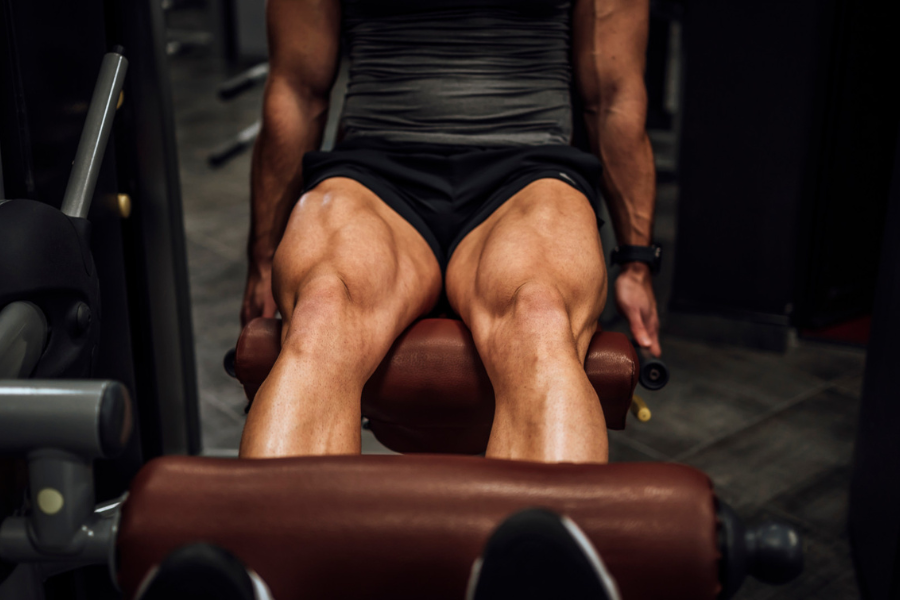
Quadriceps exercises are some of the most effective moves you can add to your leg workouts if you want more power, stability, and everyday strength. Your quads are heavily involved every time you stand up, climb stairs, sprint, or jump, so training them pays off both in the gym and in daily life.
Below, you will learn how your quadriceps work, which quadriceps exercises to prioritize, and how to put them into a simple workout that matches your current fitness level.
Understand your quadriceps muscles
Your quadriceps are a group of four muscles on the front of your thigh. Together, they straighten your knee and help flex your hip, which is why you feel them when you get up from a chair or walk up a hill.
The four quadriceps muscles are:
- Rectus femoris, runs down the middle of the thigh and crosses both the hip and knee, helps lift your thigh and extend your knee
- Vastus lateralis, the large outer quad muscle, contributes a lot to leg power
- Vastus medialis, the teardrop-shaped muscle near the inner knee, helps stabilize the kneecap
- Vastus intermedius, sits deep between the other quads and assists with knee extension
When you strengthen these muscles through targeted quadriceps exercises, you reduce stress on your knees, improve kneecap tracking, and boost performance in sports and compound lifts like squats, lunges, and deadlifts.
Benefits of strong quadriceps
Stronger quads do more than make your legs look defined. They improve how you move, feel, and perform.
Everyday movement and joint protection
When your quadriceps are well trained, they help you:
- Stand up and sit down with less effort
- Walk, climb stairs, and carry groceries with more stability
- Reduce strain on your knees by taking some load off your ligaments
Targeted quadriceps exercises can improve the stability of your kneecaps and support the tendons around the joint, which helps protect your knees during daily activities and workouts.
Sports and strength performance
If you play sports like soccer, basketball, or American football, your quads are a key power source for sprinting, cutting, and jumping. Strong quadriceps also support two of the three main lifts in strength training, the squat and deadlift, and they contribute to overall athletic performance.
By focusing on quad strength, you improve:
- Acceleration and sprint speed
- Jump height and landing control
- Your ability to handle heavier loads in compound leg exercises
Foundational bodyweight quadriceps exercises
If you are new to training or working out at home, bodyweight quadriceps exercises are a smart place to start. Many of these moves require no equipment and can still deliver a strong training effect.
Bodyweight squats
The squat is one of the best basic moves for your quads and hamstrings. According to guidelines from the Mayo Clinic as of 2026, squats can help protect your knees and improve sports performance when you use proper form.
To perform a basic bodyweight squat:
- Stand with your feet slightly wider than shoulder width and toes pointing ahead.
- Brace your core and keep your spine neutral.
- Bend at your hips, knees, and ankles, lowering until your knees are around a 90 degree angle if your mobility allows.
- Keep your knees centered over your feet.
- Press back up to standing in a smooth and controlled motion.
Mayo Clinic guidelines suggest that one set of 12 to 15 squats is generally adequate for most people to work the quadriceps. If you want more strength or muscle growth, you can build up to multiple sets.
Lunges and step variations
Lunge patterns train your quads one leg at a time and challenge your balance.
You can rotate through these options:
- Walking lunges
- Reverse lunges
- Lateral (side) lunges
- Step ups onto a sturdy bench or step
Aim to keep your front knee tracking over your toes and your torso upright. These details help load your quads instead of straining your lower back.
Single leg work for balance
Unilateral exercises are important for balancing quad strength between legs. You may notice your dominant leg taking over if you skip these.
Two useful options are:
- Bulgarian split squats, with your back foot elevated on a bench
- Single leg raises, where you lie on your back and lift one straight leg at a time
The single leg raise especially targets the rectus femoris, since it crosses the hip joint, and it is a good option if you want a low impact move that still challenges your quads.
Advanced at home quadriceps exercises
Once basic movements feel comfortable, you can progress to more challenging quadriceps exercises at home.
A common list of effective at home quad moves includes:
- Bodyweight squats
- Walking lunges
- Step ups
- Bulgarian split squats
- Lateral lunges
- Squat jumps
- Box jumps (onto a safe, sturdy surface)
- Reverse lunges
- Single leg raises
- Single leg pistol squats
The pistol squat is an advanced move that requires strength, mobility, and balance. It is best to master other quad exercises first before you attempt it. You can work toward it by holding onto a support, such as a doorframe or sturdy pole, and practicing partial range of motion.
Gym quadriceps exercises for maximum growth
If you have access to gym equipment and you want to maximize quad development, you can use specific set ups and machines that encourage your quads to work harder.
Squat variations that emphasize quads
How you squat determines which muscles do most of the work. To make squats more quad focused, you can:
- Elevate your heels slightly
- Use a narrower or hip width stance
- Keep your torso more upright
- Shift your weight toward the midfoot instead of pushing mainly through the heels
- Limit the amount of hip hinge and allow more knee bend
Effective quad focused squat variations include:
- Front squats
- Heel elevated goblet squats
- Hack squats
- Sissy squats
- Bulgarian split squats with a shorter stance and upright torso
These moves emphasize knee extension and increase quad activation. For example, a heel elevated goblet squat encourages greater knee flexion while reducing hip involvement, which places more load on your quads.
Machine and isolation movements
Compound exercises like squats and lunges are essential for overall leg strength, but isolation work can help you target your quadriceps directly with less systemic fatigue.
The leg press with a low foot placement on the platform shifts more of the work to your quads. Aim to keep your knees tracking in line with your toes and use a full, controlled range of motion.
The leg extension is a classic quad isolation exercise. It mainly trains knee extension and allows you to focus specifically on the quadriceps without as much involvement from the glutes and hamstrings. Because it is less taxing on your entire body, you can often use it more frequently or at the end of a workout to add extra volume.
How to program your quadriceps workouts
To see progress, you need both the right exercises and enough training volume.
Sets, reps, and weekly frequency
For muscle growth and strength, you can use this general structure:
- Train your quadriceps about twice per week
- Include at least two quad focused exercises in each workout
- Accumulate a total of at least 10 sets per week that clearly target your quads
- Work mostly in the 8 to 12 rep range for hypertrophy
If you are a beginner, you might start with 2 sets of 10 to 12 repetitions for each exercise after a 5 to 10 minute warm up. As you get stronger, you can increase to 3 or 4 sets, add slightly more weight, or slow your tempo.
Sample quad focused workout
Here is a simple template you can adapt, depending on whether you are training at home or at the gym.
| Level | Exercise | Sets x Reps | Notes |
|---|---|---|---|
| Beginner | Bodyweight squats | 2 x 12 | Focus on form and depth |
| Reverse lunges | 2 x 10 each leg | Hold a chair for balance if needed | |
| Step ups | 2 x 10 each leg | Use a stable step or low bench | |
| Intermediate | Heel elevated goblet squats | 3 x 10 | Use a dumbbell or kettlebell |
| Bulgarian split squats | 3 x 8 each leg | Keep torso upright for more quad load | |
| Leg extensions (gym) | 3 x 12 | Pause briefly at the top | |
| Advanced | Front squats | 4 x 6 to 8 | Prioritize full range and control |
| Hack squats or leg press | 4 x 10 | Feet lower on the platform | |
| Walking lunges | 3 x 12 steps each leg | Finish with a controlled burn |
Allow about 48 hours between hard quad sessions so your muscles and joints can recover.
Technique tips for better quad activation
Small changes in form can make a big difference in how much your quadriceps contribute during an exercise.
Use the right stance and foot pressure
For quad heavy squats and lunges, try these cues:
- Stand with a narrower stance or hip width rather than very wide
- Keep toes slightly forward instead of turned out excessively
- Press through the midfoot instead of only the heels
- Let your knees travel forward as you bend, as long as they stay in line with your toes
Elevating your heels on a small wedge or weight plate can also increase knee flexion, minimize hip hinge, and shift more work onto your quads.
Control your range of motion
A common mistake when training quads is using a limited range of motion, such as half reps on squats or leg presses. While this sometimes lets you move more weight, it reduces the stimulus for muscle growth.
Aim to:
- Squat and press to a depth that feels challenging but does not cause joint pain
- Straighten and bend your knees through as much safe range as you can control
- Avoid bouncing at the bottom of reps, especially in loaded exercises
Smooth, controlled movements keep tension on your quadriceps and reduce injury risk.
Common mistakes and how to avoid them
When you want stronger quads, it can be tempting to push as hard as possible. However, overdoing quadriceps exercises or using poor technique can cause problems.
Overemphasizing quads and ignoring balance
If you train only quads and neglect your hamstrings and glutes, you risk muscular imbalances that can increase the chance of ACL injuries and joint wear over time. This imbalance can also reduce your functional strength and overall leg development.
Include hip dominant movements like Romanian deadlifts or hip thrusts in your leg routine so the back of your body keeps up with your quads.
Letting form break down
Common technical errors that reduce quad activation and increase injury risk include:
- Squatting with a very wide stance
- Leaning too far forward so the back and hips dominate
- Pushing only through the heels and lifting your toes
- Allowing your knees to cave inward instead of tracking over your toes
Poor squatting technique can shift load from your quads to your lower back and hips, which may lead to knee or back discomfort. Practicing good form and using appropriate weight let your quadriceps do the work without placing unnecessary stress on your joints.
Skipping warm up and recovery
If you go straight into heavy quad work without a warm up, you limit how effectively you can lift and potentially increase your injury risk. A 5 to 10 minute warm up that includes light cardio and dynamic leg movements prepares your joints and muscles.
After your workout, a few minutes of stretching and gentle mobility for your quads and hips can help you recover and maintain flexibility.
Putting it all together
When you choose quadriceps exercises that match your current level and pay attention to form, you build more than just bigger legs. You create a foundation of strength that supports your knees, boosts your performance in sports and lifting, and makes everyday movement feel easier.
Start by adding one or two quad focused exercises to your next leg day, such as bodyweight squats and lunges. As they become easier, progress to more challenging variations like heel elevated goblet squats, Bulgarian split squats, or front squats, and gradually increase your sets and reps. With consistent practice, you will feel the difference every time you walk, climb, or lift.
About the Author