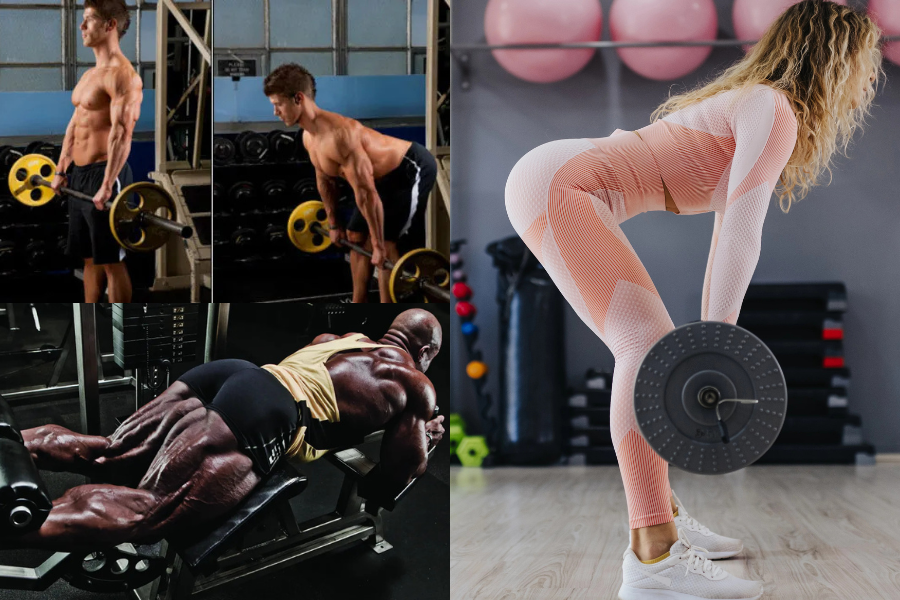
A hamstring stretch and strength workout can do more than help you touch your toes. It can ease low back tension, reduce injury risk, and make everyday movements like walking, squatting, and climbing stairs feel smoother. Your hamstrings take up roughly one third of your upper leg mass, so training and stretching them consistently pays off in a big way.
Below, you will learn how your hamstrings work, why they feel tight so often, and how to build a simple routine that improves both strength and flexibility.
Understand your hamstrings
Your hamstrings sit on the back of your thigh and are actually three muscles working together: the biceps femoris on the outer side, and the semitendinosus and semimembranosus closer to the inner thigh. The biceps femoris has a slightly different role from the other two, so you need a mix of exercises to train the whole group for balance and stability.
These muscles help you bend your knees, extend your hips, and rotate your thighs. You use them every time you walk, run, hinge forward, or stand up from a chair. Strong, flexible hamstrings support your knees, hips, and lower back, which is why they are so important in almost every fitness program, as highlighted in a Gymshark guide updated January 5, 2024.
Why your hamstrings feel tight
Hamstring tightness can have several overlapping causes. Some are about muscle tissue, while others are more about how your nervous system is responding.
Common contributors include:
- Prolonged sitting with bent knees and flexed hips
- Sports that demand frequent sprints, such as soccer or HIIT
- Heavy leg training without matching hamstring work
- Weak glutes and core that force the hamstrings to do extra work
Spending long hours seated can leave your hamstrings both tight and weak, and the effects can travel beyond your legs. Personal trainer Justin Kraft notes that sitting all day can contribute to discomfort in your back, neck, and even shoulders, not just your thighs, because of how your body compensates under constant flexion.
Certified personal trainers cited in a 2026 GQ article recommend daily hamstring stretching for everyone, not just athletes, to improve flexibility and prevent injury. Runners, lifters, and people who do high intensity workouts are especially prone to hamstring tightness due to repetitive demand.
Interestingly, the feeling of tight hamstrings is not always about short muscles. Mayo Clinic experts explain that this sensation often comes from your nervous system sending a warning signal about perceived threat or weakness rather than a true lack of mobility. In those cases, gradually building strength and stability can ease that tight feeling more than stretching alone.
Stretching versus strengthening
If you want your hamstring stretch and strength workout to work, you need both components. Stretching changes how far you can comfortably move your joints, while strength work changes how much control you have through that range.
According to Mayo Clinic, stretching is a key part of any exercise program because it boosts flexibility, improves joint range of motion, and increases blood flow after aerobic or strength sessions. At the same time, Mayo Clinic notes that many people get longer lasting relief from hamstring tightness when they add stability exercises like squats or deadlifts instead of relying only on static stretching.
Think of it this way: stretching opens the door, strength work teaches your body how to walk through it safely. Your goal is to feel both mobile and strong, not loose but unstable.
Dynamic hamstring stretches before workouts
Dynamic stretching means moving in and out of a position repeatedly rather than holding it for a long time. This approach is especially useful before you run, lift, or play sports because it warms your muscles and prepares your nervous system without making you feel sleepy or slack.
Certified trainers in Los Angeles highlight that spending about 10 minutes on dynamic stretches before exercise can improve flexibility and overall mobility when done consistently.
Aim for 60 to 90 seconds per movement with steady, controlled motion rather than bouncing or jerking.
Leg swing variation
Stand next to a wall or sturdy surface for balance. Swing one leg forward and back, keeping your torso tall and your core lightly braced. Start with small swings and gradually increase the range as your hips and hamstrings loosen up.
Switch legs after 60 to 90 seconds. You should feel warmth and mild tension, not pain.
Dynamic forward hinge
Stand with feet hip width apart. Soften your knees, hinge at your hips, and reach your hands toward the floor or your shins. Then return to standing, squeezing your glutes at the top.
Move in and out of the hinge slowly for about 60 seconds, focusing on feeling your hamstrings lengthen as you fold and contract as you stand.
Walking hamstring sweep
Take a small step forward with your right heel on the ground and toes up. Hinge at your hips, sweep your hands down your right leg toward your toes, then stand up and step through with the left leg.
Continue walking forward with this pattern for 60 to 90 seconds. This drill mimics everyday walking but adds a structured stretch to each step.
Static hamstring stretches for flexibility
Static stretching means you move into a position and hold it for a period. This style works best after workouts or anytime you are warm, such as after a walk or a shower. Trainers and Mayo Clinic physical therapists recommend holding each stretch gently for around 30 seconds with easy breathing, avoiding any bouncing or sharp pain.
You should feel tension build and then slowly ease off. If you feel nerve-like zaps, sharp discomfort, or pain in your lower back instead of your thigh, back off and modify the position.
Seated simple hamstring stretch
Sit on the floor with one leg extended and the other bent so the sole of your foot rests near your inner thigh. Sit tall, then hinge forward slightly over the straight leg, reaching toward your shin or ankle.
Hold for about 30 seconds, breathing steadily. Switch legs and repeat. You do not need to grab your toes for this to be effective. Focus on a gentle, sustained stretch instead.
Standing single leg stretch
Stand tall and place one heel on a step, low chair, or bench. Keep a slight bend in both knees. Flex your foot so your toes point up, and slowly hinge forward at the hips until you feel a stretch along the back of your thigh.
Hold for 30 seconds, then switch legs. Keep your back long and avoid collapsing your chest.
Towel or strap stretch
Lie on your back and loop a towel or strap around the ball of one foot. With the other leg resting on the floor, gently straighten the lifted leg toward the ceiling. Use the towel to help guide the leg until you feel a comfortable stretch.
Hold for 30 seconds without holding your breath. Repeat on the other side. This position can be easier on your lower back than folded seated stretches.
If hamstring tightness or pain persists despite regular stretching, Mayo Clinic experts suggest working with a physical therapist, orthopedist, or sports medicine specialist to identify the root cause and design a tailored plan.
Key strength moves for hamstrings
Strength work is an essential part of any hamstring stretch and strength workout. Many lifters undertrain their hamstrings, doing only a few quick sets of leg curls while putting far more volume into smaller muscles, such as biceps. Since your hamstrings are large and crucial for lower body power, they deserve at least as much attention.
Common mistakes include doing rushed reps, treating Romanian deadlifts like light stretches instead of real strength lifts, and never pushing close to muscular fatigue. When you skip progressive overload or advanced techniques like drop sets or rest pause work, muscle growth and strength can stall.
Research cited by Gymshark points to kettlebell swings, single leg Romanian deadlifts, and prone leg curls as top exercises for hamstring activation, which makes them great building blocks for your routine.
Romanian deadlifts
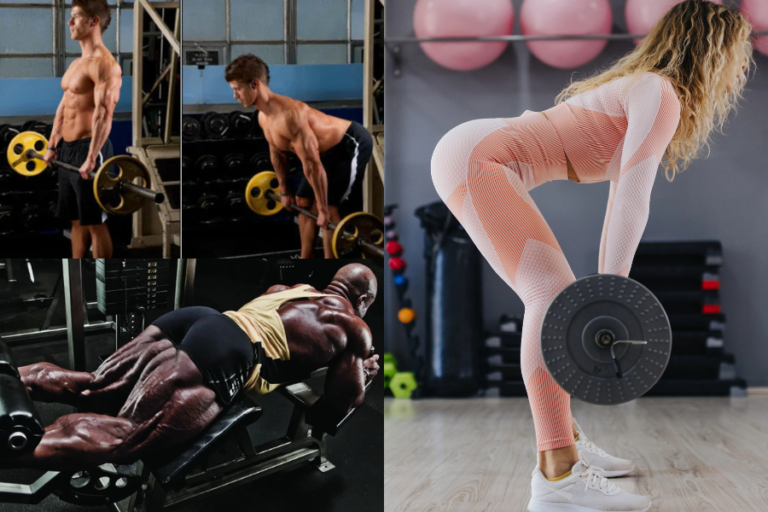
Romanian deadlifts place a large share of the load on your hamstrings instead of your lower back when done with good form. Stand with feet hip width apart, holding a barbell or dumbbells in front of your thighs. Soften your knees, then hinge at your hips by pushing them back, lowering the weight along your legs until you feel a strong stretch in your hamstrings.
Keep your back neutral and your core engaged, then drive through your heels to stand and squeeze your glutes at the top. Move with control and avoid bouncing at the bottom. Over time, gently increase the weight to challenge your strength.
Single leg Romanian deadlifts
Single leg RDLs help correct imbalances and build unilateral strength. Hold a dumbbell or kettlebell in one hand, stand on the opposite leg, and hinge at your hip while letting the non working leg extend behind you for balance.
Lower the weight toward the floor with control, then return to standing. Start with light loads and a small range if your balance feels shaky. This exercise is particularly useful for runners and field athletes who rely heavily on one leg at a time.
Machine hamstring curls
Machine curls isolate your hamstrings and are helpful if your quads dominate your leg training. Seated curls slightly change the emphasis compared to prone (lying) curls, so you can rotate both styles across your training week.
Focus on slow, controlled reps. Fully straighten and then bend your knees without snapping the weight up and down. Pause briefly at the top of each curl to feel a strong contraction.
Kettlebell swings
Kettlebell swings are a dynamic hinge movement that builds power, endurance, and hamstring activation. Start with the bell on the floor a foot in front of you. Hinge at the hips, grab the handle, hike it back between your legs, then snap your hips forward to swing the bell to chest height.
Keep your arms relaxed and let your hips drive the motion. Swings can be demanding, so learn proper form with coaching if possible and start light.
Sample hamstring stretch and strength workout
You can build a simple routine that blends mobility and strength into one focused session. Perform this workout 2 or 3 times per week, leaving at least one day of rest between sessions for recovery.
- Dynamic warm up
- Leg swings, 60 seconds per leg
- Walking hamstring sweeps, 60 to 90 seconds
- Dynamic forward hinge, 60 seconds
- Strength block
-
Romanian deadlifts, 3 sets of 8 to 10 reps
-
Single leg Romanian deadlifts, 2 to 3 sets of 8 reps per leg
-
Machine hamstring curls, 3 sets of 10 to 12 reps
-
Optional: Kettlebell swings, 2 to 3 sets of 15 to 20 reps
Rest 60 to 90 seconds between sets. Focus on steady tempo and full range of motion, not rushing to finish.
- Static cool down
- Seated simple hamstring stretch, 2 holds of 30 seconds per leg
- Standing single leg stretch, 1 to 2 holds of 30 seconds per leg
- Towel or strap stretch on your back, 1 hold of 30 seconds per leg
Consistency matters more than perfection. Trainers recommend around 10 minutes of daily hamstring stretching, ideally split into brief sessions before and after activity, for noticeable improvements in comfort and mobility over time.
Hamstring stretching exercises have also been shown to significantly reduce pain and disability in people with various types of low back pain, and to improve flexibility, according to a 2024 systematic review and meta analysis of 14 randomized controlled trials involving 735 participants.
Safety tips and when to see a pro
Before you jump into a new hamstring stretch and strength workout, check in with a healthcare professional if you have low back pain, sciatica, or a history of hamstring injuries. A physical therapist or sports medicine doctor can confirm which movements are safe for you and may tailor the volume and intensity.
General safety guidelines include:
- Move into stretches slowly and avoid bouncing
- Expect tension, not pain
- Keep breathing freely and do not hold your breath
- Stop if you feel sharp, burning, or nerve like pain
If your hamstrings feel tight or painful despite several weeks of consistent stretching and strength work, Mayo Clinic experts encourage you to seek an evaluation to look for underlying issues and to receive individualized exercises that match your body.
Start with one or two exercises and stretches from this guide and build up gradually. Over time, your hamstring stretch and strength workout can become a reliable tool that keeps you moving smoothly, protects your back, and supports everything you want to do, from running faster to simply feeling better when you get up from your chair.
About the Author