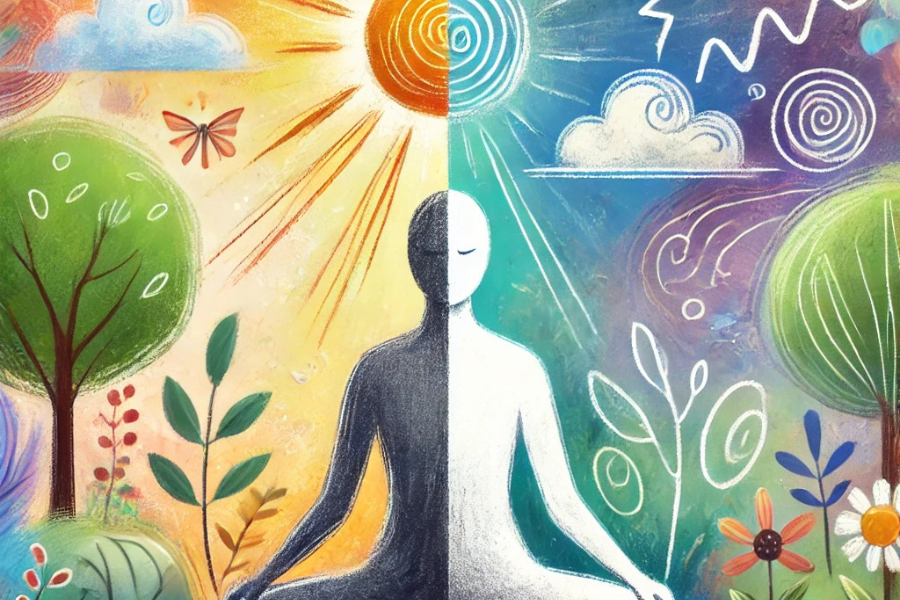
Understand mindfulness and emotional balance
When you think about mindfulness and mental health, you might picture someone sitting cross‑legged in silence. In reality, mindfulness is much more practical and down to earth. It is about paying close attention to what you are sensing and feeling right now, without judging it or trying to fix it on the spot.
Health experts describe mindfulness as a way of being fully present in the moment, which can help relax your body and mind and reduce stress (Mayo Clinic). Over time, this present‑moment awareness supports emotional balance. You start to respond to your thoughts and feelings rather than getting swept away by them.
Emotional balance does not mean you feel calm and happy all the time. Instead, it means you can:
- Notice difficult emotions without panicking.
- Recover more quickly after stressful events.
- Make choices that match your values instead of your impulses.
Mindfulness gives you the skills to do this in everyday life, not only when you are meditating.
Learn how mindfulness affects your mind
Mindfulness and mental health are closely linked. When you practice mindfulness, you train your attention, your attitude, and your nervous system. Together, these shifts can change how you experience stress, anxiety, and low mood.
Shift from autopilot to awareness
On a busy day, your mind can easily slip into autopilot. You rush from task to task while your thoughts spiral around worries, to‑do lists, or old conversations. Spending too much time caught in this kind of thinking can increase stress, anxiety, and symptoms of depression (Mayo Clinic).
Mindfulness helps you:
- Notice when your mind has wandered into rumination or worry.
- Gently guide your attention back to what you are doing right now.
- Stay more engaged with the present world instead of living in your head.
Over time you become less controlled by mental loops, which makes it easier to stay steady emotionally.
Change your relationship with thoughts and feelings
You cannot stop thoughts from appearing or emotions from bubbling up. What you can change is how you relate to them.
Mindfulness has been described as “paying attention on purpose, in the present moment, and nonjudgmentally” (NCBI PMC). When you observe your thoughts and feelings with curiosity and kindness instead of criticism, you create a little breathing room inside.
This “de‑centering” effect helps you:
- See thoughts as mental events, not facts or commands.
- Allow emotions to rise and fall without needing to push them away.
- Respond with more balance and acceptance rather than reacting on impulse.
Research suggests that this shift reduces rumination, anxiety, worry, and emotional reactivity, and supports better self‑regulation (NCBI PMC).
Support long‑term wellbeing
Mindfulness is connected to a wide range of mental health benefits. Studies have found links between trait mindfulness and higher life satisfaction, self‑esteem, optimism, and positive mood, along with lower depression, rumination, social anxiety, and emotional regulation difficulties (NCBI PMC).
Mindfulness‑based treatments have also been shown to:
- Reduce symptoms of anxiety and depression.
- Improve sleep and help people cope with pain.
- Support quality of life for those with chronic illnesses (NIH News in Health).
These benefits grow gradually as you practice. Think of mindfulness as strength training for your emotional health.
Explore how mindfulness helps specific mental health challenges
Different mental health challenges can show up in your life as stress, anxious thoughts, low mood, or emotional ups and downs. Mindfulness will not erase these experiences, but it can change how overwhelming they feel.
Reduce everyday stress
When you are stressed, your body reacts with muscle tension, faster breathing, and a racing mind. Mindfulness can interrupt this stress cycle.
By focusing on present sensations like your breath or the feeling of your feet on the floor, you activate your body’s relaxation response and shift your attention away from unhelpful mental spinning. This can bring your stress level down, even if the situation around you has not changed yet (Mayo Clinic).
Regular practice can also help you notice early signs of stress so you can take a break, say no, or ask for help before you hit a breaking point.
Ease anxiety and worry
Anxiety often pulls your attention into the future. Your mind starts predicting what might go wrong and you feel as if you need to prepare for every possible scenario.
Mindfulness helps you:
- Anchor your attention in the present instead of rehearsing future disasters.
- Notice anxious thoughts without assuming they are true.
- Soften physical tension by bringing awareness to your breathing and body.
Mindfulness‑based approaches have been shown to reduce symptoms of anxiety and improve coping skills for people living with ongoing health conditions (NIH News in Health).
Support recovery from depression
When you are feeling low, your mind can get stuck replaying the past or repeating harsh self‑criticism. This kind of rumination can deepen or prolong depression.
Mindfulness helps you become aware of these patterns early, then gently step back from them. Mindfulness‑Based Cognitive Therapy (MBCT), an 8‑week program that combines mindfulness with cognitive therapy, has been found to reduce relapse rates in people with a history of multiple depressive episodes and to improve residual symptoms and quality of life (NCBI PMC).
In simple terms, mindfulness gives you tools to:
- Notice when you are slipping into familiar negative loops.
- Ground your attention in current sensations instead of old stories.
- Treat yourself with more compassion during low periods.
Improve emotional regulation
If your emotions tend to swing sharply or feel overwhelming, mindfulness can act like a stabilizing anchor.
By paying attention to your inner experience with kindness, you learn to:
- Recognize emotions as they begin, not only when they peak.
- Pause before reacting so you can choose a response.
- Ride out intense feelings without needing to numb or escape immediately.
Studies link mindfulness with reductions in emotional reactivity and improvements in behavioral regulation and positive affect (NCBI PMC). Over time, this can make your inner world feel less chaotic and more manageable.
Practice mindfulness in everyday moments
Mindfulness does not have to mean long, formal meditation sessions, although those can be helpful. You can start with simple, realistic moments woven into your day.
Try simple daily mindfulness exercises
You can use ordinary activities to practice being present and kind toward yourself. According to the Mayo Clinic Health System, daily mindfulness practice can, over months, become second nature and help you reconnect with yourself (Mayo Clinic Health System).
Here are a few ideas:
-
Mindful morning coffee or tea
Sit for a minute as you drink. Notice the warmth of the cup, the smell, the taste. If your mind wanders, gently return to the sensations. -
Mindful shower
Feel the water on your skin, the temperature, and the sound. When your thoughts start racing, bring your attention back to the physical experience. -
Mindful dishwashing
Focus on the feeling of the water, the texture of the sponge, and the motion of your hands. You are not trying to clear your mind, only to keep returning to what you are doing. -
Mindful time with a pet
While you pet your cat or walk your dog, notice their breathing, movements, and expressions. Let that be your focus instead of your phone or to‑do list. -
Mindful window break
Take a brief pause to look out a window. Notice colors, shapes, and movement. Allow yourself to rest in what you can see and hear.
These simple exercises shift your attention away from draining negative or random thoughts and back into the present moment, which supports better mental and emotional wellbeing (Mayo Clinic Health System).
Use your breath as an anchor
Focused breathing is one of the most accessible mindfulness practices. You can do it almost anywhere, and it is especially helpful during stressful moments.
Try this short exercise:
- Sit or stand in a comfortable position.
- Gently lower your gaze or close your eyes if that feels comfortable.
- Take a slow breath in through your nose and notice the air moving in.
- Exhale slowly through your mouth or nose and feel your body soften.
- Continue for a few minutes, letting your attention rest on the sensation of breathing.
When your mind wanders, which it will, simply note “thinking” without judgment and bring your focus back to your next breath.
Setting aside quiet time, perhaps in the morning before your day starts, can deepen the benefits of this kind of practice (Mayo Clinic Health System).
Decide between mindfulness and formal meditation
Mindfulness and meditation are related, but they are not identical. Meditation usually means a dedicated practice period, such as a 10 or 20 minute session. Mindfulness means bringing present‑moment awareness into any part of your day.
You might choose to:
- Start with informal mindfulness during daily activities if your schedule feels tight.
- Add short, formal meditation sessions when you are ready for more structure.
- Combine both approaches, for example, a 10 minute morning meditation plus small mindful moments throughout the day.
Research suggests that practicing mindfulness regularly for about six months can make it feel more effortless and natural (Mayo Clinic).
Consider structured mindfulness programs
If you want more guidance or if you are working with a specific mental health challenge, structured mindfulness programs may be helpful.
Understand Mindfulness‑Based Stress Reduction (MBSR)
Mindfulness‑Based Stress Reduction (MBSR) is an 8 to 10 week group program originally developed for people with chronic pain. It combines guided mindfulness practices, gentle movement, and discussion.
Randomized controlled trials suggest that MBSR can:
- Reduce anxiety, depression, anger, and general psychological distress.
- Decrease rumination.
- Improve positive mood, self‑compassion, empathy, and quality of life (NCBI PMC).
If you are feeling worn out by long‑term stress, health conditions, or emotional strain, a program like MBSR offers step by step support rather than leaving you to figure things out alone.
Learn about Mindfulness‑Based Cognitive Therapy (MBCT)
Mindfulness‑Based Cognitive Therapy (MBCT) is an 8‑week group intervention that blends mindfulness with elements of cognitive behavioral therapy. It was designed to help people who have experienced repeated episodes of depression.
Research has found that MBCT can:
- Reduce relapse rates in people with at least three previous depressive episodes.
- Improve remaining depressive symptoms and overall quality of life.
- Show promise for other conditions, such as bipolar disorder and social phobia (NCBI PMC).
If you are already working with a mental health professional, you might ask whether MBCT or a similar mindfulness‑based approach could fit into your treatment plan.
Explore online mindfulness options
In recent years, more online programs have become available. For example, an eight‑week self‑guided mindfulness therapy has been shown to reduce depression symptoms more than standard treatments alone (NIH News in Health).
If you are exploring online options, it can help to:
- Look for resources developed or endorsed by medical schools, universities, or recognized health organizations.
- Check whether the program is based on approaches like MBSR or MBCT, which have been studied in clinical trials.
- Talk with your healthcare provider, especially if you are managing a diagnosed mental health condition.
Know when mindfulness may not be enough
Mindfulness is a powerful tool, but it is not a solution for every situation, and it is not a replacement for professional care.
Recognize when mindfulness might not feel helpful
Some people find that mindfulness practice brings up difficult memories or feelings, or that it simply does not fit well with how they prefer to cope. Mental health guidelines note that mindfulness is not recommended in all circumstances and may not be helpful for everyone (Mental Health Foundation).
You might want to pause or adjust your practice if:
- You feel more distressed or overwhelmed during or after practicing.
- You notice an increase in panic, intense flashbacks, or dissociation.
- You have a history of trauma that is resurfacing in a way that feels unmanageable on your own.
In these cases, it is important to seek guidance from a qualified mental health professional before continuing.
Combine mindfulness with other supports
Mindfulness can be one part of your mental health toolkit, alongside:
- Therapy or counseling.
- Medication, when prescribed by a healthcare provider.
- Social support from friends, family, or peer groups.
- Lifestyle changes, such as movement, sleep routines, and nourishing food.
You do not need to “fix” your mental health only by breathing or noticing your thoughts. Using multiple supports is a sign of care for yourself, not a sign of failure.
Build a sustainable mindfulness habit
Mindfulness supports emotional balance most effectively when you practice it regularly and gently over time.
Start small and be consistent
You do not have to commit to an hour of meditation right away. Instead, you can:
- Choose one daily activity to do mindfully, such as brushing your teeth or walking to your car.
- Add a 3 to 5 minute breathing practice at a time of day you can repeat.
- Use simple reminders, such as a note on your desk or an alarm on your phone.
Experts suggest that daily mindfulness practice over about six months can help mindfulness feel more natural and integrated into your life (Mayo Clinic).
Treat yourself with kindness as you learn
It is normal to:
- Get distracted often.
- Forget to practice some days.
- Wonder whether you are “doing it right.”
Each time you notice that you have drifted away and gently come back, you are practicing exactly what mindfulness is about. Curiosity, gentleness, and kindness toward yourself are just as important as any technique (NIH News in Health).
Take your next small step
If you would like to experience how mindfulness and mental health connect in your own life, you might:
- Try one short breathing exercise today.
- Choose a simple daily task to do with full attention.
- Look into a local or online mindfulness class if you feel ready for more guidance.
Over time, these small, steady steps can help you build greater emotional balance, a kinder relationship with your thoughts and feelings, and a more grounded way of moving through your day.
About the Author