A well built pair of calves does more than fill out your pant legs. Strong lower legs support every step, jump, and sprint you take. When you perform standing calf raises correctly, you turn a simple bodyweight move into one of the most effective tools for muscle growth, ankle stability, and overall athletic performance.
Below, you will learn exactly how to do standing calf raises with perfect form, how to progress them for maximum muscle growth, and how to avoid the common mistakes that hold your calves back.
Understand what standing calf raises work
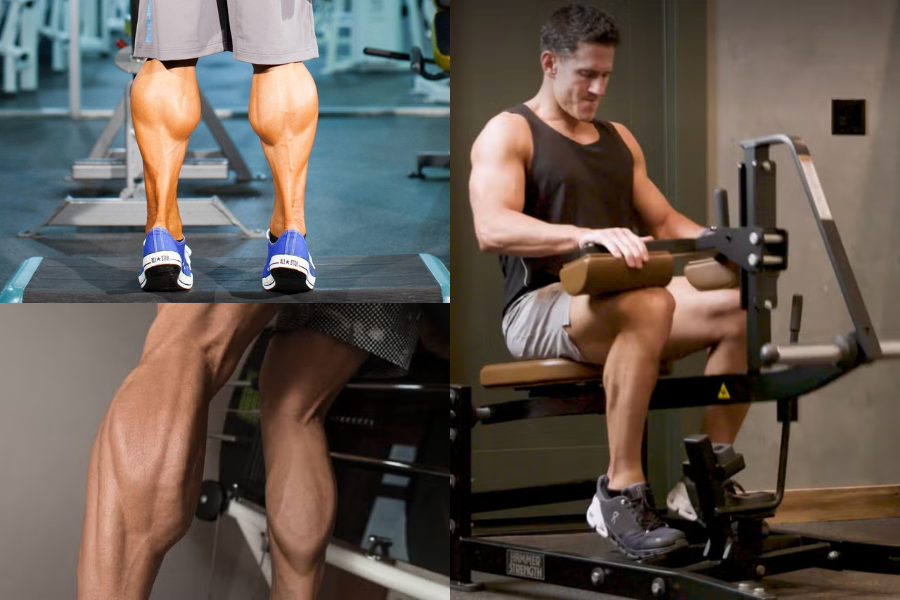
Standing calf raises mainly train two key muscles on the back of your lower leg: the gastrocnemius and the soleus.
The gastrocnemius is the rounded, more visible part of your upper calf. It has two heads and is heavily involved in explosive movements like running, jumping, and sprinting, which is why well developed calves are so important for sports like basketball, volleyball, and netball. The soleus sits underneath and helps with everyday activities like walking and standing, while still contributing to power output.
Together, these muscles flex your ankle, help you push off the ground, and stabilize every step. When you strengthen them with standing calf raises, you support:
- Muscle size and definition in the calves
- Ankle strength and stability
- Achilles tendon resilience
- Better balance and coordination
- More efficient running and jumping
Verywell Fit explains that the gastrocnemius and soleus are essential for ankle flexion and extension and that training them regularly improves both performance and injury resistance.
How to perform a basic standing calf raise
You can do standing calf raises anywhere with just your body weight. Start here before adding more advanced variations.
- Stand tall with your feet hip width apart. Keep your toes pointing forward.
- Place your fingertips lightly on a wall, chair, or countertop if you need help with balance.
- Press through the balls of your feet and lift your heels as high as you comfortably can. Aim to rise straight up, not forward.
- At the top, pause and squeeze your calves hard. Think about flexing the muscle, not just bouncing off the floor.
- Lower your heels slowly back to the starting position. Let your calves stretch at the bottom for a brief moment.
- Repeat for your planned number of repetitions.
Keep your core engaged and your back straight. The goal is a smooth, controlled motion. Verywell Fit notes that slow, controlled reps and proper posture help you get more out of the exercise while keeping your lower back and ankles safe.
How many reps and sets to start with
If you are a beginner, it is smart to start small and build up:
- 2 to 3 sets of 10 to 15 repetitions on a flat, stable surface
- Rest 30 to 60 seconds between sets
- Perform this 2 to 3 times per week
Research based guidance suggests that beginners can even go up to 20 or 30 reps per set with bodyweight, as long as the movement remains controlled and you do not lose form.
Technique cues for maximum muscle growth
If your calves have been stubborn in the past, technique is probably the missing link. A few small adjustments can dramatically change how much tension your calves experience.
Use a full range of motion
MuscularStrength highlights that a deep stretch at the bottom and a hard contraction at the top are crucial for calf growth. To do this:
- Start from a flat foot position or even slightly lower if you are on a step.
- Lower your heels until you feel a gentle stretch in your calves, without pain.
- Pause for a second, then drive up as high as possible onto your toes.
- At the top, hold for one to two seconds while squeezing your calves.
You can place your forefoot on a sturdy step or weight plates to create a deficit. This increases range of motion and gives you a deeper stretch at the bottom of each rep.
Focus on the squeeze, not the numbers
Instead of racing through repetitions, treat each one like a mini set on its own:
- Move up in about 1 to 2 seconds.
- Hold the top contraction briefly.
- Take 2 to 3 seconds to lower back down.
This slower tempo keeps your calves under tension longer and reduces cheating. It also improves your mind muscle connection, which MuscularStrength notes as key for calf growth when you consciously flex hard at the top of every repetition.
Load your forefoot evenly
Foot & Ankle Albury emphasizes the importance of keeping equal pressure across the forefoot, from your big toe joint through to your little toe joint. This keeps the movement balanced and avoids dumping all your weight into one side of your foot.
If you notice your toes clawing or curling, it often means your long toe flexors are trying to help out because your calves are undertrained. Let your toes stay relaxed, and if needed, perform calf raises with your toes hanging slightly over a step or plate. This reduces the ability of your toe flexors to assist and forces the calves to work harder.
Advanced standing calf raise variations
Once you can perform 3 sets of 20 controlled bodyweight reps, it is time to make the exercise more challenging.
Single leg standing calf raises
Single leg raises double the load on each calf and challenge your balance more intensely.
- Stand on one leg, holding onto a stable surface if needed.
- Perform the same rise, squeeze, and slow lower pattern.
- Keep your knee straight to bias the gastrocnemius, as Foot & Ankle Albury notes that a straight knee position is best for targeting this muscle.
Start with 2 to 3 sets of 8 to 12 reps per leg.
Deficit standing calf raises
Use a step, block, or stack of plates so your heels can drop slightly below your toes.
- Place the balls of your feet on the edge.
- Lower your heels until you feel a strong but safe stretch.
- Push up explosively, then control the descent.
A deficit variation increases both stretch and range of motion, which supports more muscle growth if you maintain control at all points in the movement.
Weighted standing calf raises
You can add resistance with dumbbells, a barbell on your back, or a standing calf raise machine.
- Choose a weight that allows 8 to 15 high quality reps.
- Maintain full range of motion with a hard contraction on top and a pause in the stretch at the bottom.
- Do not let the weight pull you forward or encourage you to bounce.
MuscularStrength suggests this rep range and tempo to build muscular size without compromising form.
For growth, pick a weight that feels challenging by rep 8 but still allows you to complete up to 15 controlled reps without cheating. When you can easily exceed 15, increase the load slightly.
Safety tips and common mistakes to avoid
Standing calf raises are simple, but a few common errors can limit progress or increase injury risk.
Do not rush or bounce
Bouncing at the bottom or using momentum reduces muscle tension and strains your Achilles tendon and ankle joints. Verywell Fit points out that moving too quickly and skipping a proper warm up is one of the main mistakes people make with calf raises.
Give each repetition a clear start and finish. If you find yourself bouncing, decrease the weight or reps and slow down.
Keep your posture aligned
Leaning too far forward takes the emphasis off your calves and can stress your lower back. Stand tall, keep your ribs stacked over your hips, and engage your core. A slight bend in your knees is fine, but avoid turning the movement into a squat.
If you are recovering from a lower body injury, pay extra attention to slow, controlled motion and good alignment. Verywell Fit notes that proper posture and a controlled pace are especially important in rehab situations to avoid setbacks.
Watch your knee position
For standing calf raises, you want your knees mostly straight to emphasize the gastrocnemius. Foot & Ankle Albury notes that bending the knee too much shifts work away from this muscle and is often a sign of weakness or compensation.
Save bent knee variations like seated calf raises for when you specifically want to target the soleus.
How often to train standing calf raises
Calves tend to recover quickly and can handle a bit more frequency than some larger muscle groups. If your goal is muscle growth and strength, a realistic starting plan might look like this:
- 2 to 3 sessions per week
- 3 to 4 total working sets per session
- 8 to 20 reps per set depending on the variation and load
For more bodybuilding focused progress, MuscularStrength suggests training standing calf raises around three times per week along with seated variations, using 3 sets of 10 to 12 reps and emphasizing full stretch and contraction every time.
You can place calf work at the end of lower body days or add short focused sessions on days when you train upper body.
Benefits beyond muscle size
Even if aesthetics are your main goal, the strength you build with standing calf raises benefits you in several practical ways.
Better ankle stability and fewer sprains
Strong calves support the muscles, tendons, and ligaments around your ankle joint. This boosts stability and helps protect against common injuries like ankle sprains and strains, particularly in sports that involve sudden direction changes, jumping, or running.
Improved running and jumping
By increasing the power you can produce during the toe off phase of your stride, standing calf raises can improve running efficiency, pace, and stride length. They also contribute to higher and more controlled jumps and landings, which is useful whether you play sports or just want to feel more athletic in daily life.
Balance, coordination, and long term mobility
Because they challenge you to lift and lower your body weight while keeping your center of gravity stable, standing calf raises train balance and coordination too. Verywell Fit notes that these neuromuscular adaptations are especially helpful for reducing age related mobility loss and lowering fall risk in older adults.
Putting it all together
To get the most from standing calf raises:
- Start with bodyweight on a flat surface and master slow, controlled reps.
- Use a full range of motion with a deep, brief stretch at the bottom and a hard squeeze at the top.
- Progress to single leg, deficit, and weighted variations as you get stronger.
- Keep your posture tall, knees mostly straight, and pressure evenly spread across your forefoot.
- Train calves consistently 2 to 3 times per week and treat them like any other muscle group you want to grow.
Try adding 3 sets of standing calf raises to your next workout. Focus on perfect form and strong contractions rather than rushing the reps. Over the next few weeks, you will feel the difference every time you walk, climb stairs, or pick up the pace on a run.
About the Author