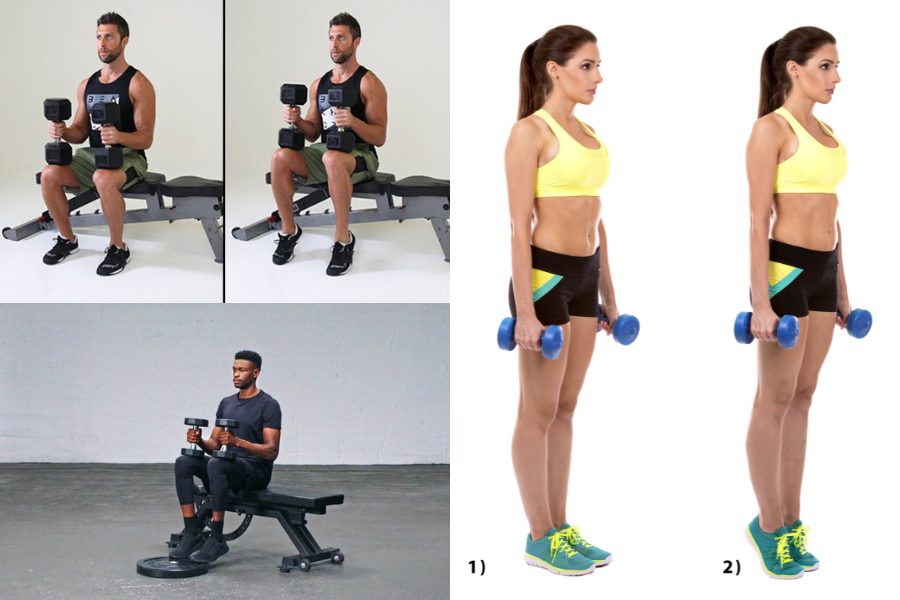
A sturdy lower body is built from the ground up, and your calves play a bigger role than you might think. With a few smart dumbbell calf exercises, you can strengthen your lower legs, protect your ankles and Achilles, and add power to every step, jump, and sprint.
Below, you will find simple, effective calf moves you can do with just a pair of dumbbells, plus form tips to keep your joints happy and your muscles working hard.
Why dumbbell calf exercises matter
Your calves are made of two main muscles: the gastrocnemius, the visible, rounded part at the back of your lower leg, and the soleus, which sits underneath and helps with stability and endurance. Together they control how you walk, run, jump, and land.
When you strengthen these muscles with dumbbell calf exercises, you:
- Improve balance and ankle stability
- Help protect your Achilles tendon and lower legs from injury, as noted by Edward R. Laskowski, M.D. at the Mayo Clinic
- Add power to movements like sprinting, cutting, and jumping
- Support better posture and everyday activities like climbing stairs
You do not need machines or a gym membership to build stronger calves. A couple of dumbbells and a small step or weight plate are enough to get started.
How to do a basic dumbbell calf raise
If you only added one move to your routine, let it be the classic standing dumbbell calf raise. Nicole L. Campbell from Mayo Clinic describes this exercise as standing with a dumbbell in each hand, feet shoulder width apart, then rising up onto your toes and slowly lowering back down while feeling tension in the back of your lower legs.
Here is how to perform it with solid form.
Step-by-step standing dumbbell calf raise
- Stand tall with your feet hip to shoulder width apart. Hold a dumbbell in each hand at your sides, palms facing your body.
- Keep your back straight and your knees gently locked but not hyperextended.
- Shift your weight into the balls of your feet and slowly rise up onto your toes as high as you comfortably can. Think about pushing your toes down into the floor rather than lifting your heels.
- Pause at the top for 1 to 2 seconds and squeeze your calves. This short hold increases muscle activation and helps overcome the natural stretch reflex.
- Lower your heels back down in a slow, controlled motion until they lightly touch the floor.
- Repeat for 12 to 15 repetitions.
Mayo Clinic suggests that one set of 12 to 15 reps is enough for most people to effectively strengthen the calf muscles, as long as you move in a smooth and controlled way and keep your knees straight throughout.
If you struggle with balance, lightly hold on to a chair, wall, or pole with one hand. Focus on control rather than speed. Rushing through the movement reduces the work your calves are doing and increases the chance that other muscles will take over.
Dialing in your form and foot position
Good form turns a simple exercise into a targeted one. Dumbbell calf raises are easy to cheat on without realizing it, so a few small cues go a long way.
Key form tips
Try to keep these points in mind on every rep:
- Keep your back straight and your chest gently lifted. Avoid leaning forward or arching your lower back.
- Keep both knees straight but soft. If you bend your knees, you shift more work to the soleus and away from the gastrocnemius.
- Move slowly in both directions. Imagine a count of 2 seconds up, 1 to 2 second hold at the top, and 2 to 3 seconds down.
- Think about pushing the balls of your feet into the floor. This helps you avoid using your hips or thighs to “help” the weight up, a common compensation pattern highlighted by strength experts like Jared Meacham, PhD, CSCS.
Adjusting your toes to target different areas
Changing toe position slightly can shift emphasis to different heads of the gastrocnemius:
- Toes straight ahead for overall calf development
- Toes slightly inward to target the outer, or lateral, head
- Toes slightly outward to target the inner, or medial, head
You can cycle through different positions over your sets or over different workouts to build a more balanced shape and strength through your calves.
Standing dumbbell calf raise variations
Once you feel confident with the basic version, you can progress with small tweaks that challenge your muscles more without complicating the setup.
Elevated standing dumbbell calf raise
Standing on an elevated surface increases your range of motion so you get a deeper stretch at the bottom and a stronger contraction at the top.
To try it:
- Place the balls of your feet on a sturdy step, low box, or weight plate, with your heels hanging off the edge.
- Hold dumbbells at your sides, stand tall, and keep your core engaged.
- Let your heels drop slightly below the step to feel a stretch, then press through the balls of your feet to rise onto your toes.
- Pause at the top, then lower again under control.
This version demands more balance and ankle stability, which further challenges your calf muscles.
Single-leg standing dumbbell calf raise
Unilateral, or single-leg, work helps correct strength imbalances between sides and prevents your stronger leg from doing more of the work.
To perform it:
- Stand near a wall or hold a chair for balance.
- Hold a dumbbell in the hand on the same side as the working leg.
- Lift the opposite foot slightly off the floor so all your weight is on one leg.
- Rise onto the ball of your standing foot, pause, and lower slowly.
Start with fewer reps on each leg and build up as your strength and balance improve.
Seated dumbbell calf raise to target the soleus
While standing calf raises emphasize the gastrocnemius, bending your knee “turns off” some of its contribution and shifts more of the work to the soleus, the deeper muscle that helps with endurance and stability. Trainers and researchers note that seated, bent leg calf raises are especially useful when you want to build this support muscle.
Here is how to set up a simple seated version at home:
- Sit on a sturdy chair or bench with your knees bent at roughly 90 degrees.
- Place your feet about hip width apart, with the balls of your feet on a low step, weight plate, or folded mat so your heels can drop slightly.
- Rest a dumbbell horizontally across your thighs, close to your knees. Hold it in place with your hands.
- Keeping your back straight and your core lightly engaged, lift your heels by pressing the balls of your feet into the platform.
- Pause at the top for 1 to 2 seconds, then slowly lower your heels until you feel a stretch.
Because the soleus is more endurance focused, you can use a mix of rep ranges. Strength coaches like Shawn Arent, PhD, suggest alternating heavier sets of 8 to 12 reps with lighter, high rep sets of 15 to 20 to encourage both strength and endurance in this muscle.
Compound dumbbell moves that hit your calves
You do not have to train calves in isolation every time. A few compound exercises train your calves along with other lower body muscles so you get more done in less time.
Dumbbell goblet squat with calf raise
This variation combines a squat with a calf raise in one smooth sequence, working your quadriceps, hamstrings, glutes, gastrocnemius, and soleus.
- Hold a single dumbbell vertically at your chest, cupping the top end with both hands.
- Stand with your feet slightly wider than hip width, toes turned out a bit if that feels more natural.
- Sit your hips back and bend your knees to lower into a squat, keeping your chest lifted and weight evenly distributed through your feet.
- Drive through your heels to stand back up.
- As you reach the top, shift your weight into the balls of your feet and rise onto your toes for a calf raise.
- Lower your heels and move into your next squat.
This move challenges your balance and coordination, and it can improve lower body power, which is helpful for running, jumping, and sports that demand quick changes of direction.
Dumbbell jumping squat
Adding a jump at the end of a squat increases how hard your calves have to work to push off the ground and control your landing.
To keep it safe:
- Start with light dumbbells or even just bodyweight.
- Lower into a squat with your chest up and knees tracking over your toes.
- Explosively push through your feet to jump off the floor.
- Land softly on the balls of your feet, immediately bending your knees and hips to absorb the impact.
This plyometric style exercise increases calf activation beyond regular squats and boosts power and calorie burn, but it is more demanding on your joints. If you have knee or ankle issues, focus on non jumping variations and controlled tempo instead.
Sample dumbbell calf workout plan
To see progress, consistency matters more than anything else. Most people do well training calves 2 to 3 times per week, with at least one rest day between sessions.
Here is a simple structure you can follow and adjust as needed.
Aim for controlled movements, full range of motion, and a weight that feels challenging in the last 3 reps of each set while still allowing good form.
Workout A, standing emphasis
- Standing dumbbell calf raise on flat ground, 3 sets of 12 to 15 reps
- Elevated standing dumbbell calf raise, 2 sets of 10 to 12 reps
- Single leg standing calf raise, 2 sets of 8 to 10 reps per leg
Workout B, seated and compound focus
- Seated dumbbell calf raise, 3 sets of 15 to 20 reps with a moderate weight
- Goblet squat with calf raise, 3 sets of 10 to 12 reps
- Optional, if joints feel good, dumbbell jumping squats, 2 sets of 6 to 8 reps
Alternate these workouts across the week, for example, Workout A on Monday, Workout B on Thursday. As you get stronger, gradually increase the dumbbell weight or add a rep or two per set to continue challenging your muscles.
Safety tips and when to ease off
Calves can feel tight or sore when you first start focusing on them, but sharp pain or a sudden pulling sensation is a sign to stop. Protecting your joints and tendons will keep you training consistently.
A few quick guidelines:
- Warm up first with a few minutes of walking or light cycling and ankle circles.
- Stretch your calves gently after your workout, holding each stretch for 20 to 30 seconds.
- If you have a history of Achilles problems or ankle injuries, talk with a medical professional or physical therapist before adding heavy calf work.
- Stop the set if your form breaks down. Quality reps are more effective than grinding through extra sloppy ones.
By paying attention to how each rep feels and progressing at your own pace, you can use dumbbell calf exercises to build stronger, more resilient lower legs that support everything else you do in the gym and in daily life.
Try adding one or two of these moves to your next workout and notice how much more stable and powerful your legs feel over time.
About the Author