Understand your rear delts
If you want strong, balanced shoulders, you cannot skip rear delt exercises. Your rear deltoids, or posterior deltoids, sit at the back of your shoulders and are responsible for pulling your arms behind you and helping with external rotation. They work with your traps, rhomboids, and upper back muscles to pull your shoulders back and help you stand tall.
When your rear delts are undertrained compared to your front and side delts, you are more likely to:
- Round your shoulders and slouch
- Feel nagging shoulder discomfort during pressing work
- Miss out on that wide, “3D” shoulder look
Training your rear delts with intention supports posture, shoulder health, and upper body strength, especially for rowing and pulling movements as noted in guides from Gymshark and Healthline.
Key benefits of rear delt exercises
Rear delt exercises do more than just add muscle to the back of your shoulders. They play a big role in how your upper body feels and performs.
Improve posture and reduce slouching
Your rear delts work alongside your upper back to pull your shoulders back into alignment. Strengthening them can help:
- Counteract hours of sitting and screen time
- Reduce the forward shoulder rounding associated with kyphosis
- Ease tension in your neck and upper traps
Regular rear delt work makes it easier to maintain an upright posture without constantly reminding yourself to “sit up straight.”
Boost shoulder stability and reduce injury risk
The posterior deltoid helps stabilize your shoulder joint during pressing and overhead movements. Strong rear delts can:
- Support bench presses, overhead presses, and lateral raises
- Reduce the strain on smaller shoulder stabilizers
- Lower the risk of impingements and overuse injuries
By building the back of your shoulders, you give your joints a more balanced support system.
Build upper back strength and performance
Many rear delt exercises also hit your rhomboids and trapezius. That added upper back strength can carry over to:
- Heavier and more stable rows and pull ups
- Better performance in compound lifts like deadlifts and barbell rows
- Improved endurance in activities that require pulling strength
Rear delt isolation movements, especially reverse flies on machines, have been shown with EMG data to create higher activation than common pulling exercises like lat pulldowns and seated rows. That makes them a smart shortcut for building this specific area efficiently.
Enhance shoulder aesthetics
Rear delts make up roughly one third of your shoulder muscle. When you prioritize them, you:
- Create a fuller, “3D” shoulder cap from every angle
- Improve symmetry between front, side, and rear delts
- Accentuate that wide, inverted triangle upper body
Many bodybuilders have historically neglected rear delts, but dedicating more of your shoulder session to them can transform how your upper body looks.
Types of rear delt exercises
You have more options than you might think. Rear delt exercises can be grouped into three helpful categories.
Direct isolation exercises
These moves are designed to specifically target the rear deltoids with minimal help from other muscles:
- Seated rear delt fly
- Bent over rear delt fly
- Lying rear delt flyes
- Band pull aparts
- Face pulls
- Rear delt machine work
Isolation is ideal if you really want to feel and grow the rear delts or bring them up to match your front and side delts.
Indirect compound exercises
These exercises focus on your broader back muscles but still involve the rear delts:
- Three point dumbbell rows
- Chest supported rows
- Barbell or dumbbell rows
- High pulls or upright rows
- Close grip lat pulldown
- Assisted pull ups
When you are short on time, indirect rear delt exercises help you hit multiple muscles in one move.
Bodyweight and minimal equipment options
You do not need a full gym to train your rear delts effectively. With just your bodyweight or simple tools, you can use:
- Inverted rows
- Y raises on suspension trainers or rings
- Band pull aparts and banded face pulls
- Side lying external rotations with a light dumbbell and towel
These are especially useful for home workouts, outdoor training, or travel.
Best rear delt isolation exercises
Below are some of the most effective rear delt exercises you can plug into your current shoulder or upper body routine.
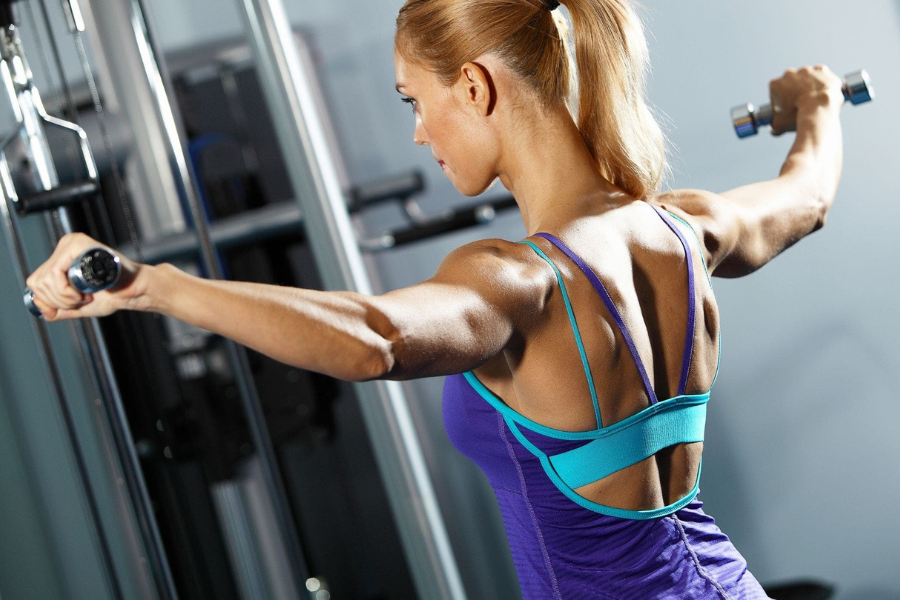
Seated dumbbell rear delt fly
This classic rear delt exercise targets the posterior delts with minimal momentum when you do it correctly.
How to do it
- Sit on the edge of a bench with your feet flat on the floor.
- Hold a light to moderate dumbbell in each hand, arms hanging down, palms facing each other.
- Hinge forward at your hips while keeping a flat back and your chest close to your thighs.
- With a slight bend in your elbows, raise your arms out to the sides until they are in line with your shoulders.
- Pause at the top and squeeze your shoulder blades together.
- Lower the weights slowly back to the starting position.
Form tips
- Keep your shoulders pulled down and back to avoid shrugging toward your ears.
- Maintain a neutral spine, do not round your lower back as fatigue sets in.
- Keep wrists straight rather than bent upward to avoid pain and keep tension on your shoulders.
Bent over rear delt fly
The bent over version mimics the seated fly but increases the stability demand through your core and hips.
How to do it
- Stand with feet hip width apart and hold dumbbells at your sides.
- Hinge at your hips until your torso is almost parallel to the floor.
- Let your arms hang straight down with palms facing each other.
- With a slight bend in your elbows, raise the dumbbells out to your sides.
- Pause briefly, then lower them under control.
If holding the bent position feels tough on your lower back, you can rest your chest on an incline bench for extra support.
Lying rear delt flyes
Lying face down helps you lock in the right angle and reduces the temptation to use momentum.
How to do it
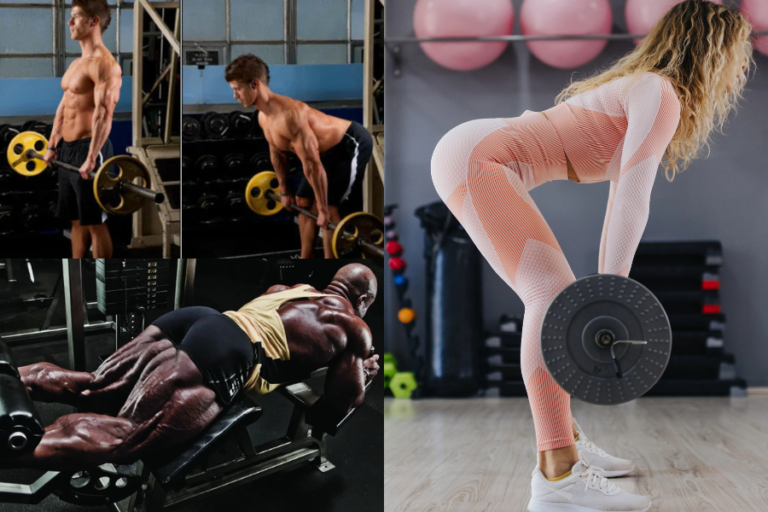
- Set an incline bench to a low or medium angle, then lie chest down with a dumbbell in each hand.
- Let your arms hang toward the floor, palms facing each other.
- Raise the dumbbells out to your sides in an arc until they are level with your body.
- Pause and squeeze your upper back and rear delts.
- Lower with control.
This move is great for mechanical drop sets, where you switch to a slightly easier version as you fatigue, for example going from lying flyes to bent over flyes then to rows.
Band pull aparts
Band pull aparts are simple, joint friendly, and easy to fit into a warm up, finisher, or quick desk break.
How to do it
- Hold a resistance band at shoulder height with your arms straight in front of you, hands slightly wider than shoulder width.
- Keeping your arms mostly straight with a small elbow bend, pull the band apart by moving your hands out to your sides.
- Focus on squeezing your shoulder blades together.
- Return to the start under control.
You can vary the angle, such as pulling at chest height or slightly overhead, to hit different fibers around your rear delts and upper back.
Face pulls
Face pulls are often highlighted as a top tier rear delt exercise and for good reason. They train the rear delts along with the rotator cuff and upper back.
How to do it
- Attach a rope handle to a cable at about face or upper chest height.
- Grab the rope with both hands, palms facing inward, and step back until there is tension on the cable.
- Pull the rope toward your face, driving your elbows out and back.
- At the end of the movement, your hands should be near your temples and your knuckles pointing behind you.
- Squeeze your shoulder blades together, then return slowly.
Keep your ribs down and avoid leaning back too far. You want the work in your shoulders, not your lower back.
Rear delt machine (reverse pec deck)
If your gym has a rear delt or reverse pec deck machine, it can be one of the most efficient ways to isolate the posterior delts.
How to do it
- Adjust the seat so the handles are at about shoulder height.
- Sit facing the machine, chest against the pad, and grab the handles with your arms slightly bent.
- Keeping your torso still, open your arms back in a wide arc until your hands are in line with your shoulders.
- Pause and squeeze, then return under control.
Because this machine guides your path, it reduces the need for balance and allows you to focus on feeling the rear delt contraction. EMG data shows this style of movement gives high activation of the rear delts compared with many general back exercises.
Effective compound rear delt exercises
Compound exercises let you train your rear delts along with other big upper back muscles.
Three point dumbbell row
This variation offers great rear delt activation when you use a slightly wider elbow path.
How to do it
- Place one hand and the same side knee on a bench for support.
- Hold a dumbbell in your other hand with your arm straight down.
- Row the weight up toward your hip or lower ribs, keeping your elbow out slightly from your body.
- Squeeze your shoulder blade at the top, then lower with control.
Pulling more out to the side instead of straight toward your waist will involve your rear delts more.
Chest supported row
Chest supported rows reduce lower back strain and help you focus on the muscles doing the work.
How to do it
- Lie chest down on an incline bench with a dumbbell in each hand.
- Start with your arms hanging straight down.
- Row the weights up by pulling your elbows toward the ceiling, keeping them a bit flared.
- Pause at the top and then lower slowly.
Adjust your elbow angle to shift focus. A slightly wider elbow path brings your rear delts into play more than a very tucked row.
Barbell or dumbbell row
Traditional rows can significantly train your rear delts when you pay attention to form.
Form pointers
- Hinge at your hips and keep your back flat.
- Pull with your elbows, not your hands, and think about driving them back and out.
- Pause briefly at the top of each rep rather than swinging the weight.
Rows also build your lats, rhomboids, and traps, making them time efficient for full upper back development.
Inverted row
The inverted row is a bodyweight staple that hits the rear delts, lats, and mid back.
How to do it
- Set a bar or suspension trainer handles at waist height.
- Lie under the bar and grab it with an overhand grip, hands slightly wider than shoulder width.
- Straighten your body in a plank from head to heels.
- Pull your chest toward the bar, focusing on leading with your chest and pulling your shoulder blades together.
- Lower yourself under control.
You can make it easier by bending your knees, or harder by elevating your feet or wearing a weight vest.
Bodyweight and minimal equipment rear delt moves
You can still challenge your rear delts with very little equipment.
Suspension Y raises
If you have a suspension trainer or gymnastics rings, Y raises are a great shoulder and upper back builder.
How to do it
- Hold the handles with arms extended in front of you and lean back so your body is at an angle.
- Keeping your arms mostly straight, raise them overhead into a Y shape.
- Think about lifting with your rear delts and mid back, not shrugging your traps.
- Lower slowly and repeat.
Adjust your angle to control difficulty. The more horizontal your body, the harder the exercise.
Side lying external rotation
This simple move targets your rear delts and key rotator cuff muscles like the infraspinatus and teres minor.
How to do it
- Lie on your side with your bottom arm supporting your head.
- Bend the top elbow to 90 degrees, resting your upper arm on your side with a light dumbbell in hand.
- Place a small towel between your elbow and torso to keep your arm positioned well.
- Rotate your arm outward, lifting the dumbbell away from your stomach while keeping your elbow pinned to your side.
- Pause, then lower slowly.
Keep the weight light and focus on smooth, controlled reps to protect your shoulder.
Common rear delt exercise mistakes
Rear delt training is only effective if your form is solid. A few common errors can limit results or cause discomfort.
Shrugging your shoulders
If you raise your shoulders toward your ears during rear delt flys or rows, your upper traps take over and your neck can get sore.
Fix it
- Before each set, pull your shoulders down and back.
- Imagine tucking your shoulder blades into your back pockets.
- If you feel your neck more than your shoulders, reduce the weight and slow the movement.
Rounding your lower back
As you fatigue, it is easy to round through your spine in bent over positions, which can stress your lower back.
Fix it
- Hinge from your hips with a slight bend in your knees.
- Keep your chest up and your spine long.
- If maintaining position is tough, try seated or chest supported versions.
Hyperextending your wrists
Bending your wrists backward during flys or rows can lead to wrist pain and reduce shoulder engagement.
Fix it
- Keep your wrists neutral, in line with your forearms.
- Imagine your hands are hooks and your elbows are doing the work.
- Use lighter weights until you can maintain good alignment.
Locking or over bending your elbows
Completely straight elbows can strain the joint in fly movements, while very bent elbows can turn a fly into a row and shift emphasis away from the rear delts.
Fix it
- Aim for a slight elbow bend of about 10 to 15 degrees.
- Keep that bend consistent throughout the movement.
- Think of moving your arms in a wide arc, not curling the weights.
Rushing your reps
Using momentum instead of muscle tension makes rear delt exercises far less effective.
Fix it
- Use a controlled tempo: about 1 to 2 seconds up, brief pause, then 2 to 3 seconds down.
- Focus on feeling the squeeze between your shoulder blades at the top.
- If you cannot control the weight, choose a lighter load.
Sample rear delt focused workout
You can blend these rear delt exercises into a balanced routine. Here is an example you can add to an upper body or shoulder day.
Warm up, 5 to 8 minutes
- Light cardio, such as brisk walking or cycling
- Dynamic shoulder circles and arm swings
- 2 sets of 15 to 20 band pull aparts
Main workout
- Face pulls
- 3 sets of 12 to 15 reps
- Focus on slow, controlled pulls and a full squeeze
- Rear delt machine or seated rear delt fly
- 3 sets of 10 to 14 reps
- Pause for 1 second at the top of each rep
- Three point dumbbell row
- 3 sets of 8 to 12 reps per arm
- Use a moderate weight and keep your elbow slightly flared
- Inverted rows or chest supported rows
- 3 sets of 8 to 12 reps
Optional finisher, mechanical drop set
Perform these three moves back to back with minimal rest:
- Lying rear delt flyes, 8 to 12 reps
- Bent over rear delt fly, 8 to 12 reps
- Dumbbell rows, 10 to 15 reps
Rest for 60 to 90 seconds and repeat for 3 to 4 total rounds.
How often to train your rear delts
To make solid progress and support posture and shoulder strength, aim to train your rear delts at least twice per week. You can:
- Add 2 to 3 rear delt exercises at the end of your shoulder day
- Include them in upper body or pull sessions
- Sprinkle lighter sets such as band pull aparts or face pulls into your warm ups
For many people, dedicating around half of their shoulder specific work to rear delt isolation is enough to bring them up to match the front and side delts over time.
Putting it all together
Rear delt exercises give you more than just better looking shoulders. They help you stand taller, press stronger, and protect your shoulders from everyday strain.
To get started, you might:
- Pick one isolation move, like face pulls or seated rear delt flys
- Pick one compound move, like rows or inverted rows
- Train them twice a week with controlled form and a focus on feeling the muscles work
As your technique improves, you can experiment with machines, bands, bodyweight variations, and mechanical drop sets to keep challenging your rear delts. With a little consistency and attention to detail, your shoulders will feel stronger, more stable, and more balanced from every angle.
About the Author