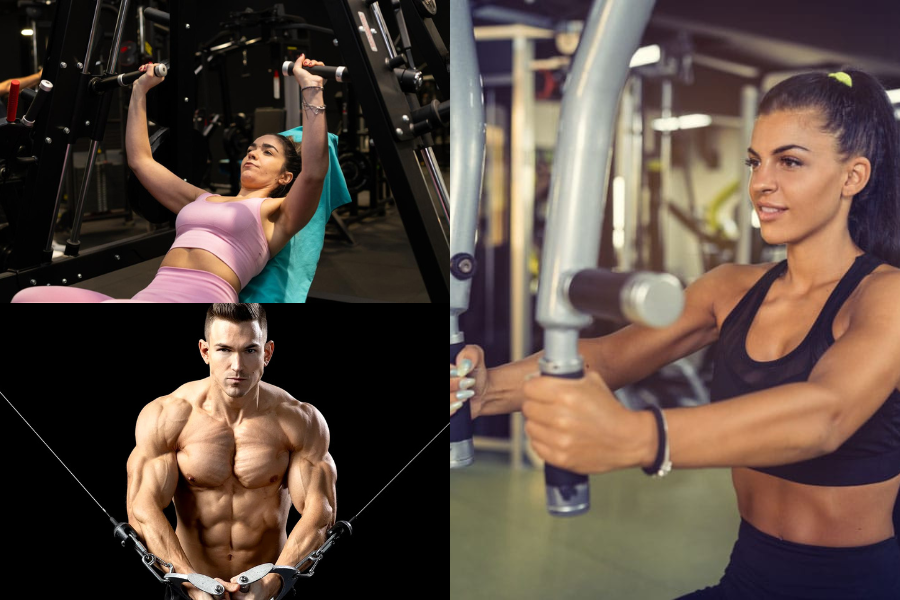
Why a 30 minute chest workout works
If your schedule is packed, a well planned 30 minute chest workout can still change your strength, posture, and overall fitness. You do not need marathon gym sessions to build your chest. With focused exercises, smart intensity, and short rest periods, you can target the pectoralis major and pectoralis minor efficiently and still have time for everything else in your day.
A structured half hour session that includes a warm up, 20 minutes of focused work, and a short cool down can improve upper body strength and appearance while supporting shoulder stability and everyday movements, as highlighted in the Nonstop Fitness plan and other strength training guides.
Understand your chest muscles
Before you load the bar, it helps to know what you are training. Your 30 minute chest workout should focus on two main muscles.
Pectoralis major
The pectoralis major is the large, fan shaped muscle you typically think of as your chest. It is responsible for:
- Flexing your arm, such as when you push a door open
- Bringing your arm across your body
- Rotating your arm inward
Pressing movements like bench press, incline press, and push ups load this muscle heavily and are key for both strength and muscle growth.
Pectoralis minor
The pectoralis minor sits underneath the pec major and attaches to your shoulder blade. It helps with:
- Moving and stabilizing the scapula
- Assisting with reaching and pushing motions
Exercises that keep your shoulders controlled and your shoulder blades moving smoothly, such as push ups and dips, involve this muscle and support overall shoulder health.
Structure your 30 minute chest workout
You can think of your 30 minute chest workout in three simple blocks that you repeat every session.
- 5 minute warm up
- 20 minute main chest workout
- 5 minute cool down and stretch
This layout, used by Nonstop Fitness and similar programs, helps you build muscle while limiting injury risk and improving recovery.
5 minute warm up
Your warm up should raise your heart rate, loosen your shoulders, and prepare your chest to work.
You can try:
- 1 to 2 minutes of brisk walking or light cycling
- Gentle arm circles and shoulder rolls
- 2 sets of easy incline push ups or wall push ups
The goal is to feel warm and mobile, not tired.
20 minute main workout
Within the main block, you can use different formats based on your goals, experience level, and available equipment. Research based plans often use:
- Supersets and trisets, pairing exercises back to back with little rest
- Rest pause methods, which break one heavy set into smaller “mini sets”
- Moderate loads for 8 to 15 reps, taken close to technical failure
These approaches let you pack high quality work into a short window.
5 minute cool down
A short cool down makes your 30 minute chest workout feel complete and supports recovery.
Focus on:
- Light walking or gentle movement for 2 to 3 minutes
- Chest and shoulder stretching for 20 to 30 seconds per stretch
- Deep breathing to bring your heart rate back down
Simple doorway chest stretches and upper back mobility work fit well here.
Choose the right training style
You can build an effective 30 minute chest workout with very different tools. Below are three common structures pulled from proven programs in the research.
Option 1: Supersets for busy lifters
Supersets and trisets pair multiple exercises with almost no rest. Guides from Primeval Labs emphasize that this style lets you get more muscle building work done in less time, while still training other areas in your session.
A typical layout:
- Start with a heavier incline dumbbell press at a low incline (no higher than 30 degrees) to emphasize the upper chest
- Follow with another pressing or fly movement
- Keep rest periods short to maintain intensity and a strong “pump”
Supersets can work well if you are comfortable with free weights and want to maximize efficiency.
Option 2: Rest pause for strength and size
Rest pause training, as described in the “Rest Pause Rampage” style workouts, divides one big set into mini sets with brief rests. This method lets you use moderately heavy weights and still reach a high total rep count in about 30 minutes.
For example:
- Pick a bench press variation and a rep goal, such as 35 reps
- Perform as many good reps as you can, rest briefly, then repeat
- Continue until you reach the total number of reps
This style is especially useful if you want to push intensity and focus on strength without adding extra sets or longer workouts.
Option 3: Bodyweight only at home
You can still run a powerful 30 minute chest workout without equipment. Bodyweight routines like the “Bodyweight Bonanza” triset include:
- Dips
- Feet elevated push ups
- Standard push ups
You perform each exercise for a set time, for example 40 seconds of quality reps, followed by 20 seconds rest, cycling through for 2 to 3 rounds. Slow, controlled descents with strong, explosive presses make the work challenging even without weights.
Sample 30 minute chest workout plans
Below is a simple way to turn these ideas into practical sessions. Always adjust loads, reps, and sets to your experience level.
Gym based strength and muscle plan
This structure uses a mix of primary, secondary, and tertiary exercises similar to guidance summarized by Barbell Medicine.
Warm up, 5 minutes
- Light cardio and dynamic shoulder movements
- 1 to 2 light sets of your first press with very easy weight
Main workout, about 20 minutes
- Bench press or incline press
- 3 sets of 4 to 6 reps
- Rest 60 to 90 seconds between sets
- Focus on controlled lowering and powerful but stable pressing
- Dumbbell bench press
- 3 sets of 8 to 10 reps
- Rest about 60 seconds
- Choose a weight that challenges you while keeping your shoulders comfortable
- Push ups
- 3 sets close to failure
- Keep your body straight and your hands under or slightly outside your shoulders
This blend of heavy pressing and moderate rep work fits within 30 minutes and targets both strength and hypertrophy.
Minimal equipment hypertrophy plan
If your goal is muscle size within a 30 minute chest workout, guidelines in the research suggest 3 to 4 exercises in the 8 to 15 rep range with short rest.
Warm up, 5 minutes
As above.
Main workout, about 20 minutes
- Incline dumbbell press, low incline
- 3 sets of 8 to 12 reps
- Flat dumbbell press
- 3 sets of 10 to 12 reps
- Dumbbell chest fly
- 2 to 3 sets of 12 to 15 reps
- Emphasize stretch and smooth motion
- Push ups
- 2 sets to near failure
Keep rest periods around 45 to 60 seconds. This modest rest, combined with steady effort, creates strong muscle tension in a short timeframe.
Home based bodyweight circuit
You can adapt the bodyweight triset approach into a simple routine.
Warm up, 5 minutes
- March in place or take a quick walk
- Gentle arm swings and shoulder circles
Main workout, about 20 minutes
Set a timer and move through the following:
- Dips on parallel bars or sturdy surfaces
- Feet elevated push ups
- Standard push ups
Perform:
- 40 seconds of work on each exercise
- 20 seconds of rest between exercises
- 2 to 3 total cycles, resting 1 to 2 minutes between cycles
Use slow, controlled lowering and strong pressing. If any movement is too hard, reduce the range of motion or switch to an easier push up variation.
Focus on form and safety
Every effective 30 minute chest workout has one thing in common, solid technique. The research from Nonstop Fitness repeatedly stresses:
- Prioritizing proper form over heavier loads
- Stopping if you feel sharp or unusual pain
- Seeking professional guidance when you are unsure about your technique
This applies especially to heavy bench pressing and deep dips, where your shoulders are under load. Proper setup, a controlled bar path, and a stable shoulder position help you stay healthy enough to train consistently.
Track your progress over time
Short workouts can produce big changes if you track and adjust over time. The programs in the research recommend a few simple measures:
- Weight used on each main exercise
- Number of reps completed at a given load
- How close you are to technical failure on your last set
- Visual changes in muscle tone and size
- Circumference measurements around your chest and upper arms
You can keep notes in your phone after each 30 minute chest workout. Look for steady increases in either weight, reps, or overall control. Spread out small improvements over months and you will see clear gains.
Match training to your recovery
Even when sessions are short, recovery still matters. Training stress from volume and intensity needs to match what your body can handle. Research based templates remind you to consider:
- Your sleep and overall stress levels
- How often you train your chest each week
- Joint soreness or nagging fatigue
If you are a beginner, including one main chest exercise per full body workout or one focused chest session per week can be enough to see progress. As you advance, you can add a second chest focused day, as some two day programs in the research do, while monitoring how you feel between sessions.
How a 30 minute chest workout changes your fitness game
When you keep your chest training tight and focused, you gain more than just muscle.
You can expect:
- Stronger pushes in everyday life, from moving furniture to playing sports
- Better posture, when chest work is paired with balanced back training
- A clear plan that fits into a busy day, so you are less likely to skip training
- Measurable progress in strength, endurance, and muscle definition over time
Your 30 minute chest workout does not need to be complicated. Pick a structure that fits your equipment and experience level, focus on solid form, and track simple improvements each week. With that approach, a half hour at a time is enough to move your entire fitness routine in a better direction.
About the Author