Understand why this combo works
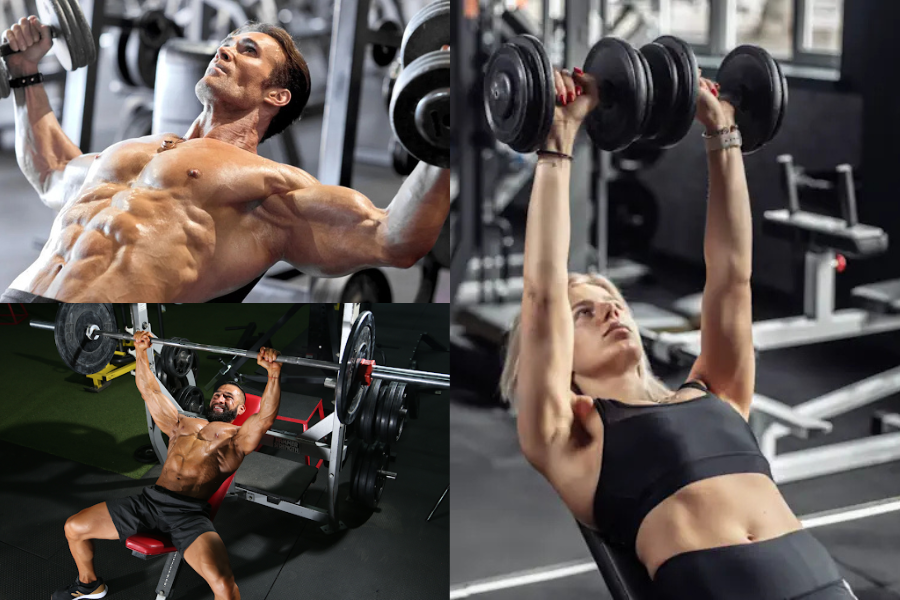
When you plan chest exercises for shoulders and triceps, you are training three muscle groups that naturally work together on every push. Any time you bench press, do push ups, or press weight overhead, your chest, shoulders, and triceps share the workload.
You can use this to your advantage. Combining chest, shoulders, and triceps in one workout:
- Saves time by training all your pushing muscles in a single session
- Builds better upper body coordination and pressing strength
- Makes programming easier if you follow a push pull legs routine
Most lifters get the best results when they:
- Train chest first
- Then hit shoulders
- Finish with triceps
Your chest is the largest muscle group, your shoulders are already involved in chest work, and your triceps assist both. This order lets you push heavier loads on big lifts and still finish with focused work for smaller muscles.
Plan your chest shoulder triceps workout
A simple way to structure an effective session is to look at:
- Exercise type
- Sets and reps
- Order and rest
Choose the right exercise types
Include a mix of:
- Compound presses for strength and mass
- Joint friendly variations if your shoulders are sensitive
- Isolation moves to finish the triceps
You will see examples of each in the sections below.
Match volume to your goals
Research suggests about 12 to 20 weekly sets per muscle group is effective for muscle growth. A single push session with around 29 total sets, such as:
- 10 sets for chest
- 10 sets for shoulders
- 9 sets for triceps
can fit well into a routine where you train these muscles at least twice per week and still recover between workouts.
Use smart sequencing
For most people, this order works well:
- Heavy chest press (flat or incline)
- Secondary chest or shoulder press
- Shoulder isolation and stability work
- Triceps extensions and pushdowns
Start heavier and more complex when you are fresh. Move to lighter and more controlled exercises as fatigue sets in.
Chest exercises that support shoulders and triceps
Chest work should be the foundation of your push day. The right chest exercises for shoulders and triceps will train all three areas, without beating up your joints.
Flat barbell bench press
The flat barbell bench press is a classic compound move that hits your chest, front delts, and triceps at the same time. It is one of the best exercises to build overall upper body strength and size.
How to use it
- Warm up with lighter sets
- Work up to 3 to 4 heavier sets in a pyramid style, for example:
- Set 1: 10 reps, light
- Set 2: 8 reps, a bit heavier
- Set 3: 6 reps, heavy
- Set 4: 4 to 6 reps, heaviest set you can handle with good form
A pyramid progression lets you handle heavier weights when you are fresh, which is ideal for strength gains early in the workout.
Form cues
- Keep your feet flat and your upper back tight
- Lower the bar under control to mid chest
- Press up while driving your feet into the floor
- Do not bounce the bar off your chest
Incline dumbbell press
Incline dumbbell presses shift more work to your upper chest. Many lifters also find dumbbells friendlier on the shoulders than a straight bar.
Why it helps your shoulders and triceps
- Strengthens the upper chest and front delts through a large range of motion
- Forces each arm to work on its own, which helps fix imbalances
- Keeps your triceps involved as secondary movers
How to program it
- 3 to 4 sets of 8 to 12 reps
- Use a moderate incline so you feel it mostly in your chest, not only your shoulders
- Focus on a smooth path and full control
Neutral grip dumbbell bench press
If standard benching irritates your shoulders, the neutral grip dumbbell bench press is worth a try. Keeping your palms facing each other reduces how far your upper arm moves out to the side, which can reduce shoulder stress and strain, especially if you tend to get impingement issues.
Benefits
- Puts your shoulders in a safer, more comfortable position
- Still trains chest, shoulders, and triceps together
- Encourages good back setting and controlled lowering
Basic setup
- Lie on a flat bench with dumbbells held at your sides, palms facing each other
- Keep your shoulder blades pulled back and down into the bench
- Lower the weights slowly to the sides of your chest
- Press up while keeping the elbows tucked closer to the torso
Dumbbell floor press
The dumbbell floor press is a great chest pressing exercise if you want to limit stress on your shoulders.
Because your upper arms stop at the floor, your shoulders do not move into deep horizontal abduction. This shorter range of motion means less strain while still challenging your chest and triceps. The floor also gives your upper back clear feedback about staying tight and stable.
How to do it
- Lie on the floor with knees bent and feet flat
- Hold dumbbells over your chest with a neutral or slight angle grip
- Lower until your upper arms gently touch the floor
- Pause briefly, then press back up
Use 3 to 4 sets of 8 to 12 controlled reps.
Use controlled tempo for safer gains
Adding a deliberate tempo to your presses can help you grow without relying on very heavy weights. For example:
- Lower the weight over 3 seconds
- Pause 1 second at the bottom
- Press up and briefly pause at lockout
A controlled tempo like this promotes stability, improves mind muscle connection, and can reduce shoulder stress while still stimulating muscle growth.
Shoulder exercises that protect pressing strength
After chest, you can shift focus to direct shoulder work. You already used your front delts on presses, so now you want to build stability and balanced strength around the joint.
Landmine press
The landmine press is a modified overhead pressing exercise where you press a bar that is anchored at one end. The angled path makes it more shoulder friendly than a straight overhead press for many people.
Why it works so well
- Trains upper chest, shoulders, and triceps together
- Encourages strong scapular movement and stability
- Helpful if you are getting back to pressing after shoulder pain or time off
How to use it
- Stand or half kneel facing the landmine
- Hold the bar near your shoulder with both hands or one hand
- Press the bar up and slightly forward in a smooth arc
- Lower under control and repeat
Aim for 3 to 4 sets of 8 to 12 reps.
Reverse grip push up
The reverse grip push up is an underused bodyweight option that can boost posterior shoulder strength and stability. By turning your hands out so your fingers point to the sides or slightly backward, you create more external rotation at the shoulder joint.
This position can:
- Strengthen the back of the shoulders
- Promote better shoulder and mid back positioning during other pressing movements
- Help keep your shoulders healthier over time
How to perform it
- Start in a plank with your hands slightly behind your shoulders
- Turn your hands so your fingers point out to the sides or a bit back
- Keep your ribs down and body straight
- Lower your chest between your hands, then press back up
Begin with small ranges of motion and low reps if this variation is new to you, and stop if you feel any discomfort.
Triceps exercises that finish the job
Your triceps assist every press you do. Ending your workout with focused triceps work fills in the gaps and builds lockout strength.
Lying barbell triceps extension
Lying triceps extensions with a barbell are a classic choice that can target all three heads of the triceps when performed correctly.
How to do it
- Lie on a flat bench and hold the bar with a narrow to medium grip
- Start with arms straight above your shoulders
- Bend at the elbows and lower the bar toward your forehead or slightly behind it
- Keep your upper arms mostly fixed, then extend back to the start position
Use 3 to 4 sets of 8 to 12 reps with a weight you can control.
Overhead cable triceps extension
Overhead cable extensions put more emphasis on the long head of your triceps and keep constant tension on the muscle throughout the movement.
Benefits
- Strong stretch at the bottom
- Smooth resistance from the cable
- Great as a mid or late workout triceps move
Setup tips
- Stand facing away from the cable machine
- Hold a rope or straight bar behind your head with elbows up
- Extend your arms until they are almost straight
- Lower under control and repeat
Tricep pushdowns for the finishing pump
High rep tricep pushdowns are a good isolation finisher. You can use a straight bar, V bar, or rope attachment.
Guidelines
- 3 to 4 sets of 15 to 25 reps
- Keep your elbows close to your sides
- Lock in your upper arms and move only at the elbows
- Squeeze hard at the bottom of each rep
The goal here is not maximum weight. You are chasing well controlled reps and a strong pump in the back of your arms.
Sample chest shoulder triceps workout
Here is how you can put these chest exercises for shoulders and triceps into a single, effective session. Adjust sets and loads based on your experience.
Warm up
- 5 to 10 minutes of light cardio
- Dynamic arm circles and band pull aparts
- 2 to 3 light warm up sets of your first press
Main workout
- Flat barbell bench press
- 4 sets in a pyramid style, 10, 8, 6, 4 to 6 reps
- Incline dumbbell press or neutral grip dumbbell bench press
- 3 to 4 sets of 8 to 12 reps
- Dumbbell floor press
- 3 sets of 8 to 12 reps with controlled tempo
- Landmine press
- 3 sets of 8 to 12 reps
- Reverse grip push ups
- 2 to 3 sets to near technical fatigue, keeping form tight
- Lying barbell triceps extension
- 3 sets of 8 to 12 reps
- Overhead cable triceps extension
- 2 to 3 sets of 10 to 15 reps
- Tricep pushdowns
- 2 to 3 sets of 15 to 25 reps, short rest between sets
Rest 60 to 120 seconds between heavier compound sets and 30 to 60 seconds between isolation or high rep sets.
Frequency, recovery, and progression
If you train chest, shoulders, and triceps together, you can often work these muscles at least twice per week without excessive fatigue. Because they rest when you train your back, biceps, and legs, they have time to recover between push days.
Studies show that the chest and triceps recover similarly about 48 hours after bench press work, which means you can train them again roughly every third day if the volume and intensity are managed well.
To keep progressing:
- Add small amounts of weight when you can perform all target reps with solid form
- Increase total reps across sets before adding load
- Keep your weekly sets within a range you can recover from, often around 12 to 20 sets per muscle group
Pay attention to your joints. If your shoulders or elbows feel irritated, lean more on joint friendly variations like the neutral grip dumbbell bench press, dumbbell floor press, and landmine press, and adjust volume or intensity as needed.
Bringing it all together
When you program chest exercises for shoulders and triceps with some intention, you turn a simple push workout into a complete upper body builder. Start with heavy, well controlled presses, add joint friendly variations that support shoulder health, then finish with focused triceps work.
You do not need to change everything at once. Try swapping in one new exercise, such as the landmine press or dumbbell floor press, during your next push session. Notice how your shoulders feel and how your chest and triceps respond, then build from there.
About the Author