Understand what a good machine back workout looks like
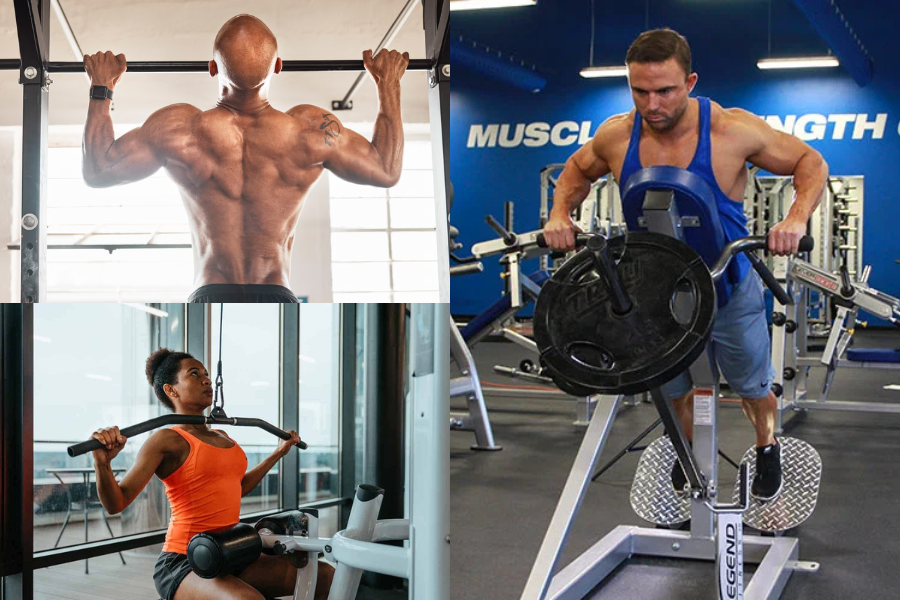
If you rely on a machine back workout to build strength, it helps to know what you are really training. Most back machines are designed to target the latissimus dorsi (lats), traps, rhomboids, rear delts, and the muscles along your spine. When you use them with solid form, you can build a stronger upper body and better posture while keeping joint stress lower than with heavy free weights.
Weight machines provide a fixed path and stability, which is helpful if you are a beginner or coming back from a break. They let you focus on feeling your back muscles work instead of worrying about balancing dumbbells and barbells. At the same time, that fixed path can be a drawback if you unknowingly repeat the same mistakes every session.
Below are common errors that can quietly limit your progress, plus simple adjustments to make your machine back workout safer and more effective.
Mistake 1: Letting your arms do all the work
On many back machines, it is easy to feel the burn in your biceps long before your lats or upper back kick in. This usually means you are pulling mostly with your arms.
Why this is a problem
- Your back muscles never get a full stretch and squeeze
- Your biceps fatigue early, so you cut sets short
- You miss out on the main benefit of a back-focused workout
Research notes that improper form on machines often leads to overusing secondary muscles like the biceps and rear delts instead of the latissimus dorsi. That is why mind-muscle connection and controlled movement matter in back training, especially with machines (Muscle & Fitness, 2025).
How to fix it
On lat pulldowns, seated rows, and high row machines:
- Think “pull with your elbows,” not your hands
- Keep your wrists neutral, do not curl the bar as if it were a biceps curl
- At the start of each rep, set your shoulders down and slightly back, then pull
If you finish a set and feel almost all of it in your biceps, lighten the weight and slow down your tempo on the next set. Focus on your back muscles moving your arms, not the other way around.
Mistake 2: Using momentum and rocking your torso
You have probably seen it: someone leaning far back on every lat pulldown or jerking their body into each seated row. This turns what should be a back exercise into a full-body tug.
Why this is a problem
- Momentum robs your back of tension
- Your lower back and hips take on extra stress
- You lose control and increase the risk of tweaks or strains
Guidelines for lat pulldowns in 2024 highlight that rocking the torso is one of the most common errors and that it reduces both effectiveness and safety.
How to fix it
On any machine where you pull a bar or handle toward you:
- Sit tall with your feet flat and your core gently braced
- Keep your torso nearly still, no big swings or thrusts
- Use a smooth up-and-down tempo instead of jerking the weight
- Stop the set as soon as you need to “heave” the weight to finish a rep
A simple cue: if someone watched you from the side, your upper body should look almost like a statue while only your arms and shoulder blades move.
Mistake 3: Ignoring full range of motion
Machines can make it tempting to shorten each rep, especially when the stack feels heavy. This is common on seated cable rows and high row machines, where the last few centimeters of stretch or squeeze get skipped.
Why this is a problem
- You get less muscle activation where it counts
- You miss the stretch that helps your lats grow
- Your joints do not move through their natural ranges
Research on lat pulldowns notes that allowing the arms to fully extend at the top and pulling to around chin level, not too high or too low, makes the movement both safer and more effective.
How to fix it
For pulldowns and rows:
- At the start: let your arms straighten without shrugging your shoulders to your ears
- At the finish: pull until your elbows pass the line of your torso or the bar reaches about chest or chin level, depending on the exercise
- Do not slam the weight stack, control it all the way back
If you notice the stack never touches or never fully rises, your range is probably too short. Reduce the load until you can move it through the machine’s full intended range.
Mistake 4: Relying only on machines long term
Machines are excellent for learning form and building confidence. However, over time, relying solely on a machine back workout can hold you back.
Why this is a problem
- Machines limit your range of motion to one fixed path
- Stabilizing muscles work less, so overall athleticism can lag
- Your nervous system does not get the same level of challenge compared with free weights
Coaches and publications such as Muscle & Fitness point out that while machines are comfortable and safe, free weights generally provide superior total muscle stimulation. They also engage more stabilizing muscles and help develop your nervous system along with strength.
How to fix it
You do not need to abandon machines, but you can balance your routine:
- Start your workout with 1 to 2 machine exercises to groove the movement
- Add in free weight moves like dumbbell rows, barbell rows, or pull-ups as you gain experience
- Over several months, gradually let free weight and bodyweight work take a bigger role, while keeping machines for targeted work or burnout sets
If you are a beginner, think of machines as your starting point, not your forever plan.
Mistake 5: Neglecting your lower back
Most people think “back day” means lats and upper back only. The lower back, specifically the spinal erectors, often gets left out.
Why this is a problem
- Your posture suffers, even if your upper back is strong
- You are more vulnerable when lifting heavy objects or doing sports
- Imbalances between upper and lower back can contribute to discomfort
Guides from 2025 emphasize that while standing exercises stimulate the lower back a bit, you still need some focused isolation work if you want those muscles to be strong and resilient.
How to fix it
Include at least one dedicated lower back or posterior chain exercise:
- Back extension machine: bend slowly at the waist, then straighten with control, do not bounce
- Seated back extension machine: strengthens lower back, glutes, and hamstrings while you are supported
- Smith machine inverted row: trains the back without heavily loading the lower spine, helpful if you are cautious about your back
The key is slow, controlled movement, not heavy, aggressive reps.
Mistake 6: Using the wrong grip or bar path on pulldowns
Lat pulldowns are a staple in many machine back workouts, but small form errors accumulate. Pulling the bar behind your neck, gripping far too wide, or yanking the bar below your chest can all cause problems.
Why this is a problem
Guidance for lat pulldowns in 2024 highlights several issues:
- Behind-the-neck pulldowns can stress your shoulders and neck
- Overly wide grips reduce range of motion and lat engagement
- Pulling the bar too low or using momentum increases strain on your spine
How to fix it
On the standard cable lat pulldown:
- Sit upright with feet flat and chest lightly lifted
- Take an overhand grip slightly wider than shoulder width
- Pull the bar down to roughly chin or upper chest level in front of you
- Stop if you find yourself leaning way back just to finish the rep
You can also vary your grip to target different muscles:
- Wide overhand grip: more emphasis on outer lats and upper back
- Narrow or underhand grip: more involvement from biceps and mid-back
- Single-arm reverse grip pulldowns: helpful for correcting left-right imbalances, since unilateral training can be more effective for balancing strength
No matter the variation, prioritize comfort and control over chasing the heaviest possible weight.
Mistake 7: Letting grip strength cut sets short
Your back muscles are large and powerful. Your hands and forearms are not always able to keep up. On heavy machine rows or pulldowns, this mismatch can show up quickly.
Why this is a problem
- Your grip fails before your back is fully worked
- You cannot take advantage of the machine’s stability and load capacity
- Progress stalls because your back rarely reaches true fatigue
Training guides point out that grip strength is often the limiting factor in both machine and free weight back exercises, which means many lifters are not fully stimulating their back muscles.
How to fix it
You can approach this from two angles:
- Improve your grip
- Add simple grip work once or twice a week, such as farmer carries or static holds on a bar
- Use controlled, not rushed, reps on rows and pulldowns so your grip learns to handle longer time under tension
- Use sensible support
- If your goal is back hypertrophy, consider straps on your heaviest sets so your grip does not end those sets early
- Keep at least some sets without straps to maintain grip development over time
Watch for the pattern: if your forearms are always burning out first, it is time to address grip directly.
Mistake 8: Poor machine setup and body positioning
Even great technique will suffer if the machine is not adjusted to your body. Seat height, pad position, and handle distance all influence which muscles you feel.
Why this is a problem
- Misaligned joints add stress to shoulders, elbows, and spine
- Target muscles do not line up with the machine’s resistance path
- You confuse “awkward” with “effective,” which can discourage you from consistent training
For example, on the chest-supported row machine, the pad is there to stabilize your torso so your upper back muscles can work harder. If the pad is too low or too high, you lose that advantage.
How to fix it
Before each new machine:
- Take a moment to adjust the seat so handles line up roughly with your mid to upper chest
- Make sure pads (thigh, chest, or back) are snug but not crushing you
- Do a light “test set” and notice where you feel the work, then tweak the setup if needed
If something feels off in your joints instead of your muscles, stop and adjust rather than forcing your way through the set.
Mistake 9: Choosing machines that aggravate back pain
If you already have back pain or a history of injury, machines can be a mixed bag. They can provide support, but their fixed paths may not match what feels natural to your body.
Why this is a problem
- Fixed positions can trap you in a pattern that causes discomfort
- You cannot easily shift your stance or bar path to find a pain-free groove
- Over time, this can reinforce painful movement rather than reduce it
Discussions on equipment for back pain note that machines often put you in a strict path and add weight only in that position. For some people, like those using the Smith machine for squats or presses, this lack of flexibility can make back symptoms worse instead of better.
How to fix it
If you deal with back pain:
- Favor machines that support your chest or have adjustable angles, such as chest-supported rows or back extension machines
- Be cautious with Smith machine squats and overhead presses if they feel forced or uncomfortable
- Where possible, use free weights that let you make small position changes to find a pain-free path
- If you are in rehab or post-surgery, talk with your physical therapist or trainer about which machines are appropriate for you
Pain should not be a regular part of your machine back workout. Mild muscle fatigue is normal. Sharp or lingering joint or spine pain is a sign to change what you are doing.
Mistake 10: Skipping progression and variety
Even if your form is solid, doing the same weight and the same exercises for months at a time will eventually stall your progress.
Why this is a problem
- Your muscles adapt and stop responding
- You feel bored and less motivated to train
- Strength and size gains slow down or stop altogether
Structured routines for intermediate and advanced lifters often use more variety. For example, intermediate back plans might pair cable pullover and high row machines with free weight and bodyweight exercises in 3 sets of 10 to 12 reps with short rests. Advanced programs may add more exercises, 3 to 4 sets, and techniques such as drop sets for higher intensity.
How to fix it
You can keep things simple while still progressing:
- Track your weights and try to add small increases every 1 to 2 weeks
- Rotate grips and angles on cable machines: wide grip pulldown, narrow grip row, straight arm pulldown
- Occasionally adjust your rep ranges, for example 8 to 10 reps for strength and 12 to 15 reps for muscle endurance
- Every couple of months, swap one or two machine exercises for different movements that hit the same muscle groups from a new angle
This does not mean changing your workout every day. A little planned variation goes a long way.
Putting it all together for a smarter machine back workout
You do not need a perfect program to make progress. You just need to avoid the biggest pitfalls and be consistent. Here is a quick guide you can run through mentally before your next machine back workout.
Quick checklist for your next session
- Are you pulling with your elbows and back, not just your biceps?
- Is your torso mostly still, without rocking or swinging?
- Are you using a full, controlled range of motion on each rep?
- Have you set up the seat and pads to fit your body, not the last person’s?
- Did you include at least one exercise that challenges your lower back or posterior chain safely?
- Are you mixing in some free weight or bodyweight work over time, instead of only machines?
- Does your grip last the whole set, or do you need to build it up or use support?
- Are you slowly increasing weight, reps, or exercise difficulty over the weeks?
If you can answer yes to most of these, you are already ahead of what many people are doing on back day.
Start by cleaning up one or two of your biggest mistakes, then adjust from there. Small form changes on your favorite machines can add up to a much stronger, more capable back over the next few months.
About the Author