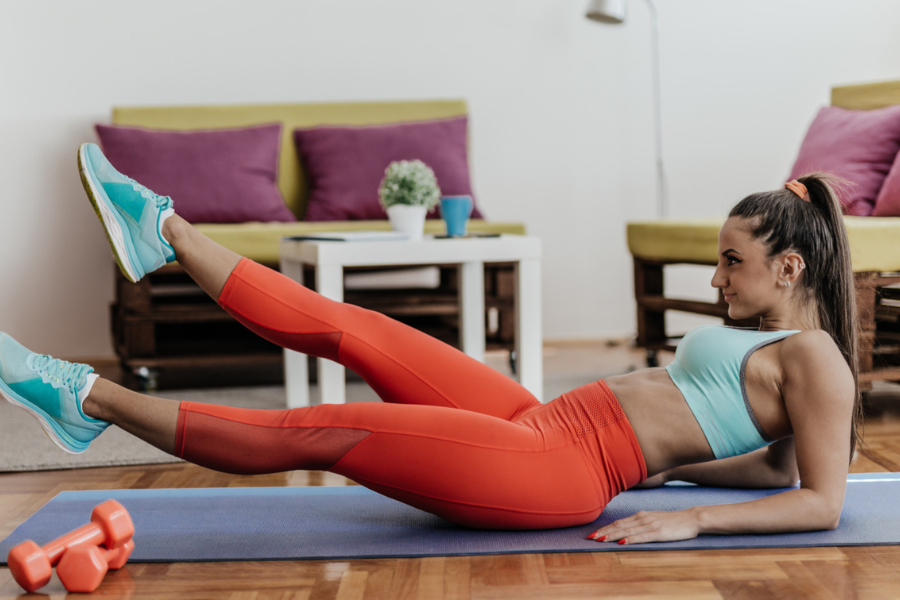
Why a no equipment ab workout works
A no equipment ab workout lets you train your core anywhere, anytime, using just your body weight. You avoid bulky gadgets, save money, and still build strength in the muscles that support your spine, improve your posture, and power almost every movement you make.
You also do not need long, complicated routines. Short targeted sessions, from 5 to 30 minutes, can effectively challenge your abs and overall core when you focus on control and form rather than speed or fancy tools. Many personal trainers recommend simple, beginner friendly sequences that fit easily into your week and can be adjusted as you get stronger.
In this guide, you will learn:
- The benefits of bodyweight ab training at home
- Fundamental core exercises and how to do them
- A 10 minute and a 15 minute no equipment ab workout you can follow
- How often to train your abs and how to progress safely
Understand your core muscles
Before you start, it helps to know what you are actually training. Your “core” is more than just the visible six pack.
Main muscles involved
-
Rectus abdominis
The front “six pack” muscle that flexes your spine, like when you do a crunch or sit up. -
Obliques
Run along the sides of your torso. They help you rotate and bend, and stabilize your spine when you twist or reach. -
Transverse abdominis
A deep belt like muscle that wraps around your trunk. It acts like a natural weight belt, supporting your spine and bracing your midsection. -
Lower back and hip stabilizers
Muscles around your spine and hips, often trained with moves like Bird Dog and planks, keep you upright and help prevent back pain.
A smart no equipment ab workout works all of these, not just the front of your abs.
Benefits of training abs without equipment
You might see expensive gadgets promised on infomercials, but you can build strong, functional abs without any of them.
Why you can skip ab gadgets
- Bodyweight moves like planks, leg raises, and hollow holds challenge your core effectively without anything more than a mat.
- Simple tools like an exercise ball, resistance bands, or dumbbells are more versatile and can train your entire body, not just your abs.
- Many ab specific machines are marketed with unrealistic claims that they will “melt belly fat” without effort, but visible abs mainly come from reducing overall body fat through nutrition and full body training, not from a single device.
Focus your time on proven movements and good technique so you get more out of each workout.
Everyday benefits of a stronger core
Regular core work pays off in more ways than just appearance:
- Better posture and less slouching
- Greater stability when you walk, run, or lift
- Support for your lower back since the core helps take pressure off the spine
- Easier daily tasks such as carrying groceries or lifting kids
- A stronger base for sports and other workouts
Because your core is involved in almost everything you do, even a short no equipment ab workout can improve how your body feels and moves.
Core training basics at home
To make your at home ab sessions effective and safe, set a few basic rules.
Focus on form over reps
Proper technique is more important than the number of repetitions you do. When you rush or use momentum, your hip flexors or neck often take over, and your abs work less than you think.
Keep these cues in mind:
- Move slowly and with control.
- Exhale as you exert effort, such as when you crunch or lift your legs.
- Keep your lower back supported. If you feel sharp pain or your back arches off the floor, adjust or modify the exercise.
- Stop a set when you can no longer maintain good form, even if the timer is not finished.
Plan your training frequency
Your abs are muscles like any other. They get stronger when you challenge them and then give them time to recover.
- Aim to train your abs 2 to 3 times per week.
- In each session, pick 2 to 5 exercises that target different parts of your core.
- You can add short core work after a cardio or strength session, or pair a quick circuit with a walk on days when you are short on time.
You can also add a little extra core work through posture and stabilization moves, since your core recovers faster than larger muscle groups.
Key bodyweight ab exercises to know
The exercises below appear in many no equipment ab workout plans because they are simple, effective, and easy to modify. Use a mat or carpeted surface for comfort.
Plank
Planks engage your entire core as stabilizers. You hold your body in a straight line while your abs work to prevent your hips from sagging or lifting.
How to do it
- Start on your forearms and toes, elbows under shoulders.
- Step your feet back, forming a straight line from head to heels.
- Brace your core as if someone is about to poke your stomach.
- Keep your hips level and avoid letting your lower back dip.
- Hold for time while breathing steadily.
Beginner modification
- Drop your knees to the floor, keeping a straight line from shoulders through knees.
- Or place your hands on a sturdy elevated surface instead of the floor.
Side plank
Side planks target your obliques and deep stabilizers that support your spine.
How to do it
- Lie on your side with legs extended, elbow under shoulder.
- Stack your feet or place one in front of the other for balance.
- Lift your hips off the floor so your body forms a straight line from head to feet.
- Hold, keeping your hips lifted and your chest open.
- Repeat on the other side.
Beginner modification
- Drop your bottom knee to the floor so your lower leg is bent and your upper leg stays straight.
- You can also shorten the time you hold the position.
Dead bug
Dead bugs build core stability without straining your neck or lower back, which makes them great for beginners.
How to do it
- Lie on your back with arms extended toward the ceiling and knees bent at 90 degrees over your hips.
- Press your lower back gently into the floor by bracing your core.
- Slowly lower your right arm and left leg toward the floor while keeping your back flat.
- Return to the start and repeat on the other side.
- Move in a controlled, alternating pattern.
Beginner modification
- Hold the “starting” position isometrically instead of moving your arms and legs.
- Only lower your limbs part way if your back starts to arch.
Leg raise
Leg raises challenge your lower abs and require control to keep your pelvis stable.
How to do it
- Lie on your back with legs straight and hands at your sides or under your hips for support.
- Press your lower back into the floor.
- Keeping your legs as straight as you comfortably can, slowly lift them toward the ceiling.
- Lower them back down with control until they are just above the floor or as low as you can go without your back arching.
- Repeat for time.
Beginner modification
- Bend your knees slightly to reduce the load.
- Lower your legs only part way or rest your heels lightly on the floor between reps.
Hollow hold
Hollow holds are a tough isometric challenge that fire up your entire core.
How to do it
- Lie on your back with arms overhead and legs extended.
- Brace your core and press your lower back into the floor.
- Lift your shoulders and legs a few inches off the ground so your body forms a gentle “banana” shape.
- Hold while breathing steadily and keeping your lower back down.
- Lower gently when your form starts to fade.
Beginner modification
- Bend your knees and bring them closer to your chest.
- Reach your arms forward toward your knees instead of overhead.
- Hold for shorter intervals and build up over time.
Mountain climber twist
Mountain climbers add a conditioning element, and the twist variation brings in extra oblique work.
How to do it
- Start in a high plank position with hands under shoulders and body in a straight line.
- Bring your right knee toward your left elbow, then return to plank.
- Bring your left knee toward your right elbow, then return.
- Alternate sides at a steady pace while keeping your hips low and your core braced.
You can move slower for more control or speed up slightly if you want more of a cardio challenge while staying in good form.
Bicycle crunch
Bicycle crunches combine spinal flexion and rotation to train both your rectus abdominis and obliques.
How to do it
- Lie on your back with hands lightly behind your head, elbows wide.
- Lift your shoulders off the floor and bring your knees to about 90 degrees.
- Extend your right leg while twisting your torso so your right elbow moves toward your left knee.
- Switch sides, extending your left leg and bringing your left elbow toward your right knee.
- Continue alternating in a controlled, pedaling motion.
Avoid pulling on your neck and focus on initiating the twist from your torso.
Bird dog
Bird dog is a core stability move that also involves the lower back and hips, which helps support your spine.
How to do it
- Start on hands and knees, hands under shoulders and knees under hips.
- Brace your core and keep your spine neutral.
- Extend your right arm forward and left leg back, keeping your hips level.
- Hold briefly, then return to all fours.
- Switch sides and repeat.
Move slowly and imagine balancing a glass of water on your lower back so it stays steady.
10 minute no equipment ab workout
Use this quick circuit on busy days or add it to the end of your regular workout. You only need a mat and a timer.
How it works
- Perform each exercise for 30 seconds.
- Move to the next exercise with minimal rest.
- After one full circuit, rest 60 to 90 seconds.
- Repeat the circuit twice for about 10 minutes total.
Circuit
- Mountain climber twist
- Side plank with hip dips (right side)
- Side plank with hip dips (left side)
- Reverse crunch
- Plank up (from forearms to hands and back)
- Lying leg raises
- Bicycle crunch
- Inchworm push up
Several of these moves come from popular 10 minute core circuits that focus on building strength quickly without any tools, so you can tag them onto your day with little planning.
Tips for this workout
- Keep your movements controlled, especially on reverse crunches and leg raises, so momentum does not take over.
- With inchworm push ups, you get both core work and upper body strength as you walk your hands out to a plank, perform a push up, then walk your feet toward your hands and stand.
- Take extra breaths between exercises as needed, especially if you are new to training.
15 minute beginner friendly core routine
If you want an easy to follow no equipment ab workout that is especially beginner friendly, try this 15 minute routine inspired by personal trainer Kira Jones, CPT. It focuses on simple movements that teach you how to engage your core correctly.
How it works
- Perform each exercise for 30 to 45 seconds.
- Rest 15 to 30 seconds between exercises.
- Complete 2 to 3 rounds depending on your fitness level.
Exercises
- Dead bug
- Forearm plank
- Seated straight leg lift
- Side plank (right)
- Side plank (left)
- Toe touch crunches
This setup keeps things uncomplicated but effective. You will work your front abs, obliques, and deep stabilizers in a short, focused session.
Modifications for beginners
To keep the routine accessible:
- Do planks on your knees or on an elevated surface if holding a full plank is too intense.
- Try holding a static dead bug position with arms and legs up instead of lowering them if your back arches.
- During seated straight leg lifts, place your hands slightly behind your hips for extra support.
- In side planks, lower your bottom knee to the floor until you can comfortably hold a full side plank.
You can gradually extend your work time, reduce rest periods, or add one more round as your strength improves.
How to build your own ab circuit
Once you are comfortable with the exercises above, you can mix and match to design your own no equipment ab workout that suits your goals and schedule.
Step 1: Choose 4 to 6 moves
Include a balance of:
- Stability exercises: planks, side planks, bird dogs
- Dynamic exercises: crunch variations, leg raises, bicycle crunches
- Conditioning moves: mountain climbers, inchworm push ups
Step 2: Set work and rest times
A simple format to start with:
- 30 to 45 seconds of work per exercise
- 15 to 30 seconds of rest
- 2 to 4 total rounds
If you prefer counting reps, aim for 8 to 15 controlled reps per exercise instead of rushing to hit a large number.
Step 3: Adjust difficulty
To make the workout easier:
- Shorten your work intervals or reduce the total number of rounds.
- Use modifications, such as bent knees in leg raises or knees down in planks.
- Increase rest periods between exercises or circuits.
To make it harder:
- Increase your work time to 45 or 60 seconds.
- Add more challenging moves like hollow holds and long duration planks.
- Reduce rest or add an extra round.
Your goal is to finish feeling like you worked hard but could still do one more round with good form.
Common mistakes to avoid
Pay attention to how each movement feels so you protect your body and get the most out of your training.
Overusing gadgets instead of technique
Many infomercial products suggest you can get flat abs just by strapping on a device or performing a single repetitive motion, but they do not replace consistent training and overall healthy habits. If you want to invest in equipment, choose versatile items like dumbbells, resistance bands, or an exercise ball that can work your whole body, including your core.
Ignoring your lower back and deep core
Only doing crunches can leave your deep core and lower back under trained. This imbalance can contribute to discomfort and poor posture.
Include exercises like:
- Planks and side planks
- Bird dogs
- Dead bugs
- Hollow holds
These moves engage multiple muscle groups around your spine and help support your back by sharing the load.
Training abs every day without rest
You might feel tempted to do endless ab sessions, but more is not always better. Training your abs 2 to 3 times a week with focused, high quality work is enough for progress. Extra short core work can supplement this, but your muscles still need recovery time between intense sessions.
Expecting ab workouts alone to reveal a six pack
Ab exercises strengthen the muscles, but visible definition depends largely on body fat levels. Without lowering your overall body fat to around the lower teens or single digits percentage range (the exact number varies by sex and individual), your abs will stay hidden under a layer of fat, no matter how many crunches you do.
The most effective approach combines:
- Consistent resistance and core training
- Cardio or other activities you enjoy
- Nutrition that supports your goals
Core workouts remain important for strength and stability even if your main focus is not visible abs.
Putting it all together
A no equipment ab workout is one of the easiest ways to start building a stronger core at home. With just a mat and a little space, you can:
- Strengthen the muscles that support your spine and posture
- Improve stability for everyday activities and sports
- Fit short, effective sessions into a busy week
Begin with the 10 minute or 15 minute routines, focus on controlled movement, and adjust the difficulty as you get stronger. Over time, your core will not only feel more solid, your entire body will move and function better because of the foundation you have built.
About the Author