A basic calf routine can only take you so far. If you want stronger, more powerful, and more defined lower legs, you need advanced calf workouts that use smart loading, targeted exercises, and just enough intensity to spark change without overdoing it.
Below, you will learn how to train both major calf muscles effectively, how to use heavy strength work and plyometrics, and how to put everything into a practical weekly plan.
Understand your calf muscles
Before you add weight or jump training, it helps to know what you are actually training. Your calves are not just one muscle. They are a team of two primary players that respond differently to how you move.
The gastrocnemius is the larger, more visible muscle that sits at the back of your lower leg. It crosses both your knee and ankle, which means it works hardest when your knee is straight. It has more fast twitch fibers, so it is built for sprinting and jumping.
The soleus sits underneath the gastrocnemius. It only crosses the ankle and is most active when your knee is bent about 30 degrees. It has more slow twitch fibers, so it shines in endurance activities like long walks or long runs. Research has shown that bent knee calf exercises selectively activate the soleus and reduce gastrocnemius activity, which is why you need both straight and bent knee work to train the full calf complex effectively.
Since calf muscles contain many slow twitch fibers, they often respond well to higher volume, slightly lighter loads, and sets done with high effort. A 2020 study by Brad Schoenfeld and colleagues found that calf growth was similar regardless of how heavy the load was, as long as you pushed your sets with good effort. Effort and consistency matter more than chasing the heaviest possible weight.
Prepare with smart warm ups
Advanced calf workouts place a lot of stress through your ankles, Achilles tendons, and lower legs. A rushed warm up is one of the easiest ways to end up sore or sidelined.
Start with 3 to 5 minutes of light movement such as walking, easy cycling, or low impact cardio. The goal is simply to raise your body temperature and get blood flowing. Once you feel warmer, add dynamic warm up moves that specifically target the calves and surrounding muscles.
Dynamic exercises like leg swings and high knees are helpful because they move your ankles through a full range of motion while engaging your hips and core at the same time. This type of dynamic warm up has been shown to activate muscle groups and prepare them for more intense activity, which is especially important before heavy strength work or plyometrics.
Finish with a few easy calf raises using only your bodyweight. Move slowly, pause for a second at the top, and lower in control. Think of these as rehearsal reps, not a workout yet. By the time you reach your first working set, you should feel loose, stable, and mentally ready to focus.
Focus on form and safety
Good technique is what makes an advanced calf workout productive instead of risky. When you rush or overload too quickly, stress shifts away from the muscle and into your joints and connective tissue.
Keep your core engaged and your hips over your feet during all calf raises. This alignment keeps your knees from collapsing inward and helps you avoid putting unnecessary strain on your calves and hamstrings. New York Bone and Joint Specialists emphasize that proper form in standing and seated calf raises is essential to reduce injury risk by maintaining a stable trunk and aligned knees and hips.
Use a full, controlled range of motion. Drop your heels just below the level of your toes without bouncing, then rise as high as you can onto the balls of your feet. Pause briefly at the top to feel your calves contract, then lower under control. Fast, jerky rebounds rob the muscles of time under tension and shift load to your tendons.
Think long term with your progression. Increase volume and intensity slowly, and respect early signs of fatigue. If you notice lingering soreness, a feeling of heaviness when walking, or tightness around the Achilles that does not improve with light movement, take that as a cue to rest or reduce load. Overtraining your calves can be just as limiting as not training them at all.
Build maximal strength first
If you already do basic calf raises, you are ready to step up to advanced strength loading. For many people, especially runners, bodyweight alone is not enough to build maximal force in the calves. The American College of Sports Medicine recommends loads that limit you to roughly 8 to 12 repetitions per set for effective strength training, and this principle applies to your calves as well.
A simple way to individualize your advanced calf workouts is to find your 10 repetition maximum, or 10RM. This is the heaviest weight you can lift 10 times with solid form. For standing or single leg calf raises, you can use a smith machine, hold dumbbells, or wear a weighted backpack to safely test and train at this level.
Once you know your approximate 10RM, structure your strength focused calf sessions like this:
3 sets of 10 repetitions at your 10RM weight with 2 to 3 minutes rest between sets, performed 2 to 3 times per week on non running or non plyometric days.
As you get stronger, gradually increase the load by about 2 to 10 percent to keep the stimulus challenging. This kind of patient, progressive overload gives your muscles time to adapt, and it helps your tendons and joints keep up with your new strength.
Target both gastrocnemius and soleus
Advanced calf workouts are only truly advanced if you train both major calf muscles. You can do that by changing your knee position and your foot angle.
Straight knee calf exercises like standing calf raises or donkey calf raises emphasize the gastrocnemius. Bent knee exercises around 30 degrees of flexion, such as seated calf raises or specific moves like Calf Launchers, shift more work toward the soleus. Because soleus work is often more challenging than people expect, it is wise to start with lower weights and progress gradually.
You can also vary your foot position to target different parts of the gastrocnemius. A 2020 study by Nunes and colleagues found that pointing your feet outward focused more on the medial head, pointing them inward emphasized the lateral head, and keeping them straight worked both heads more evenly. Including all three positions across your weekly training can help you achieve more balanced development.
Aim to include both straight and bent knee variations in each week of training, and occasionally rotate foot positions in your sets. This combination ensures that no part of your calf complex is left behind.
Add plyometrics for power
Once your calves can handle heavier strength work with solid form, you can layer in plyometric training to boost power, speed, and spring. Plyometrics use the stretch shortening cycle, which is an eccentric pre stretch followed quickly by a concentric contraction, to train muscles to produce force rapidly.
A comprehensive review of plyometric training by Davies and colleagues highlighted several key points about lower body plyometrics and performance:
- Programs lasting 6 to 24 weeks with total volumes of roughly 400 to 1700 jumps improved vertical jump height.
- High intensity efforts at about 80 to 100 percent of your maximal effort were necessary to recruit fast twitch fibers, which are critical for power.
- Plyometric training on its own improved sprint speed over short distances of about 10 to 40 meters, although combining it with other methods did not always add extra sprint benefit.
For calves specifically, plyometric moves like Sprinter Calf Jumps, Dumbbell Calf Hops, jumping jacks, box jumps, and squat jumps can all be valuable. These exercises challenge your balance and coordination because you must control quick, dynamic movements, and over time they help strengthen the muscles and tendons around your knees and ankles.
If you are new to advanced calf plyometrics, ease in with very short bursts of 10 to 20 seconds at a time. Focus on landing softly, keeping your knees aligned with your toes, and avoiding hard, noisy landings. You can gradually increase the number of bouts or total jump count as your strength and confidence grow.
Try key advanced calf exercises
To bring everything together, here are some effective exercises you can plug into your advanced calf workouts. You do not need to do every variation in one day. Instead, pick a few that match your goals and equipment.
-
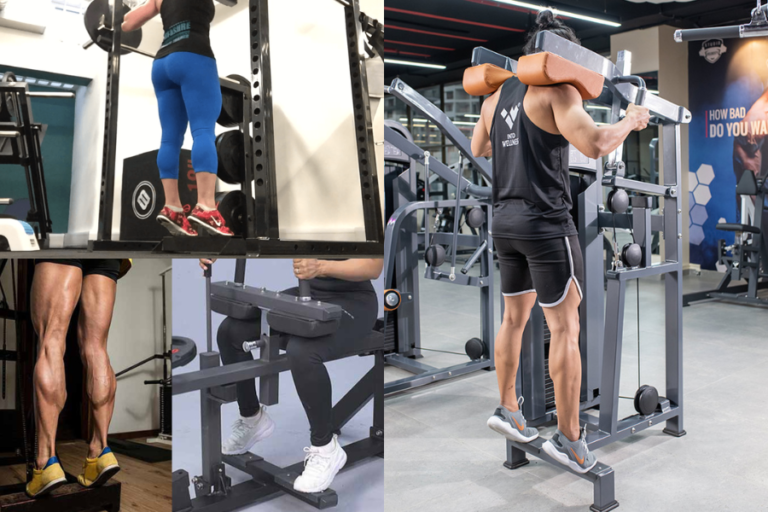
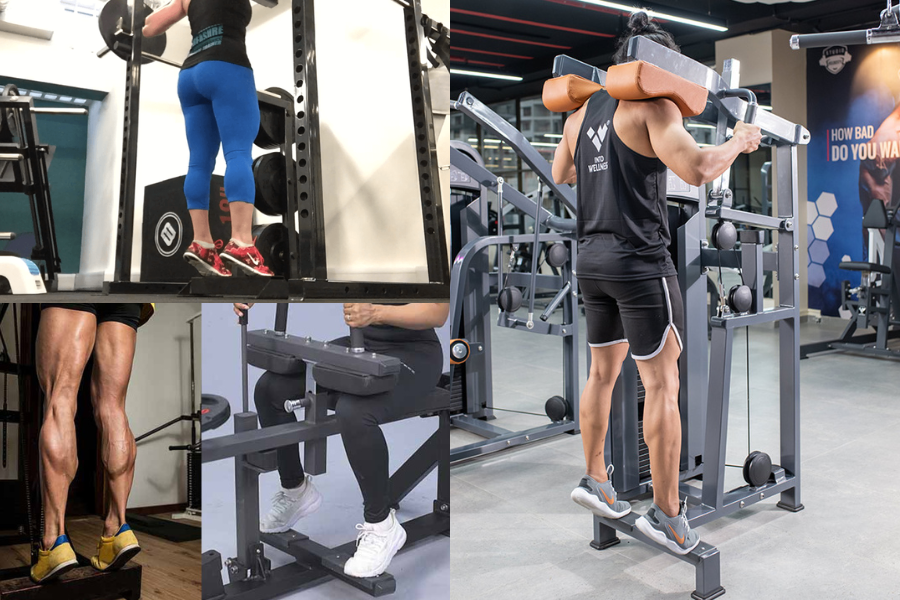
Standing calf raises
A foundation lift that primarily targets the gastrocnemius. You can perform these with a barbell, dumbbells, or a calf raise machine. High rep sets of 25 to 30 repetitions with varied foot angles are excellent for building endurance and size, especially if you already have a base of strength. -
Seated calf raises
With your knees bent, seated calf raises shift more work to the soleus. Focus on slow, controlled reps, and squeeze hard at full extension without bouncing. Longer sets such as 20 to 25 reps can drive a strong pump and challenge the endurance oriented fibers of the soleus. -
Eccentric calf raises
Step up on both feet, then shift your weight onto one leg and lower slowly for 3 to 5 seconds. This eccentric emphasis is particularly good for tissue health and can help build resilience around the Achilles tendon over time. -
Tip toe farmer’s carry
Walk on the balls of your feet while holding dumbbells at your sides. This move combines loaded endurance, balance, and postural strength and is a useful way to add extra calf volume without more machine based sets. -
Squats into calf raises
Perform a regular squat, then rise onto your toes at the top. This functional move challenges the calves when they are already working to stabilize your ankles and knees, which can translate well to jumping and running.
Some advanced routines also add a circuit style approach. For example, you might cycle through six different calf and lower leg exercises without rest, then take one minute off and repeat the circuit two more times. Single leg standing calf raises, deficit soleus raises, and single leg Romanian deadlifts are all strong additions when you want to challenge each leg individually and improve stability, as physical therapists at Hinge Health highlighted in 2024.
Recover and progress over time
Calves can handle frequent use throughout the day, but focused advanced calf workouts still require planned recovery. Since there are limits to how many sets, reps, and minutes you can spend in the gym, many advanced bodybuilding programs cap heavy calf sessions at two or three per week and encourage smaller bouts of work at home.
For example, you might sprinkle in extra sets of 10 to 20 bodyweight calf raises throughout your day. When done occasionally, these mini sessions accumulate extra volume that supports growth without overloading any single workout.
Regular stretching is also useful. Wall calf stretches, where you keep your heel down and lean forward, help maintain length through the gastrocnemius and soleus. Foam rolling your calves gently after training can reduce tightness and support circulation. Used consistently, these habits may lower your risk of strains and help you feel ready for your next session.
Above all, be patient and consistent. Calf muscles are involved in nearly every step you take, so they can be stubborn to change. Progressive strengthening, respect for rest days, and a mix of strength, endurance, and power work are your best tools for taking your calves to the next level.
Start by adding one advanced element to your current routine, such as heavier standing calf raises at your 10RM or a short plyometric block of Sprinter Calf Jumps. As that becomes comfortable, layer in more variety. Over time, you will notice stronger push offs, better athletic performance, and calves that finally reflect the effort you are putting in.
About the Author