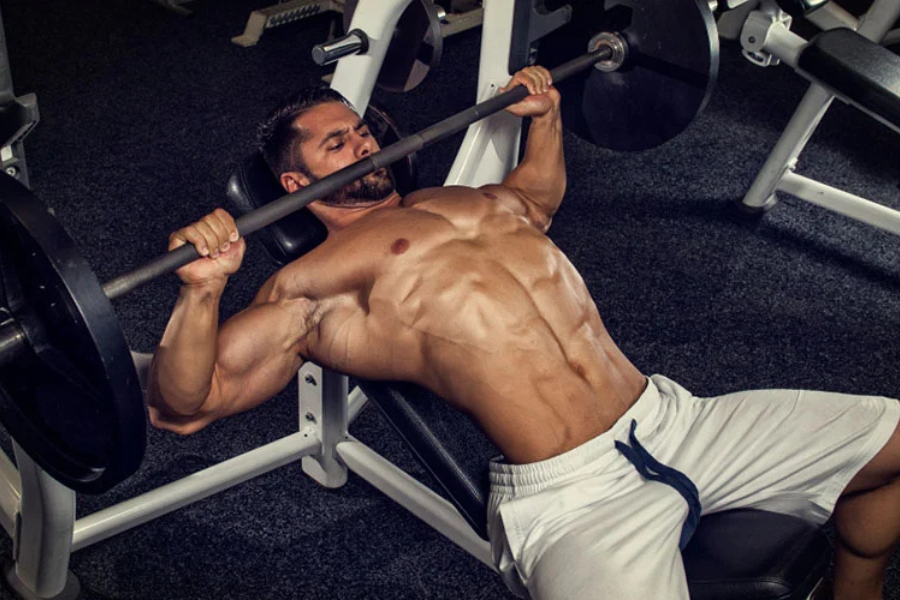
Why barbell chest exercises work so well
If you want a stronger, fuller chest, barbell chest exercises deserve a place in your routine. The classic barbell bench press and its variations let you load weight efficiently, build pressing strength, and add size to your pecs, triceps, and shoulders.
Research comparing flat, incline, and decline bench presses shows that all three angles produce similar overall activation in the pectoralis major and surrounding muscles. In other words, you do not need a magic angle to grow your chest. Solid technique, enough effort, and consistent progression matter more than the exact bench position.
Below, you will learn how to use barbell chest exercises to build size and strength, how to set up each variation, and how to avoid the common form mistakes that hold your chest back.
Understand how the barbell bench press works
The barbell bench press is one of the three main powerlifting movements and a staple in bodybuilding workouts. It primarily targets your pectoralis major, with your triceps and anterior deltoids helping out. Because you can safely load heavy weight with a rack and spotter, it is one of the best upper body strength builders available as of 2024.
Muscles worked
When you press a barbell from your chest, you train:
- Pectoralis major, both heads
- Triceps brachii
- Anterior deltoids
- Serratus anterior and smaller stabilizers
Although incline and decline setups feel different, studies show no statistically significant difference in pectoralis major activation or overall hypertrophy between flat, incline, and decline presses. This means you can choose variations based on comfort, joint friendliness, and how they fit your goals instead of chasing a specific angle.
Benefits for your training
Barbell chest exercises offer you:
- Efficient strength gains, since you can use heavier loads than with dumbbells
- Clear progression, with small jumps in weight and reps
- Good transfer to sports and daily tasks that involve pushing
- A simple way to test your upper body one rep max
Because of this, lifters from beginners to advanced athletes use barbell presses to anchor their chest training.
Master the flat barbell bench press
The flat barbell bench press is often the first barbell chest exercise you learn, and for good reason. With proper form, it is one of the best movements for building overall chest size and pressing strength.
Step by step technique
- Lie on the bench
- Eyes directly under the bar.
- Feet flat on the floor, slightly wider than hip width.
- Set your upper back
- Pinch your shoulder blades together and down into the bench.
- Allow a slight natural arch in your lower back.
- Grip the bar
- Use a grip slightly wider than shoulder width to emphasize your chest.
- Wrap your thumbs around the bar for safety.
- Keep wrists straight instead of letting them bend back.
- Unrack the bar
- Take a deep breath, brace your core, and press the bar up.
- Move it out until it is directly over your mid chest.
- Lower with control
- Tuck your elbows slightly toward your sides, not flared at 90 degrees.
- Lower the bar to touch somewhere between your nipple line and lower chest.
- Keep your forearms vertical when the bar is on your chest.
- Press back up
- Drive your feet into the floor.
- Push the bar up and slightly back toward your upper chest.
- Keep your shoulder blades pinned until the set is done.
- Rack safely
- Lock out your elbows.
- Guide the bar back to the uprights and set it down gently.
Form tips to protect your shoulders
A few small details make a big difference in how much your chest, not your joints, does the work:
- Keep your shoulder blades retracted and pressed into the bench. Protracting your shoulders shifts more load to the delts and arms and reduces chest engagement.
- Tuck your elbows instead of flaring them. This reduces shoulder strain and often increases pressing power.
- Do not bounce the bar. Use a light touch on your chest, then press.
- Film a few sets from the side or foot of the bench. Check for even bar path and balanced shoulder movement.
Use incline and decline barbell presses wisely
Incline and decline barbell chest exercises feel different, but in practice they still work your entire chest, triceps, and shoulders.
Incline barbell bench press
Incline presses are often labeled an “upper chest” movement. While some guides suggest this emphasis, newer research does not show a strong advantage for upper pec hypertrophy compared to flat pressing. What it does provide is a slightly different angle that many lifters find more comfortable for their shoulders, and it can have good carryover to overhead pressing.
How to set up
- Set the bench to around 30 to 45 degrees.
- Use the same shoulder blade positioning, grip, and elbow tuck as the flat bench.
- Lower the bar toward your upper chest or collarbone area with control.
- Press up while keeping your shoulders pinned to the bench.
When to use it
- If you want more variety in your chest training.
- If flat pressing irritates your shoulders and incline feels better.
- If you want a movement that can help your overhead press, since the shoulders are more involved.
Decline barbell bench press
Decline barbell bench press changes how your body relates to the bar, often reducing shoulder strain and shifting some sensation to the lower chest.
Some work suggests decline may preferentially activate the lower portion of the pectoralis major a bit more than other angles. At the same time, studies do not show major differences in overall hypertrophy compared with flat or incline pressing.
How to set up
- Secure your legs at the top of the decline bench.
- Use a similar grip width as your flat bench.
- Retract your shoulder blades and keep them pressed into the pad.
- Lower the bar to the lower chest or upper stomach area.
- Press up until your arms are straight, keeping control throughout.
When to use it
- If you want a pressing variation that usually feels easier on your shoulders.
- If lower chest development is a priority for you.
- As an alternative when you are rotating bench angles in a program.
Pick the right bench variations for you
Since flat, incline, and decline bench presses show similar muscle activation overall, you can choose based on comfort and long term progress rather than chasing a perfect angle.
Here is a quick comparison to guide your choices:
| Variation | Main feel / focus | Best for you if you want |
|---|---|---|
| Flat barbell bench press | Overall chest, triceps, shoulders | Maximum loading, classic strength test |
| Incline barbell bench press | Chest with more shoulder involvement | Better transfer to overhead strength, angle variety |
| Decline barbell bench press | Chest with less shoulder discomfort | Shoulder friendly pressing and more focus on lower chest |
You do not have to use all three in every phase of training. Many lifters make great progress using mostly flat bench, then rotating incline or decline periodically to stay fresh and avoid overuse discomfort.
Avoid common barbell chest mistakes
Barbell chest exercises can build an impressive upper body, but some habits limit your results and increase injury risk. A 2010 article by Greg Merritt on Simplyshredded.com highlighted a few classic issues that still show up in many gyms.
Overdoing the barbell bench press
Relying almost exclusively on flat barbell bench presses can:
- Overemphasize the lower pec area, creating an unbalanced look
- Increase wear and tear on shoulders, elbows, and wrists
- Raise the risk of pec strains or tears
You will likely grow better by combining bench work with other chest movements, such as inclines, dumbbell presses, and push ups, rather than hammering only flat bench with too many heavy sets.
Ego lifting and using momentum
Trying to lift more weight than you can handle cleanly leads to:
- Bouncing the bar off your chest
- Half reps with shortened range of motion
- Shifting the load to shoulders and triceps instead of your pecs
You are “working the weight” instead of “working the muscles”. Use loads that let you control the bar, pause lightly on your chest if needed, and feel the pecs doing the majority of the pushing.
Losing shoulder position
Protracting your shoulders, letting them roll forward off the bench, shifts the emphasis away from the chest to your front delts and arms. It also reduces stability.
To keep the focus on your chest:
- Retract and depress your shoulder blades before unracking.
- Maintain that tension through every rep.
- Think “press your upper back into the bench” as you drive the bar up.
Skipping warm up and mobility
Diving straight into heavy barbell chest exercises without preparation can reduce performance and increase injury risk. You will benefit from:
- Light cardio to increase blood flow
- Dynamic stretches for chest and shoulders
- Activation drills like band pull aparts or light push ups
A brief warm up helps you use a fuller range of motion and feel more stable under heavier loads.
Progress your barbell chest training
To build more size and strength in your chest, you need progressive overload. That means gradually doing more total work by increasing weight, reps, or sets over time.
Simple progression example
A practical strategy is to combine increases in reps and weight. For example:
- Start with a weight that is about 80 percent of your estimated one rep max.
- Do 4 sets of 4 reps with solid technique.
- Each week, aim to add 1 to 2 reps per set until you can do 4 sets of 8 reps.
- Once you hit 4 x 8 with good form, add 5 pounds, return to 4 x 4, and repeat.
This approach helps you stay in a productive strength and hypertrophy range while avoiding big weight jumps that break your form.
Strength focused rep ranges
For pure strength development in barbell bench press, sets of around 6 to 8 hard reps work very well. Several guidelines suggest that 5 sets of lower reps at high effort usually beat 10 rep sets for max strength progress, since you avoid excessive fatigue and stay closer to maximal output.
You can structure your week like this:
- 1 heavier bench day with sets of 4 to 6 reps
- 1 lighter or moderate day with sets of 6 to 10 reps
This combination supports both strength and muscle growth without burning you out.
Plan your weekly chest volume
How many sets of barbell chest exercises you should do depends on your experience and recovery. Practical recommendations from 2021 guidelines suggest:
- Beginners: about 12 sets per week for chest
- Novices: around 16 sets per week
- Veterans: up to 20 sets per week
Spread those sets across 2 or 3 weekly sessions and allow 48 to 72 hours between hard chest workouts so your pecs can recover and grow.
A weekly structure could look like:
- Day 1: Flat barbell bench press + other presses
- Day 3 or 4: Incline or decline bench + accessory chest work
You do not need to hit your chest every day. Consistent, well recovered sessions usually outperform frequent but fatigued training.
Use variations and accessories for balance
Barbell chest exercises are powerful, but using them alone can leave some gaps in muscle development and joint comfort. Mixing in a few other movements helps build a well rounded chest and better control.
Helpful supporting exercises
You might include:
- Dumbbell bench presses, which challenge stability and let each arm move independently
- Push ups, especially for beginners or as warm ups
- Fly variations or cables, to feel the stretch and squeeze in your pecs
- Machine presses, when you want chest work without worrying about balance
If you are new to lifting or still building base strength, starting with dumbbell presses and push ups before going heavy on the barbell can help you learn better control and reduce the risk of poor form on heavier loads.
Specialty bar options
If straight bar benching bothers your shoulders or wrists, there are bar variations you can discuss with a coach or see at some gyms:
- Hex bar bench press
- Football bar bench press
- Swiss bar bench press
These tools change your grip and shoulder position, which can reduce discomfort while still giving you a heavy press.
Put it all together for a stronger chest
You do not need a complicated plan to benefit from barbell chest exercises. Focus on:
- Solid technique with shoulder blades retracted and elbows tucked
- Reasonable training volume for your experience level
- Gradual progression in weight and reps
- Variety across flat, incline, or decline presses as needed
- Support from dumbbells, push ups, and other accessory work
Start with loads you can control, avoid ego lifting, and give your chest time to recover between sessions. Over the coming months, you will see your pressing strength climb and your chest development improve, rep by rep.
About the Author