Understand why cable bicep exercises work
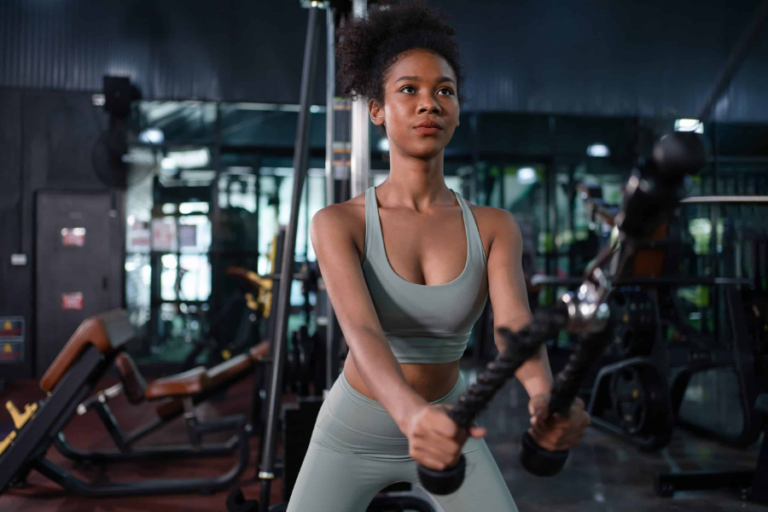
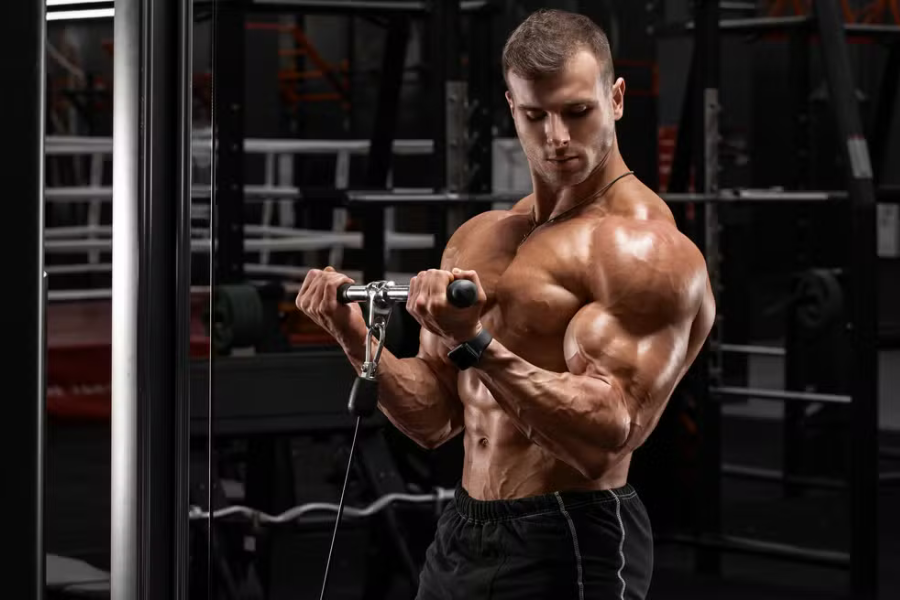
If you want bigger, stronger arms, cable bicep exercises are one of the best tools you can use. Unlike dumbbells, cables keep constant tension on your biceps through most of the movement. That steady pull makes each rep more efficient and can help you build muscle with less guesswork about form and range of motion.
Cable curls are also beginner friendly. The machine guides your path, you can adjust the weight in small increments, and you can choose different angles and grips to find what feels best for your joints.
Muscles targeted with cable curls
When you do cable bicep exercises correctly, you mainly work:
- Biceps brachii, the classic “bicep peak” on the front of your upper arm
- Brachialis, a muscle under the biceps that helps your arm look thicker
- Brachioradialis, a forearm muscle that adds size and strength near the elbow
Your shoulders, forearms, upper back, and core also help stabilize your body as you curl.
A 2014 study by the American Council on Exercise ranked the cable curl as the second best movement for biceps brachii activation, tying with the chin up and just behind the concentration curl. Other research in the Journal of Strength and Conditioning Research has linked constant muscle tension to more muscular hypertrophy over time.
Compare cables and dumbbells for biceps
You do not have to pick sides between cables and free weights. Both have strengths, and together they cover more of the biceps range of motion.
Key differences at a glance
| Feature | Cable bicep curls | Dumbbell bicep curls |
|---|---|---|
| Tension profile | High at the bottom and mid range, less at the top | Lower at the bottom, higher near the top |
| Muscle focus | More isolation on biceps | More stabilizer work in shoulders and forearms |
| Range of motion control | Very controlled, easier to keep form | More freedom, also more room to cheat |
| Joint friendliness | Often easier on elbows and shoulders | Depends heavily on your individual mechanics |
| Best use | Constant tension, “finisher” work, shape and detail | Heavy strength work, overall arm and grip development |
Fitness coach Ebenezer Samuel, C.S.C.S., notes that cable curls keep tension on the biceps in their lengthened position, which is key for growth, while dumbbells challenge the muscle more at the top. When you combine both, you load the biceps through their full range and get better overall development.
Use smart programming for results
Before you jump into specific cable bicep exercises, decide what you want most: strength, size, or endurance. Your rep ranges and sets should match that goal.
A 2021 study in Sports (Basel) suggests the following ranges for resistance training:
- Strength: 1 to 5 reps per set, heavier weight
- Hypertrophy (size): 8 to 12 reps per set, moderate weight
- Endurance: 15 plus reps per set, lighter weight
You can use the same guidelines with cables:
- For strength, do 3 to 5 sets of 3 to 6 reps with controlled speed
- For size, do 3 to 4 sets of 8 to 12 reps, focusing on tension and form
- For endurance, do 2 to 3 sets of 15 to 20 reps with short rest periods
Many coaches recommend cable curls toward the end of your workout so you can hit the biceps hard without worrying about stabilizing heavy free weights when you are already tired.
Nail your basic cable bicep curl
The standard cable bicep curl is your foundation. Once you can perform it with complete control, every other variation becomes easier to learn.
How to set up
- Attach a straight bar or EZ bar handle to a low pulley on the cable machine.
- Stand facing the machine, feet about hip width apart.
- Grip the bar with your palms up and hands about shoulder width apart.
- Step back a small distance so there is tension on the cable even when your arms are straight.
How to perform each rep
- Keep your torso upright with your core engaged.
- Let your arms hang straight, elbows close to your sides.
- Curl the bar up toward your shoulders by bending only at the elbows.
- Do not let your shoulders roll forward or your elbows drift behind you.
- Squeeze your biceps at the top for one second.
- Slowly lower the bar back to the starting position under control.
You should feel consistent pull on the biceps both as you curl up and as you lower the weight. That constant tension is what makes cable bicep exercises so effective.
Common mistakes to avoid
- Swinging your upper body to move more weight
- Letting your wrists bend back instead of staying straight
- Shrugging your shoulders toward your ears as you curl
- Losing tension at the bottom by letting the stack rest between reps
If you notice your form slipping, lower the weight and rebuild control. You will usually get better muscle growth from cleaner reps than from grinding through heavy, sloppy sets.
Try these beginner friendly cable bicep exercises
Once you are comfortable with the basic cable curl, you can add variations that change the angle, grip, and arm position. These small tweaks hit different fibers of the biceps and supporting muscles.
Cable preacher curl
The cable preacher curl combines the support of a preacher bench with the constant tension of the cable machine. It locks your upper arm in place so you cannot swing or cheat.
How to do it
- Place a preacher bench in front of a low cable pulley.
- Attach a straight or EZ bar handle to the cable.
- Sit with your upper arms resting fully on the preacher pad, chest close to the bench.
- Grip the bar with palms up and curl the weight toward your face.
- Squeeze at the top, then lower slowly until your arms are nearly straight, without relaxing completely.
Why it works
- Stabilizes your upper arm so the biceps do most of the work
- Keeps tension high in the stretched position at the bottom
- Excellent for beginners learning to feel pure biceps contraction
Start with lighter weight than you use for standard curls. The strict position makes this movement feel harder than it looks.
Single arm cable bicep curl
The single arm cable curl lets you work each side independently. This is helpful if one arm is weaker or smaller.
How to do it
- Attach a single D handle to a low pulley.
- Stand facing the machine with the handle in one hand, palm up.
- Step back a bit to keep tension on the cable.
- Brace your core, keep your elbow close to your side, and curl the handle to your shoulder.
- Lower under control and repeat for the set before switching arms.
Why it works
- Corrects left and right strength differences
- Requires your core to resist twisting, which improves posture
- Makes it easier to focus on the mind muscle connection in each arm
If you feel yourself rotating toward the cable, step your opposite foot slightly forward for a more stable base.
Cable rope hammer curl
Cable rope hammer curls focus more on your brachialis and brachioradialis, adding thickness to your arms and strength to your grip.
How to do it
- Attach a rope handle to a low pulley.
- Stand facing the machine and hold the rope with neutral grip, palms facing each other.
- Keep elbows close to your sides and curl the rope toward your shoulders.
- At the top, separate the rope ends slightly to squeeze your forearms and biceps.
- Lower slowly and repeat.
Why it works
- Trains both biceps and forearms together
- Neutral grip can feel more comfortable on your wrists
- Helps your arms look fuller even when relaxed by your sides
You can plug this in right after straight bar curls for a complete front of arm workout.
Progress to more advanced constant tension moves
As you gain strength and confidence, you can use cable angles that fully shorten or lengthen the biceps and create a strong “peak” contraction.
Overhead cable bicep curl (high cable curl)
The overhead cable curl, also called the high cable curl, hits the biceps in a very shortened position. Many people like it for the intense pump and peak-focused feel.
How to do it
- Set two cable pulleys to about shoulder or head height.
- Attach a single handle to each pulley.
- Stand centered between the stacks with a handle in each hand, arms out to your sides like a “T,” elbows slightly bent.
- Curl the handles toward your head by bending at the elbows, keeping upper arms lifted.
- Squeeze hard at the peak, then slowly extend back to the start without dropping your arms.
Why it works
- Trains the biceps at their fully shortened length
- Emphasizes the inner head of the biceps and peak contraction
- Produces strong pump due to continuous tension and fixed arm position
Keep the weight light. This is not a heavy strength move. Aim for 12 to 15 slow, controlled reps.
Reverse grip cable curl
Reverse grip curls shift more work to the brachioradialis and outer forearm while still involving the biceps.
How to do it
- Attach a straight bar to a low pulley.
- Stand facing the machine and grab the bar with an overhand grip, palms facing down.
- Keep your elbows close to your sides.
- Curl the bar toward your chest without letting your wrists collapse.
- Lower slowly and repeat.
Why it works
- Targets muscles that often get overlooked in standard curls
- Adds thickness to your upper forearm near the elbow
- Builds functional strength for daily pulling and gripping tasks
Use moderate weight and focus on smooth, non jerky motion to protect your wrists.
Plan a simple cable bicep workout
You can use cable bicep exercises as a whole arm session or as a focused part of your upper body day. Here is one example for muscle growth that fits most beginner to intermediate lifters:
- Basic cable bicep curl
- 3 sets of 8 to 12 reps
- Cable rope hammer curl
- 3 sets of 10 to 12 reps
- Single arm cable bicep curl
- 2 sets of 10 to 12 reps per arm
- Overhead cable bicep curl
- 2 sets of 12 to 15 reps
Rest 60 to 90 seconds between sets. If you already do heavy barbell or dumbbell curls, you can cut this list in half and use cables as a finisher:
- 2 sets basic cable curl
- 2 sets overhead or rope hammer curl
Adjust sets and reps based on how your arms feel and recover. If you are very sore for more than two days, trim the volume or train biceps less often.
Stay safe and comfortable while you train
Cable bicep exercises are usually joint friendly, but any movement can feel uncomfortable if the angle or load is wrong for you. Some people report that standing cable curls feel “off” or create a weird sensation partway through the set, while other cable moves like rows feel completely fine.
If you notice discomfort that is not normal muscle fatigue:
- Try a different attachment, for example switch from straight bar to EZ bar or rope
- Adjust your distance from the machine so the line of pull feels natural
- Reduce the weight and slow down the movement
- Experiment with supported positions like preacher curls or seated curls
If sharp pain persists, stop the exercise and consider talking with a qualified professional such as a physical therapist or certified trainer before continuing.
Remember, more weight is not automatically better. Prioritizing controlled form in the 6 to 15 rep range is usually more effective for muscle building than chasing heavy loads with sloppy technique.
Put it all together
When you focus on cable bicep exercises that keep constant tension, you make every rep count. Cables:
- Keep your biceps working through most of the range of motion
- Offer beginner friendly control and stability
- Allow simple adjustments to angle, grip, and attachment
- Pair well with dumbbells and barbells for complete arm development
Start by mastering one or two cable curls, then layer in variations as you get stronger. With consistent practice and steady progression, you will feel a noticeable difference in how your biceps contract, pump, and grow.
About the Author