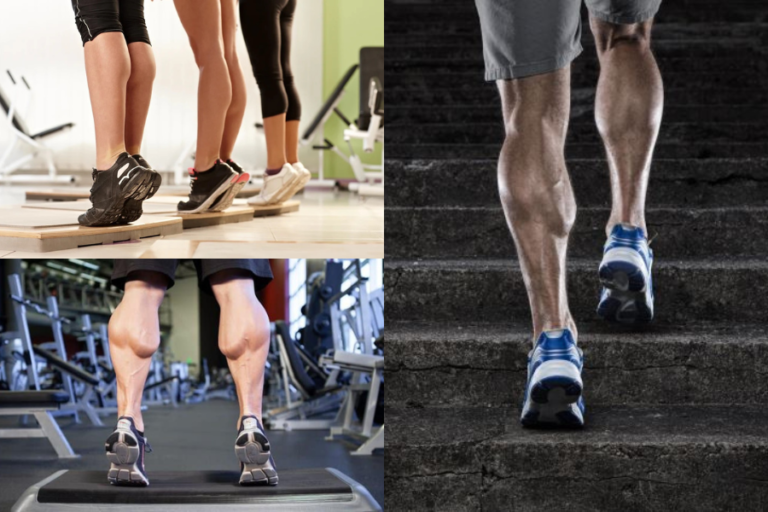
Calf workouts at home can do more than build definition in your lower legs. Strong calves support ankle stability, improve balance, and give you extra power for running, jumping, and lifting. You can train them effectively with little or no equipment, and you do not need long sessions to see results.
Below, you will find how your calf muscles work, why they respond well to frequent training, and simple routines you can follow in your living room, hallway, or even on the stairs.
Understand your calf muscles
Your calves are mainly made up of two muscles: the gastrocnemius and the soleus. Together, they control how your heel lifts off the ground, how your foot points, and how stable your ankle feels when you walk, run, and jump.
The gastrocnemius is the larger, more visible muscle that pops when you flex your calves. It helps you push off the ground and generates a lot of your forward propulsion. The soleus sits underneath and plays a big role in standing balance and stabilizing your ankle and lower leg.
Because these muscles are active every time you walk, stand, or go up stairs, they are used to working often. That is one reason calf workouts at home can use higher volume and frequency than heavier compound lifts. Your calves usually recover quickly and can handle more total repetitions across the week.
Why calf workouts at home matter
Calves play a quiet but critical role in almost everything you do on your feet. Strong calves help control foot movement and support your knees and hips. They also work closely with your Achilles tendon, which is a common source of pain and injury, especially for runners.
If you enjoy running or want to run more, focused calf strengthening can improve your running speed and gait and may help you avoid Achilles problems and other lower leg pains. Physiotherapists often highlight calf work as a key part of keeping runners on the road and out of injury cycles.
Targeted calf exercises are also useful for daily life. Better calf strength supports balance when you stand on one leg to step into pants, ride public transit, or walk on uneven ground. Over time, this can reduce the risk of falls and give you a more confident stride.
Principles for effective calf training
You can make your calf workouts at home much more effective with a few simple principles. These do not require extra equipment, just attention to how you move.
Use a deep stretch
Research suggests that training your calves in a deeper stretch position can significantly increase muscle growth. When you lower your heel below your toes and pull the toes up slightly toward your shins, you create more mechanical tension on the calf fibers through the full range of motion.
You can do this on the edge of a stair, a sturdy step, or any raised surface that lets your heel drop. Lower slowly, pause in that stretched position, then drive up to a strong contraction at the top.
Prioritize standing variations
Standing calf raises tend to build more visible calf muscle size than seated versions. A 12 week comparison found that standing raises led to greater growth in the gastrocnemius and overall calf area than seated raises. This makes sense because the gastrocnemius crosses both your ankle and knee, so it is more active when the knee is straight.
If your goal is shape and definition, base most of your home training on standing or slightly bent knee movements. You can still include some bent knee work to emphasize the soleus, but let standing work be the foundation.
Train with higher volume and frequency
Calves respond well to more total repetitions and more frequent sessions. Since they are smaller muscles that recover quickly, you can train them several times per week without feeling worn down.
Aim for 2 to 4 calf focused sessions spread across the week. In each session, you might perform 3 to 6 sets of 12 to 25 repetitions. If you are using only body weight, you can go even higher on reps, especially once you get stronger.
Add small but smart tweaks
Little changes in your technique can make a noticeable difference. One simple tweak is to finish sets with partial reps in the stretched position at the bottom of the movement. After your full reps, pulse gently at the bottom for several short repetitions. This keeps the muscle under tension in that effective stretch, which can further boost growth.
You can also play with toe angle. Pointing your toes slightly in, out, or forward during different sets helps you challenge different lines of the muscle.
Best calf exercises you can do at home
You do not need machines or heavy weights to build strong calves. The following exercises use your body weight and common household surfaces, and you can adapt them to almost any fitness level.
Basic and advanced calf raises
Start with classic calf raises, then progress as your strength improves.
-
Two leg floor calf raise
Stand with your feet hip width apart and hands on a wall or countertop for balance. Slowly rise onto the balls of your feet, pause, then lower under control until your heels lightly touch the ground. This is your foundation move. -
Single leg floor calf raise
Once two leg raises feel comfortable, shift to one foot at a time. Stand tall, hold on lightly for balance, and lift and lower on one leg. This doubles the load on each calf without needing extra equipment. -
Step or stair calf raise
Use a stair, curb, or sturdy step. Place the balls of your feet on the edge, with your heels hanging off. Lower your heels below the step for a deep stretch, pause, then press up as high as you can. This longer range of motion makes the move more challenging and effective. -
1 and ½ calf raises
From the bottom stretch on a step, lift all the way up, lower halfway, go back up, then lower fully. That is one repetition. This variation keeps the muscle working longer and intensifies each rep without adding weight.
Power focused calf moves
When you are comfortable with controlled raises, you can add some explosive work to build power and athleticism.
-
Sprinter calf raises
Take a staggered stance, with one foot in front, heel down, and the other foot slightly behind you. Lean forward a little, then push through the front foot and drive your heel up quickly, as if pushing off for a sprint. Lower with control and repeat. -
Sprinter calf jumps
From that same sprinter stance, bend both knees slightly and perform small, quick jumps off the front foot, focusing on landing softly and absorbing the impact. Keep the jumps low and rhythmic. This trains reactive strength and is a simple plyometric you can do at home. -
Jump squats and seal jumps
Moves like jump squats, lunge jumps, seal jumps, and high knees all place a strong demand on the calves. Use them sparingly at first and focus on landing lightly, especially if your ankles or knees are sensitive.
Targeted home exercises
Some movements are especially helpful when you have no equipment at all.
-
Calf Launchers
Start on your hands and knees with your toes tucked under. Shift your hips back toward your heels to stretch your calves, then push through your toes to lift your knees slightly off the ground while keeping your hips back. Straightening and bending the knees in this position works both the soleus and the gastrocnemius through a large range of motion. -
Single leg step raises
Stand on a step on one foot, heel hanging off the edge. Hold a wall or railing for balance. Lower your heel into a deep stretch, then drive up to a strong, held squeeze at the top. The single leg setup gives you more stretch and a more intense contraction. -
Isometric calf raise
Simply rise up onto your toes and hold that top position for 20 to 40 seconds. You can do this with both legs or one leg. Isometrics build endurance and are kind to sensitive joints.
Sample 6 minute calf workout at home
When you are short on time, you can still get a meaningful calf session done in just a few minutes. Try this quick routine that uses Calf Launchers and 1 and ½ raises.
- Minute 1 and 2: Calf Launchers
- 40 seconds of controlled reps
- 20 seconds rest
- Minute 3 and 4: Single leg 1 and ½ step raises, toes forward
- 40 seconds on one leg, then 40 seconds on the other
- 20 seconds rest at the end of each minute
- Minute 5: 1 and ½ step raises, toes slightly out
- Use both legs together
- 40 seconds work, 20 seconds rest
- Minute 6: 1 and ½ step raises, toes slightly in
- 40 seconds work, then finish with 20 seconds of small pulses at the bottom stretch
Work at a controlled pace. Focus on full range of motion and strong squeezes rather than rushing for more repetitions. If you cannot complete the full 40 seconds, do what you can and gradually build up.
Warm up and stretch your calves safely
Because your calves are involved in almost every step you take, it pays to warm them up before intense work and to stretch them afterward.
Before your workout
Use dynamic movements that gently move your ankle through its range of motion and increase blood flow. For example, you can do:
- A few minutes of easy marching or walking in place
- Gentle ankle circles
- Slow, controlled heel raises with partial range
Dynamic stretching before running or jumping helps warm the tissue and can reduce the risk of strains.
After your workout or run
Static stretching is more useful at the end of your session. It helps lengthen tight tissue and may improve flexibility over time. Try these:
-
Standing calf stretch
Place your hands on a wall. Step one leg back with the heel on the floor and the knee straight. Lean forward until you feel a stretch in the calf. Hold for 20 to 30 seconds, then switch sides. -
Seated calf stretch
Sit with one leg extended. Loop a resistance band, towel, or tea towel around the ball of your foot. Gently pull the toes toward you while keeping the knee straight. Hold for 20 to 30 seconds.
If your calves feel especially tight after running or jumping, this kind of cool down can help them recover and stay comfortable.
If you notice persistent calf pain, swelling, bruising, or a lot of stiffness that limits your movement, rest and seek advice from a medical professional or physiotherapist before pushing harder with training.
Tips for balance and progression
When you first start doing calf workouts at home, you may notice your ankles feel a little wobbly, especially on single leg exercises. This is normal, and you can work around it safely.
Use a wall, countertop, or sturdy chair for light support. You can also press one hand into an exercise ball placed against a wall. This extra contact point gives you stability while your ankle and calf muscles learn to control the movement.
Over time, ease off the support, or shift from a full hand grip to just a couple of fingertips. This way, you gradually challenge your balance without sacrificing form.
To keep progressing:
- Increase repetitions before you add more difficult variations
- Slow down the lowering phase to increase time under tension
- Add pulses or isometric holds at the bottom or top of the movement
- Move from two leg to single leg versions once the basics feel easy
Putting it all together
You do not need a gym or specialized machines to build strong, capable calves. With a few smart exercises and consistent effort, your calf workouts at home can boost lower body strength, support healthy ankles and knees, and improve your performance in running, jumping, and everyday activities.
Start with one or two exercises, such as basic step raises and Calf Launchers, and perform them several times per week. As they become easier, layer in single leg work, plyometric drills, and deeper stretches. Small, regular sessions will add up to noticeable changes in how your legs feel and perform.
About the Author