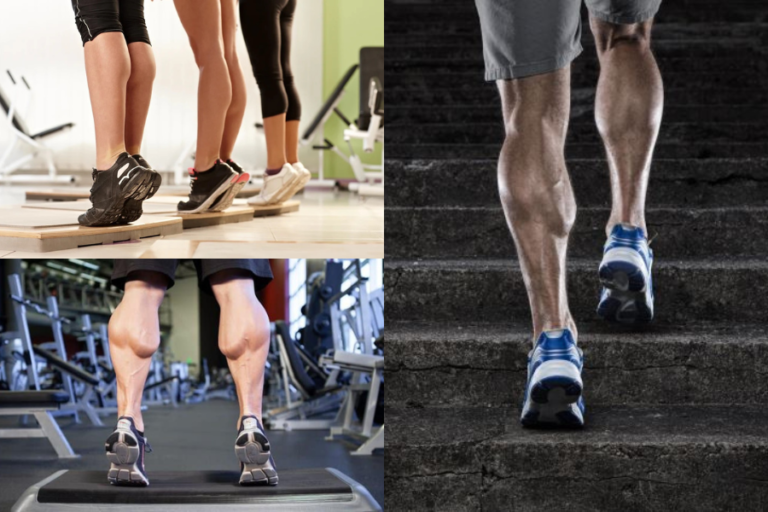
A focused plan for calf workouts for men can finally turn stubborn lower legs into a strength and size asset. Instead of throwing in a few lazy sets at the end of leg day, you will treat your calves like any other muscle group, with smart exercise choices, weekly structure, and progress you can actually see.
Below, you will learn how your calves work, which exercises give you the biggest return, and how to put them into a realistic plan you can stick with.
Understand how your calf muscles work
If you want noticeable gains from calf workouts for men, you need to know what you are training.
Your calves are not just one lump of muscle. They are a small group that controls your ankle and helps your knee move.
The main players are:
-
Gastrocnemius
This is the visible “diamond” on the back of your lower leg. It crosses both the knee and ankle, and it works hardest when your leg is straight, like in standing calf raises and sprinting. -
Soleus
This sits underneath the gastrocnemius and does a lot of work when you stand and walk. It is more active when your knee is bent, for example in seated calf raises. -
Plantaris
A smaller muscle that assists the other two and helps with posture and balance.
Together, these muscles help you walk, run, jump, change direction, and even stand upright. Studies show that training calves with different knee angles is important so both the gastrocnemius and soleus develop in a balanced way.
Well trained calves do more than fill out your shorts. Strong calf muscles can improve sprint speed and jump performance and may reduce injury risk in sports that involve quick changes of direction.
Why calf workouts feel so stubborn
If you have trained your calves before and seen almost nothing change, you are not alone. Genetics play a noticeable role in calf size, and some people naturally have thicker or longer muscle bellies. Coaches like Jeff Cavaliere point out that genetics set your starting point, but they do not make growth impossible if you train correctly.
Several factors make calves feel “stubborn”:
You use them all day for walking, so they are used to low effort. They contain a high percentage of slow twitch fibers, so they often respond better to higher training volume with lighter to moderate loads and plenty of time under tension. Research from Brad Schoenfeld suggests muscle growth can occur across different loads if you push close to failure and use good technique, which is useful for calf training where both heavy and lighter sets have a place.
The good news is that when you finally give calves focused attention, with enough sets, full range of motion, and regular progression, they usually start to respond. You will not change your genetics, but you can dramatically improve what you were given.
Choose the best calf exercises
To get more from your calf workouts for men, think in terms of movement patterns, not just random machines. You want exercises that train both straight leg and bent leg positions, plus some explosive work.
Standing calf raises
Classic standing calf raises target the gastrocnemius and give you that visible “pop” in the back of the lower leg. You can do these with bodyweight, on a Smith machine, in a standing calf machine, or using dumbbells.
Focus on:
- A full stretch at the bottom, letting your heel sink while keeping control
- A strong press up onto your toes without bouncing
- A brief pause at the top to fully contract the muscle
Many lifters find that heavy, high rep standing calf raises with a full range of motion are one of the most productive exercises for growth.
Seated calf raises
Seated calf raises focus on the soleus because your knee is bent. This is where a lot of people fall short. If you only ever do straight leg movements, the soleus can lag behind even though it adds thickness that pushes the gastrocnemius out.
You can perform these on a dedicated seated calf machine or by sitting on a bench with a barbell or dumbbells across your thighs.
For best results:
- Use a block so your heels can drop into a deep stretch
- Move slowly through the bottom, then drive up and squeeze
- Hold the top and bottom positions for about two seconds
A practical guideline is 3 sets of 8 to 15 reps with controlled tempo and full range of motion.
Single leg calf raises
Calf size and strength are often different from one leg to the other. Single leg calf raises help you address these imbalances and increase intensity without needing huge weights.
You can do them on the floor, on a step, or on a leg press machine:
- On the floor or a step, hold a wall or rail for balance and rise up on one foot
- On a leg press, place the ball of one foot on the bottom of the sled, keep the leg straight, and push through the toes
You can progress by holding dumbbells. Take your time, especially in the stretched position, to get the most from each rep.
Leg press calf raises
Leg press calf raises let you load your calves heavily without stressing your spine with a barbell. They train the gastrocnemius in a straight leg position and allow a deep stretch.
Set up as you would for a normal leg press, but place just the balls of your feet on the bottom edge of the platform. Keep your knees mostly straight, lower your heels under control into a stretch, then press up as high as possible.
This is a solid option for moderate to heavy sets in the 10 to 20 rep range.
Plyometric and athletic movements
Explosive activities like sprinting, jumping, and jump rope create high tension contractions in the calves, similar to what you see in many professional athletes. These movements can support size and strength gains while boosting overall athleticism.
Jump rope in particular is convenient. Intervals of 30 seconds on and 30 seconds off for 3 to 4 rounds work well as a warm up or finisher and help build explosive power and endurance in the lower legs.
Apply smart training techniques
Muscle choice is only half the story. The way you perform calf exercises makes a big difference, especially when you are trying to overcome slow progress.
Use a full, painful stretch
A deep stretch at the bottom of each rep, held for about one to two seconds, is a key feature of productive calf training. This stretched position increases tension on the muscle and can support hypertrophy. It may also help keep the Achilles tendon and ankle more resilient.
Because that stretch can be intense, especially at first, start with modest volume and build up across a few weeks so soreness does not overwhelm you.
Vary your rep ranges
Calves respond well to a mix of heavy, moderate, and lighter sets. You can think of it like this:
- Heavy: 5 to 10 reps
- Moderate: 10 to 20 reps
- Light: 20 to 30 reps
You do not need all of these in every workout, but aiming for about half your training volume in the moderate range and the rest split between heavy and lighter sets works well for most people. This lets you train strength, muscle size, and endurance in the same overall plan.
Use different foot positions
Small changes in foot angle shift emphasis on different parts of the gastrocnemius. One useful pattern is:
- 2 sets with toes pointing straight ahead
- 1 set with toes slightly inward
- 1 set with toes slightly outward
Research suggests this simple variation can help target different fibers in the muscle and may lead to more even development.
Respect rest and recovery
Your calves recover quickly from each individual set, which means they usually do not need long breaks. Resting about 1 to 3 minutes between sets is enough for most people to regain “very good” performance on the next set.
At the same time, they still need weekly recovery. You can train them often, but volume must match your experience level and overall program.
Structure your weekly calf workouts
Putting everything into a weekly plan keeps you from doing random, low effort work that never moves the needle. You have a few key pieces to balance: frequency, exercise selection, and weekly set volume.
Decide how often to train calves
For many men, training calves 2 or 3 times per week is a good starting point. Advanced lifters or athletes may go up to 4 to 6 times per week if they manage volume carefully.
General guidelines:
- Beginners: 2 sessions per week
- Intermediate: 3 sessions per week
- Advanced: 3 to 5 shorter sessions per week
You want each session to feel focused but not so long that you start rushing through sets.
Plan exercises per week and per session
You do not need a different calf exercise for every day of the month. The goal is a mix of movements that cover straight and bent leg positions, plus some explosive work.
A practical structure is:
- 1 to 3 calf exercises per session
- 2 to 4 different calf exercises across the week
This keeps things simple and ensures you repeat movements often enough to progress.
Sample weekly calf plan
Here is a simple layout you can adapt to your own training days:
Day 1: Strength focus (straight leg dominant)
- Standing calf raises: 4 sets of 8 to 12 reps
- Leg press calf raises: 3 sets of 10 to 15 reps
- Jump rope: 3 rounds of 30 seconds on, 30 seconds off
Day 2: Volume and soleus focus (bent leg dominant)
- Seated calf raises: 4 sets of 12 to 20 reps
- Single leg calf raises on a step: 3 sets of 12 to 15 reps per leg
- Light calf and ankle stretching after training
Day 3: Athletic power and balance
- Jump rope intervals: 4 rounds of 30 seconds on, 30 seconds off
- Walking tip toe farmer’s carry with dumbbells: 3 walks of 20 to 30 seconds
- Optional: short sprints or hill runs, focusing on strong, quick push offs
Adjust volume based on how sore you get. As calves can be extremely sore after new training, especially with deep stretching, you may want to start with half of the sets above and build up over 2 to 3 weeks.
Warm up, stretch, and avoid injuries
Because calves and the Achilles tendon handle a lot of load, good preparation is not optional.
Before your main sets, spend a few minutes with:
- Light cardio such as brisk walking or easy jump rope
- Simple ankle circles and pointing and flexing the feet
- A couple of easy sets of calf raises through a partial range of motion
After training, use static stretches like a basic wall calf stretch or a calf and ankle stretch on a step. These help maintain ankle mobility and can support better technique in future workouts.
Move slowly through every rep to keep your joints aligned. If you are new to strength training, increasing load by about 10 to 15 percent every two weeks is a safer pace than adding large jumps all at once. If you have a history of Achilles or ankle issues, it is worth checking your plan with a physical therapist or qualified trainer.
Turn calf training into clear progress
Calf workouts for men do not have to be complicated, but they do need to be deliberate. When you:
- Train both the gastrocnemius and soleus with standing and seated work
- Use deep, controlled stretches and a full range of motion
- Mix heavy, moderate, and higher rep sets
- Include 2 to 4 well chosen exercises across the week
- Progress weight or reps over time
you give your calves the same serious attention you already give your chest, back, or arms.
Start by picking one or two of the changes above for your next lower body session, such as adding seated calf raises with a full stretch or bumping your calf frequency from once to twice a week. As you build consistency, those once stubborn muscles will start to look and perform very differently.
About the Author