Why dumbbell bicep exercises at home work
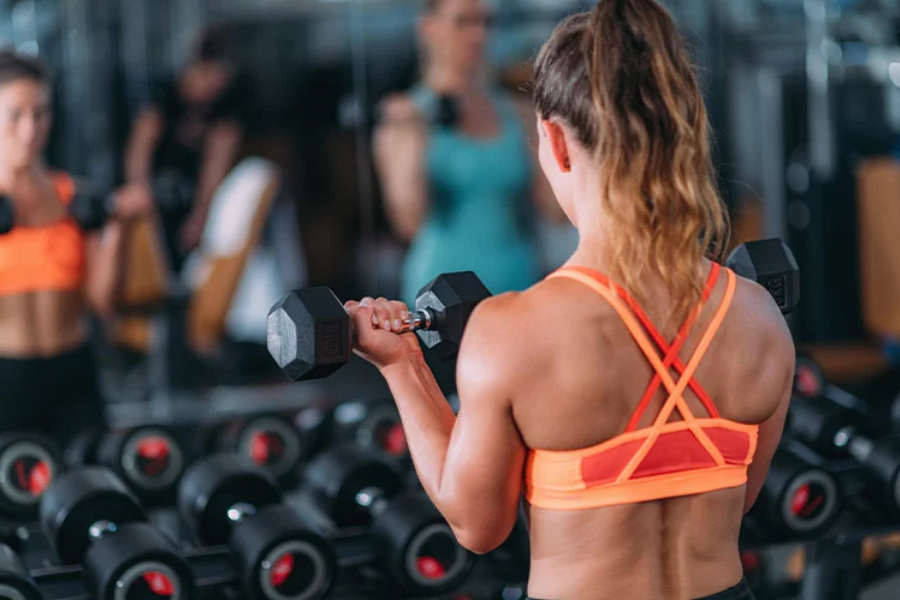
Dumbbell bicep exercises at home are a simple way to build stronger, more defined arms without needing gym machines or a lot of space. With just a pair of dumbbells, you can target both heads of the biceps brachii, improve elbow flexion, and even boost grip strength as you train.
According to Dr. Edward R. Laskowski from Mayo Clinic, the basic dumbbell biceps curl is an effective exercise to build strength in the front of your upper arm when you perform it with good form and control. Dumbbells are also portable and easy to store, so you can keep up a consistent routine even in a small home.
In this guide, you will learn:
- How to set up safely for home bicep workouts
- Key dumbbell bicep exercises you can do at home
- Form tips that protect your elbows and improve results
- A sample 30 minute bicep workout you can follow
Use this as a menu. Start with a few exercises that fit your current strength, then build from there over time.
Set up for safe home bicep training
Before you jump into dumbbell bicep exercises at home, you need the right setup so you can train safely and consistently.
Choose the right dumbbells
For most people, having at least two pairs of dumbbells works well:
- One lighter pair for higher reps, control, and new movements
- One heavier pair for strength and muscle gain as you get stronger
Selecting appropriate weight is essential. You want a load that feels challenging by the last few reps but still lets you maintain solid form. You can always move up by 5 to 10 percent every few weeks if you are handling the current weight comfortably.
Create a small workout space
You do not need a full gym. Aim for:
- A clear area where you can raise your arms without hitting anything
- A stable chair, bench, or edge of a bed for seated or incline work
- A non slip surface so your feet stay planted during curls and rows
Dumbbells are convenient and easy to store, so even a corner of your living room can become a reliable training spot.
Warm up your joints and muscles
A short warm up helps your elbows and shoulders handle bicep training better. Spend 5 to 7 minutes on:
- Light cardio, such as marching in place or brisk walking
- Arm circles, shoulder rolls, and gentle elbow bends
- A few very light curls to practice the motion
You should feel warm and loose, not tired, before you start working sets.
Master the basic dumbbell biceps curl
If you only did one bicep movement at home, the classic dumbbell biceps curl would be a strong choice. It directly targets the biceps brachii and builds both size and strength when done correctly.
How to do a standing dumbbell curl
This version follows guidance from Mayo Clinic and other experts like Jeff Cavaliere of Athlean-X, who recommend slow, controlled curls for best results.
- Stand tall with a dumbbell in each hand, arms down by your sides, palms facing forward.
- Keep your elbows close to your torso and just in front of your hips.
- Brace your core and keep your wrists straight and rigid.
- Slowly curl the weights up by bending your elbows. Do not swing your arms or lean back.
- Squeeze your biceps hard at the top, bringing the pinky side of the dumbbell slightly inward to emphasize supination.
- Lower the weights back down slowly to the starting position, maintaining tension the whole way.
Aim for 1 to 3 sets of 12 to 15 repetitions if you are starting out. Focus on smooth, controlled movement to feel the tension in the front of your upper arms.
Key form tips for curls
- Keep your wrists straight, not bent, to protect your joints.
- Do not swing the dumbbells. Let your biceps, not momentum, lift the weight.
- Keep your elbows mostly fixed. Imagine them pinned at your sides.
- Move through a full range of motion, all the way up and all the way down.
Avoid twisting the dumbbell halfway up. Mixing hammer curls into standard curls makes it harder to target the biceps consistently.
Try essential dumbbell bicep variations
Once you are comfortable with the classic curl, you can add variations that hit different angles of your biceps and forearms. These dumbbell bicep exercises at home give you a complete menu to build from.
Alternating bicep curl
The alternating biceps curl helps you focus on one arm at a time and build a stronger mind muscle connection.
How to do it:
- Stand with a dumbbell in each hand, palms facing forward.
- Curl one dumbbell up while keeping the other arm down and tense.
- Squeeze the working bicep at the top, then lower with control.
- Switch sides and repeat, alternating arms each rep.
This variation engages your core for stability while you move one arm at a time, and helps correct left and right side imbalances.
Hammer curl
Hammer curls shift your grip so your palms face each other. This works your biceps, brachialis, and forearms more intensely.
How to do it:
- Stand with a dumbbell in each hand, arms at your sides, palms facing in.
- Keep your elbows close to your body.
- Curl the weights up in a straight path while maintaining the neutral grip.
- Pause briefly at the top, then lower with control.
Hammer curls are especially helpful for building grip strength along with outer arm and forearm development.
Reverse curl
Reverse curls are a variation that turns your palms toward the floor. This targets your biceps and forearms differently and is useful for balanced arm development.
How to do it:
- Stand with dumbbells in front of your thighs, palms facing down.
- Keep your elbows close to your sides.
- Curl the weights up by bending at the elbows only.
- Slowly lower back to the starting point.
Start with lighter weights for reverse curls so you can focus on clean form and avoid wrist strain.
Cross body curl
Cross body curls change the path of the dumbbell so you curl toward the opposite shoulder. This can help emphasize different fibers of the biceps.
How to do it:
- Stand tall with a dumbbell in each hand, palms facing your body.
- Curl the right dumbbell up and across toward your left shoulder.
- Lower with control, then repeat on the other side.
Keep the movement deliberate, and resist the urge to twist your torso or swing the weights.
Seated incline curl
If you have an adjustable bench or a sturdy surface you can lean against, the incline curl is excellent for stretching and activating the long head of the biceps.
How to do it:
- Set your bench to a slight incline. Sit back with a dumbbell in each hand, arms hanging straight down.
- Keep your shoulders back against the bench.
- Curl both dumbbells up while keeping your elbows pointed toward the floor.
- Squeeze at the top, then lower slowly into a full stretch.
Incline curls place your biceps under greater stretch, which can support muscle growth when combined with good control.
Zottman curl
Zottman curls combine a standard curl on the way up with a reverse curl on the way down, so they challenge both your biceps and forearms.
How to do it:
- Stand with dumbbells at your sides, palms facing forward.
- Curl the weights up like a regular biceps curl.
- At the top, rotate your wrists so your palms face down.
- Slowly lower the weights in this reverse grip.
- Rotate back to palms forward at the bottom.
Use a moderate weight, since the reverse lowering phase is demanding on your forearms.
Strict wall curl
For extra isolation, the strict wall curl keeps your body locked in place and makes your biceps work harder.
How to do it:
- Stand with your back, shoulders, and the backs of your arms pressed against a wall.
- Hold a dumbbell in each hand, palms facing forward.
- Curl the weights up using only your elbows, keeping your upper arms pinned to the wall.
- Pause briefly at the top, then lower under control.
Pressing against the wall increases full body tension and minimizes cheating, which helps your biceps take on more of the load.
Add pulling strength with dumbbell rows
Although rows mainly target your back, they also strengthen the muscles of your upper arms and help balance all the pushing you do during the day.
Personal trainer Monty Simmons recommends the single arm dumbbell row as a staple home exercise since it trains your pulling muscles without needing machines like assisted pull up stations.
Single arm dumbbell row
You can do this move with just one moderately heavy dumbbell and a stable surface, such as a sofa or the edge of a bed.
How to do it:
- Place one hand and the same side knee on a stable surface about knee height.
- Hold a dumbbell in the opposite hand, arm extended toward the floor.
- Keep your back flat and core braced.
- Pull the dumbbell up toward your hip, leading with your elbow.
- Squeeze your upper back at the top, then lower slowly.
Simmons suggests 3 sets of 8 to 10 repetitions per side, pushing close to fatigue, especially if your dumbbells are lighter. This move strengthens the back of your shoulders, the middle of your back, and the arm muscles, and it also mimics everyday pulling motions.
Use tempo and tension for better results
How you perform each rep can matter as much as which exercise you choose. Slow, controlled movements increase time under tension and improve muscle activation.
Slow curls and time under tension
Research and expert coaches agree that moving slowly during both the lifting and lowering phases helps you build more muscle. Jeff Cavaliere recommends a tempo of about four seconds up and four seconds down for some of your sets to maximize biceps activation and reduce help from your front delts and forearms.
You do not need to use this slow tempo for every rep, but mixing it in can:
- Improve your control and form
- Make lighter weights feel challenging
- Help you feel your biceps doing the work
Supination and grip cues
Your forearm rotation, or supination, plays a big role in how fully your biceps contract. To enhance this:
- Grip the dumbbell firmly, especially with your thumb and index finger against one side of the bell.
- As you curl up, slightly turn your wrist inward, as if you are trying to turn your pinky toward your shoulder.
This creates a seesaw effect that challenges supination and can deepen the contraction in the biceps.
Sample 30 minute home bicep workout
You can build a complete 30 minute bicep workout using several of the dumbbell bicep exercises at home listed above. This simple structure blends classic curls with variations and rows for balance.
Beginner friendly routine
Repeat 2 to 3 times, resting 45 to 60 seconds between sets:
- Standing dumbbell curl
- 2 to 3 sets of 12 to 15 reps
- Alternating bicep curl
- 2 sets of 10 reps per arm
- Hammer curl
- 2 sets of 10 to 12 reps
- Single arm dumbbell row
- 3 sets of 8 to 10 reps per side
Start with a weight that feels manageable, and focus on clean form and slow lowering.
Intermediate routine with tempo focus
Repeat 3 times, resting 45 seconds between sets:
- Strict wall curl
- 3 sets of 8 to 10 reps
- Use a 3 to 4 second lowering phase
- Zottman curl
- 3 sets of 10 reps
- Cross body curl
- 3 sets of 10 reps per arm
- Single arm dumbbell row
- 3 sets of 10 to 12 reps per side
This structure keeps your muscles under tension for longer and hits the biceps from multiple angles.
Progress your home bicep training safely
To keep seeing results from your dumbbell bicep exercises at home, you need to gradually ask more of your muscles over time.
Increase load or volume gradually
Progressive overload can come from:
- Increasing dumbbell weight by 5 to 10 percent when reps feel easy
- Adding 1 to 2 more reps per set
- Adding 1 extra set once your current sets feel comfortable
Only change one variable at a time, and keep your form strict even as you increase difficulty.
Set a smart training schedule
You do not need to train biceps every day. For most people, it works well to:
- Train biceps no more than twice per week
- Allow at least 48 hours of rest between bicep focused sessions
This rest period gives your muscles time to repair and grow.
Support your training with recovery
You will see better progress if you:
- Eat a balanced diet with enough protein, carbohydrates, and healthy fats
- Sleep consistently
- Gently stretch your arms after workouts if they feel tight
Mild soreness is normal, especially when you try new variations or increase weight, but sharp pain is a signal to stop and reassess your form or reduce the load.
Common mistakes to avoid
Good technique keeps your elbows and shoulders happy and your biceps fully engaged. Watch out for these frequent issues.
Relying on momentum
If you are swinging the dumbbells or leaning back, the weight is probably too heavy or your core is not braced. Try:
- Picking a lighter weight
- Tightening your midsection as if someone were about to poke your stomach
- Focusing on a smooth path up and down
Letting elbows drift
If your elbows swing forward or backward a lot during curls, you are taking tension off your biceps. Instead, think of:
- Keeping elbows close to your sides
- Moving only from the elbow joint, not your shoulder
For extra discipline, use the strict wall curl occasionally. It gives you instant feedback if your arms start to drift.
Dropping the negative
Lowering the weight quickly wastes a big part of the muscle building opportunity. To fix this:
- Count 2 to 4 seconds in your head as you lower
- Keep your grip firm throughout the whole motion
- Do not relax your wrists or hands at the bottom
You can work strict negatives even with moderate weights, which helps you earn every rep.
Putting it all together
You can build impressive strength and definition in your arms with simple dumbbell bicep exercises at home. With one or two pairs of dumbbells, a small clear space, and consistent effort, you will be able to:
- Target both heads of the biceps with classic curls and smart variations
- Improve grip and forearm strength with hammer, reverse, and Zottman curls
- Support your back and arm development with single arm rows
- Progress safely with controlled tempo, good form, and gradual overload
Pick one or two exercises from each section and try a short session this week. Pay close attention to how each rep feels in your biceps, especially on the way down. Over time, those small, controlled movements will add up to stronger, more capable arms you can rely on in everyday life.
About the Author