Why a full chest routine matters
If you want a bigger, stronger chest, following a structured full chest workout routine will get you there faster than randomly adding a few presses on “chest day.” Your chest is not a single flat slab of muscle. It has distinct regions that respond best to different angles and ranges of motion.
Your goal is to:
- Train all areas of your chest in one balanced routine
- Use movements that let you load heavy for strength and size
- Add exercises that fully shorten the muscle by moving your arms across your body
- Progress over time so you keep building mass, not just chasing a pump
The plan below walks you through an effective gym-based full chest workout routine, then gives you at‑home options with and without equipment.
Understand your chest muscles
Before you start pressing, it helps to know what you are trying to target with your chest workout.
Main chest muscles you train
Your chest training focuses on two key muscles:
- Pectoralis major
- Upper fibers (clavicular head)
- Mid fibers (sternal head)
- Lower fibers (abdominal head)
- Pectoralis minor, a smaller muscle under the pec major
These muscles help you:
- Bring your arms across your body (horizontal adduction)
- Push objects away from you
- Control arm movement when you pull, rotate, or lift
A smart full chest workout routine hits your upper, mid, and lower fibers by changing bench angles and arm paths, and by using both pressing and flye‑style movements.
Why presses alone are not enough
Classic presses like the barbell bench are great for strength and mid‑chest size. However, they do not fully cover one key function of your pecs: pulling your arms across the centerline of your body.
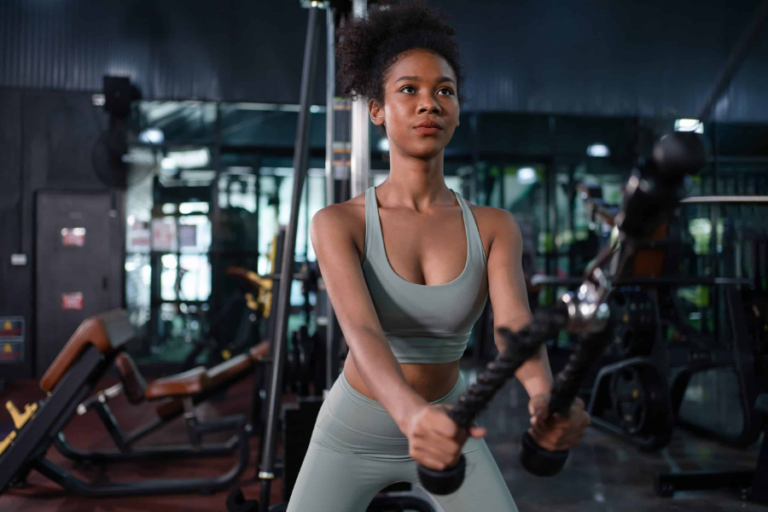
Cable crossover variations fix this. They keep tension on the chest and let your hands move past midline, which helps you reach a stronger contraction than presses alone.
Key training principles for chest growth
You will get more out of any chest routine if you keep these principles in mind.
Use progressive overload
To build muscle, you need to gradually increase the challenge. You can do that by:
- Adding small amounts of weight
- Doing more reps with the same weight
- Increasing total working sets over time
- Slowing the lowering phase to increase time under tension
The research emphasizes using heavy barbell and dumbbell work, then pairing it with higher rep cable or bodyweight work to fully fatigue all chest fibers.
Control the weight, not your ego
Speeding through reps to move more weight usually shifts the work to your shoulders and triceps. You want your chest to do the job.
A useful reminder from bodybuilding legend Jay Cutler is to work the muscles, not the weight. That means:
- Lower under control
- Pause briefly at the bottom when safe
- Squeeze your chest at the top, instead of locking out and relaxing into your joints
Protect your shoulders as you press
Many people feel shoulder pain before they ever feel their chest working. Common fixes include:
- Keep your upper arms at roughly a 45‑degree angle to your torso instead of flared out at 90 degrees
- Keep shoulders “back and down” on the bench, which stabilizes your shoulder blades
- Use an incline angle that keeps your forearms vertical and does not force you to press almost straight up over your face
If certain presses always hurt, swap them out for variations you can do pain‑free. Decline work, machines, or dumbbells can be useful alternatives when flat barbell work is not comfortable.
Balance chest with back work
Heavy chest training pulls your shoulders forward. If you skip back exercises, you increase your risk of shoulder issues and poor posture.
On days you train chest, it is wise to also include rows or other pulling movements in the same week to stay balanced and reduce injury risk.
Gym-based full chest workout routine
This full chest workout routine targets your mid, upper, and lower chest in one session. You will pair a heavy compound movement with a higher rep cable or bodyweight move that emphasizes bringing your arms or hands across your midline.
Aim to run this routine 1 to 2 times per week with at least 48 hours between chest sessions.
1. Flat barbell bench press + horizontal cable crossover
Bench press
- Sets: 4
- Reps: 6, 8, 10, 12 (increasing reps, adjust weight each set to reach near failure)
How to do it:
- Lie on a flat bench with feet planted and lower back slightly arched.
- Grip the bar a little wider than shoulder width.
- Set your shoulders back and down and keep your upper arms at roughly 45 degrees to your torso.
- Lower the bar to mid‑chest under control, pause briefly, then press up while squeezing your chest.
Horizontal cable crossover
- Sets: 4 (paired with your bench sets)
- Reps: 15 each set
How to do it:
- Set the pulleys at about chest height.
- Step forward with a staggered stance and slight bend in your elbows.
- Bring the handles together in front of your chest and slightly across the midline.
- Squeeze for a second, then return under control until you feel a stretch.
This pairing gives you heavy overload for the mid chest from the bench press, then high‑tension work where your arms cross your body to fully activate your pecs.
2. Incline dumbbell bench press + low‑to‑high cable crossover
Incline dumbbell bench press
- Sets: 4
- Reps: 8 to 12
How to do it:
- Set your bench to a moderate incline, not too steep, so your forearms can stay close to vertical as you press.
- Start with dumbbells at your chest, palms facing forward.
- Press up and slightly in, focusing on contracting your upper chest.
- Lower until you feel a comfortable stretch across your chest and shoulders.
Low‑to‑high cable crossover
- Sets: 4 (paired with your incline sets)
- Reps: 15
How to do it:
- Set the pulleys low near the floor.
- With a slight forward lean, bring your hands upward and together in front of your face or upper chest.
- Cross slightly over midline to squeeze the upper fibers of your chest.
- Return slowly to the starting position.
This combination focuses heavily on the upper chest, which many lifters neglect and which helps create a fuller, “shelf‑like” look from the collarbone down.
3. Weighted dips + high‑to‑low cable crossover
Weighted dips
- Sets: 4
- Reps: 8 to 12 (or as many as you can with good form)
How to do it:
- Use parallel bars. Add weight with a belt if bodyweight is too easy.
- Lean slightly forward to place more emphasis on your chest.
- Lower until your upper arms are at least parallel to the ground, pause briefly, then push back up without locking out hard at the top.
High‑to‑low cable crossover
- Sets: 4 (paired with your dip sets)
- Reps: 15
How to do it:
- Set the pulleys high above shoulder level.
- With a slight forward lean, bring the handles down and together toward your lower chest or upper abs.
- Cross slightly over midline and squeeze your lower chest.
- Slowly let the cables rise back to the start.
Weighted dips overload the lower chest, while the high‑to‑low crossover lets you fully shorten those fibers by pulling down and across your body.
4. Weighted pushups + banded cross‑body pushups
Finish your full chest workout routine with a high‑rep bodyweight pairing that drives blood into the muscles and taps any remaining fibers.
Weighted pushups
- Sets: 3
- Reps: As many as you can with good form
How to do it:
- Place a weight plate or weighted vest on your upper back.
- Set your hands slightly wider than shoulder width.
- Keep a straight line from head to heels and lower your chest toward the floor.
- Push back up while squeezing your chest.
Banded cross‑body pushups
- Sets: 3 (paired with your weighted pushups)
- Reps: As many as you can with good form
How to do it:
- Loop a resistance band so that one end is under one hand and the other end is anchored behind you.
- As you push up, let the band pull your working hand slightly across your body to mimic the cable crossover effect.
- Alternate sides or complete all reps on one side before switching.
These finishing moves increase time under tension and emphasize moving your hands across your midline, which helps you fully fatigue the chest after the heavier compound work.
Rest and progression guidelines
- Rest about 60 to 90 seconds between sets
- For paired exercises, move from the heavy movement to the crossover or bodyweight move, rest, then repeat
- When all sets feel manageable at the top of the rep range, increase the load slightly in your next workout
At‑home full chest workout routine without equipment
You can still run a serious full chest workout routine at home with no equipment by using pushup variations. Research shows that pushups can produce similar strength and hypertrophy gains to the bench press, with no significant differences in muscle growth when training volume is matched.
Here is a simple no‑equipment chest circuit you can repeat 3 times:
- Regular pushups
- Reps: 10
- Hands just wider than shoulder width to target the mid chest.
- Star jumps
- Time: 60 seconds
- Keeps your heart rate up between pushup sets.
- Incline pushups
- Reps: 10
- Hands on a bench or sturdy surface, feet on the floor. This angle shifts more emphasis to the lower chest.
- Star jumps
- Time: 60 seconds
- Decline pushups
- Reps: 10
- Feet elevated on a step or chair. This angle targets more of the upper chest.
- Star jumps
- Time: 60 seconds
- Time‑under‑tension pushups
- Reps: 5 very slow reps
- Take 3 to 5 seconds to lower, pause briefly at the bottom, then press up.
- Mountain climbers
- Reps: 30 (total steps)
Pushups hit your pec major and minor, triceps, anterior delts, and even your core and quads. Deficit pushups, where your hands are on handles or blocks to increase your range of motion, can also be very effective, because they recruit more muscle units and increase total work.
At‑home chest routine with dumbbells
If you have dumbbells or a pair of adjustable weights, you can add more direct pressing and flye work without a gym.
Try this circuit for 3 rounds:
- Regular pushups
- Reps: 10
- Chest dips
- Time: 30 seconds
- Use sturdy chairs or parallel surfaces, focus on a slight forward lean to hit the chest.
- Flat dumbbell chest press
- Reps: 10
- Lie on a bench or even the floor and press dumbbells from chest level to straight above you.
- Dumbbell chest flyes
- Time: 30 seconds
- Slight bend in the elbows and open your arms wide, then bring them together while squeezing your chest.
- Incline dumbbell chest press
- Reps: 10
- Use an adjustable bench or prop yourself with cushions to create an incline.
- Chest dips
- Time: 30 seconds
- Time‑under‑tension pushups
- Reps: 10 slow reps
This setup uses presses for heavy loading and flyes for a bigger stretch and squeeze. Dips also challenge your stabilizers, which adds another growth stimulus.
How often to train your chest
Most effective muscle‑building programs train chest about twice per week with different variations and rep ranges. For example:
- An upper/lower split where you hit chest on both of your upper days
- A push/pull/legs split where chest is trained on each push day with a mix of barbell, dumbbell, cable, and bodyweight exercises
You want enough frequency to keep progressing, but not so much that you cannot recover. If you notice performance dropping or chronic soreness, reduce your total sets or frequency slightly.
Common chest training mistakes to avoid
You can have the perfect full chest workout routine on paper and still stall if you make these mistakes:
-
Relying only on flat barbell bench
This often overdevelops your lower chest and leaves the upper area undertrained, which can create a droopy look and increase strain on your shoulders and elbows. -
Using too many machine presses and flyes
Machines have their place, but historically the best pec development tends to come from routines that emphasize free weights, which require more stability and recruitment. -
Never reaching full contraction
In many free weight presses and flyes, tension drops at the top and your triceps take over. That is why including cable crossover variations, or banded pushups that pull your arms across midline, can make your chest work harder at the point of full contraction. -
Flaring your elbows to 90 degrees
This position stresses your shoulders and often limits progress. Keep your upper arms closer to a 45‑degree angle to better target your chest and spare your joints. -
Skipping back work
Only training pushing muscles can pull your shoulders forward. Adding rows or other back work helps balance your physique and protect your shoulders.
Putting your new routine into action
To revamp your training with a full chest workout routine:
- Choose the gym or at‑home program that matches your current setup.
- Commit to running it at least once a week, ideally twice, with rest days in between.
- Track your exercises, weights, and reps so you can apply progressive overload.
- Adjust angles and exercise choices if your shoulders complain, not if your ego does.
Start with the first exercise pairing from the gym routine in your next session, or swap your standard pushups for the at‑home circuit. Once you feel the difference in how thoroughly your chest is working, you will understand why training all angles and using full ranges of motion matters so much for growth and strength.
About the Author