A solid quad workout for athletes does not have to take over your whole day. With the right exercises and smart programming, you can build stronger quadriceps, boost speed, and support knee health in 20 to 30 minutes. The key is choosing movements that give you maximum return for your effort and time.
Below, you will find quick, efficient quad-focused options you can plug into your current training, whether you are in season, off season, or just trying to fit strength work around a busy schedule.
Understand why quad strength matters
Your quadriceps are the four muscles on the front of your thigh. These include the rectus femoris, vastus lateralis, vastus medialis, and vastus intermedius. Together, they straighten your knee, help control your hip, and play a major role every time you sprint, jump, or change direction.
If you are an athlete, stronger quads help you:
- Accelerate faster out of the blocks and during the first 20 meters of a sprint
- Produce more power in squats, deadlifts, lunges, and sled pushes
- Improve stability around the knee and protect the joint from stress
Weak quads are also common after knee injuries and surgeries. Quadriceps weakness after ACL reconstruction is linked to slower functional recovery and more knee osteoarthritis, so rebuilding quad strength is critical if you are returning to high demand sports.
Key principles for quick quad sessions
When you are short on time, the structure of your quad workout for athletes matters as much as the exercises you choose. A few guiding rules keep things simple and effective.
Focus on quality over volume
You do not need a huge list of exercises. For muscle growth and strength, aim for:
- Quad training 2 times per week
- At least 2 quad-focused exercises per session
- Around 10 total sets for quads each week, in the 8 to 12 rep range
This level of work is enough to build size and strength when you stay close to technical failure on each set, which means you stop when you only have 1 or 2 good reps left.
Mix compound and isolation work
To make the most of limited time, combine:
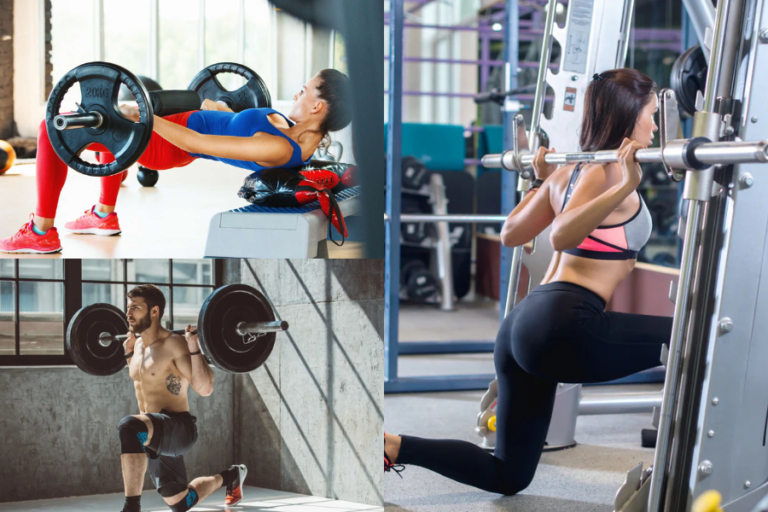
- Compound movements like front squats, hack squats, lunges, Bulgarian split squats, and sled pushes that train multiple joints and muscles at once
- Isolation work like leg extensions that let you push the quads hard without overloading the rest of your body
Research and coaching guides from brands such as Gymshark recommend exactly this blend, with quad-focused squats and presses plus leg extensions to maximize quad activation and growth.
Prioritize good knee mechanics
Your quads work best and your knees stay happier when:
- Your knees track in line with your toes
- Your heels stay grounded or gently elevated as planned
- You control the lowering portion of each rep, instead of dropping into the bottom
Simple tweaks like elevating your heels on a plate or slant board can shift more work to the quads and reduce the load on hips and lower back.
Warm up quickly but effectively
A good warm up for a short quad workout should wake up the muscles without eating half your session.
- Spend 2 to 3 minutes on light cardio, such as easy cycling or brisk walking.
- Add 1 to 2 minutes of dynamic leg swings and bodyweight squats.
- Finish with 1 or 2 light sets of your first quad exercise using very low weight.
If you are prone to quad tightness, a brief round of foam rolling, especially on the rectus femoris and vastus lateralis, can help reduce tension and improve knee tracking. Rolling from just above the knee to the top of the thigh is a simple way to prepare the tissue for work.
Quick quad workout for strength and speed
This first option is a short, intense quad workout for athletes who want strength and sport transfer, especially for sprinting and field sports.
Workout A: Strength and acceleration focus
You can complete this session in about 25 minutes if you move with purpose and rest 60 to 90 seconds between sets.
- Heel elevated front squats
- 3 sets of 5 to 8 reps
- Elevate your heels on small plates or a slant board. Keep your torso upright and drive your knees forward over your toes.
- This position shifts more work onto your quads and improves dynamic trunk control, which carries over to better posture and power when you run.
- Dumbbell elevated split squats
- 3 sets of 8 reps per leg
- Place your front heel on a small ramp or plate and your back foot on a low step, about 7 inches high.
- Stay tall through your torso and let the front knee travel forward. This setup hits the quads heavily while training unilateral strength and balance, both important in the drive phase of sprinting.
- Heavy sled pushes
- 3 sets of 10 to 15 meters
- Keep your heels slightly elevated, avoid letting them drop flat, and lean forward.
- Drive through your quads and glutes to push the sled. This drill closely matches the posture and force angles of acceleration, and is effective for teaching athletes how to produce forward power efficiently.
If you only have 15 minutes, cut to 2 sets of each movement and maintain the same focus on form and intent.
Quick hypertrophy workout for quad size
If your main goal is to add muscle to the front of your thighs, this session gives you a dense hit of volume without keeping you in the gym all night.
Workout B: Muscle growth focus
Aim for 60 to 75 seconds of rest and complete the session in 20 to 25 minutes.
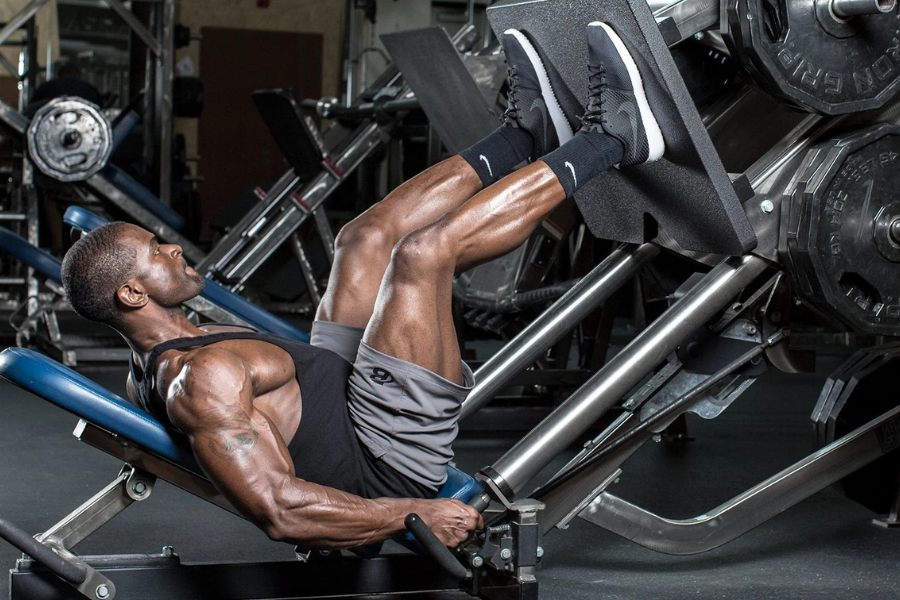
- Hack squats or leg press with quad emphasis
- 3 sets of 10 to 12 reps
- Place your feet a bit lower on the platform and keep them shoulder width apart.
- This foot position and a more upright torso angle place more load directly through the quads.
- Bulgarian split squats
- 3 sets of 8 to 10 reps per leg
- Use a shorter stance and keep your torso vertical.
- Let your front knee move forward over your toes instead of sitting back into the hip. This targets your rectus femoris and vastus medialis and also helps correct imbalances between legs.
- Leg extensions
- 3 sets of 12 to 15 reps
- Control the weight up and down and pause briefly at the top.
- Because leg extensions isolate your quads with your body supported by the machine, you can safely take these close to failure to fully fatigue the muscle without excessive strain on your back or hips. Guides from Gymshark highlight leg extensions as ideal finishers for quad growth and endurance.
You can use this workout twice per week, altering the rep range slightly, for example 10 to 12 reps in one session and 12 to 15 in the other, to keep your muscles challenged.
Minimal equipment quad routine at home
If you do not have access to machines or bars, you can still train your quads hard with bodyweight and a pair of dumbbells.
Workout C: Home or field session
This routine fits neatly into 15 to 20 minutes and still hits all four quadriceps muscles.
- Heel elevated goblet squats
- 3 sets of 10 to 12 reps
- Hold one dumbbell at your chest or use bodyweight if needed. Elevate your heels on a wedge or a couple of books.
- Focus on allowing the knees to track forward and keeping your torso upright to drive emphasis into the quads.
- Walking lunges
- 2 to 3 sets of 12 steps per leg
- Step forward, lower until both legs are at roughly 90 degrees, and keep your front knee stacked over your ankle.
- Proper 90 degree alignment reduces stress on your knees and shifts more work to your quads, glutes, and hips.
- Banded Spanish squats
- 2 sets of 15 reps
- Anchor a heavy resistance band around a sturdy object at knee height and loop it behind your knees. Sit back into a squat while keeping your torso tall.
- The band helps stabilize your knees and lets your quads work hard with less discomfort, which is helpful if you usually feel knee pain in standard squats.
If you want an extra power element, you can finish with 2 sets of bodyweight jump squats for 6 to 8 reps, landing softly and keeping depth to about parallel. This adds an explosive challenge without much extra time.
Quad training for injury prevention and rehab
If you have a history of knee injuries or are working back from ACL surgery, your quad workout for athletes needs extra care. The goal is still to load the quads, but in a way that respects healing tissues.
Early on, simple open chain exercises like quadriceps setting at 20 to 45 degrees of knee flexion and straight leg raises can start to rebuild activation and strength. Slight external rotation of the thigh and dorsiflexion of the ankle help maximize quad force output. As you progress, short arc knee extensions and other open chain work remain valuable.
Current rehab approaches recommend combining open kinetic chain and closed kinetic chain exercises and taking sets close to fatigue at longer muscle lengths to stimulate hypertrophy and strength. Some protocols also use blood flow restriction training at very low loads to accelerate quad regrowth while reducing joint stress.
If you fall into this category, it is best to work with a physical therapist or sports medicine professional to tailor exercises and volumes to your stage of recovery.
How to fit quad work into a busy week
To keep things realistic, pair your quad work with sessions you already have planned.
You might:
- Add Workout A after your primary speed session once per week
- Use Workout B on a separate lifting day focused on lower body strength
- Drop in Workout C at home when you cannot reach the gym
Give yourself at least 48 hours between hard quad sessions so your muscles can recover and grow. If your schedule is unpredictable, aim for two quad focused workouts per week and fill any gaps with shorter, single exercise mini sessions, such as 3 sets of heel elevated squats after practice.
Simple progression plan
To keep improving without overcomplicating things, adjust one variable at a time:
- In week 1 and 2, get comfortable with technique and hit the lower end of the rep ranges.
- In week 3 and 4, keep the same weight and increase reps by 1 or 2 per set.
- In week 5 and beyond, add a small amount of weight and drop back to the lower end of the rep range again.
You can stay with the same basic quad workout for several months by cycling through this pattern and paying attention to form, control, and near to failure effort on your working sets.
With a clear plan, you do not need long sessions to see progress. Choose one of these quick workouts, commit to it for a few weeks, and you will start to feel stronger, faster, and more stable every time you step onto the field or track.
About the Author