Why single arm dumbbell chest exercises work
If you want a stronger, more defined chest but only have limited equipment, single arm dumbbell chest exercises are a smart place to start. Training one side at a time helps you build your chest muscles, improve stability, and fix strength imbalances, all while challenging your core more than traditional barbell presses.
Single arm chest work primarily targets your pectorals, while also engaging your triceps, shoulders, and core for stability. Because you are resisting rotation on every rep, these movements can actually feel harder than pressing with both arms at once, even with lighter weights.
Key benefits of single arm chest training
Before you pick up a dumbbell, it helps to understand what you are getting out of this style of training.
Improve muscle balance and symmetry
When you press with a barbell or two dumbbells at once, your stronger side can quietly take over. Single arm dumbbell chest exercises remove that shortcut so each side has to pull its own weight.
Benefits include:
- More even strength between your left and right sides
- Better symmetry in your chest muscles over time
- A stronger base for your bilateral presses and push-ups
Guidance from PureGym notes that unilateral pressing can help minimize muscular imbalances and improve your overall chest press performance by forcing each side to work equally as of June 2024.
Build chest and core strength together
Because the load is only on one side, your body has to resist tipping or twisting. That means your:
- Obliques and abdominals work to prevent rotation
- Glutes and legs create a stable base
- Shoulder stabilizers keep the joint in a safe, strong position
Coaching resources on the single arm bench press highlight that this unilateral setup boosts shoulder and core stability and can reduce injury risk, since your stability tends to give out before your joints are overloaded.
Train effectively with minimal equipment
You can create a tough chest workout with:
- One adjustable dumbbell
- A bench, box, or even the floor
- Minimal space at home, in the gym, or while traveling
Recent guides to one-dumbbell chest workouts emphasize that this approach is portable, space efficient, and suitable for all fitness levels as of March 13, 2024.
How to set up for single arm chest work
Good setup protects your shoulders and makes every rep more effective.
Position your body
For most single arm presses you will:
- Lie on a flat or incline bench with your eyes under the dumbbell.
- Keep five points of contact: head, upper back, hips on the bench, feet flat on the floor.
- Slightly arch your upper back by pinning your shoulder blades to the bench.
- Keep your non-working arm either extended to the side or gripping the bench for balance.
PureGym notes that squeezing your shoulder blades together and maintaining a light arch helps you avoid shoulder strain while keeping your chest in a strong pressing position.
Protect your shoulders
To keep the focus on your chest without irritating your shoulders:
- Tuck your elbows about 45 to 60 degrees from your torso.
- Avoid flaring your elbows straight out to the sides.
- Keep your chest up and avoid rounding your shoulders forward at the top.
Fitness coach Jeremy Ethier explains that over-flared elbows and rounded shoulders shift the work into your front delts and triceps and can raise injury risk. A tucked elbow path better matches the direction of your chest fibers so your pecs do more of the work.
Use the right weight and range of motion
A useful guideline:
- Start with a lighter dumbbell than you use for two arm pressing.
- Lower the weight under control to slightly below mid-chest level if your shoulders are comfortable.
- Press until your arm is straight but do not slam the dumbbell together with your other hand or cross past directly above your shoulder.
Ethier notes that pressing straight up and letting the dumbbells touch at the top reduces chest tension and wastes effort. Instead, you want the dumbbell to travel toward your mid-chest on the way down and slightly back toward your shoulders on the way up, with the forearm vertical over the elbow.
Best single arm dumbbell chest exercises
You can mix and match the movements below to build a complete chest session. Start with one or two presses, add one fly or squeeze variation, and then finish with a bodyweight move if you have time.
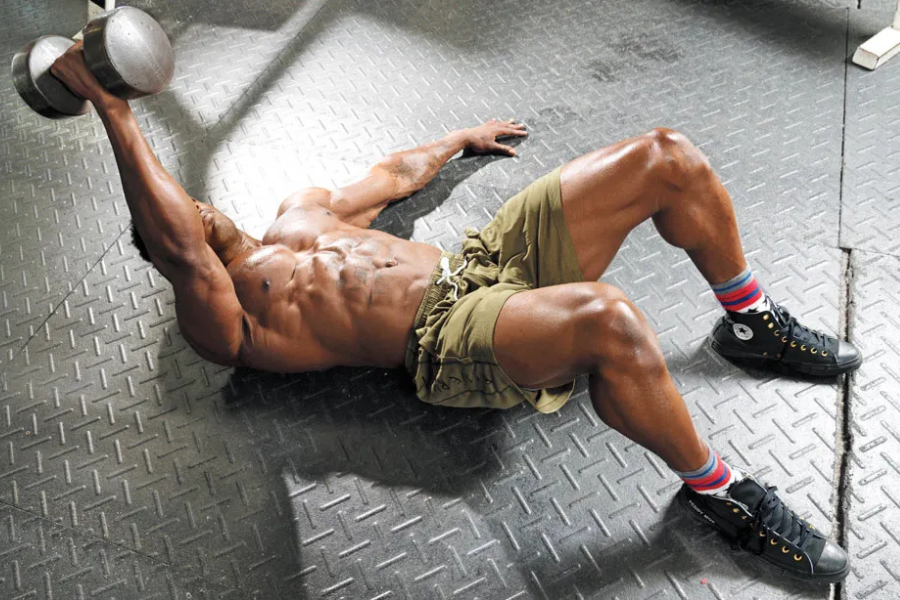
Single arm dumbbell flat bench press
This is your foundational movement and a direct twist on the standard dumbbell bench press.
Muscles worked: Middle chest, triceps, front shoulders, core stabilizers
How to do it:
- Lie on a flat bench or mat with your knees bent and feet flat.
- Hold a dumbbell in one hand at chest level with your palm facing forward.
- Retract your shoulder blades and keep a slight arch in your upper back.
- Brace your core and press the dumbbell up until your arm is straight above your shoulder.
- Lower the dumbbell toward your mid-chest in a controlled arc, keeping your elbow tucked, until it is just below chest level or as far as your shoulders allow without discomfort.
- Press back up, keeping your forearm stacked over your elbow throughout the movement.
Programming idea:
- 3 sets of 8 to 12 reps per arm, resting 60 to 90 seconds between sets
Resources on the single arm bench press recommend this rep range with moderate weight to build both pressing strength and stability.
Incline single arm dumbbell press
Changing the angle to an incline shifts more focus to your upper chest.
Muscles worked: Upper chest, front shoulders, triceps, core
How to do it:
- Set your bench to a low incline, roughly 15 to 30 degrees as often suggested by strength coaches like Jeremy Ethier for targeting upper chest.
- Lie back and set up as you would for the flat press.
- Press the dumbbell up above your shoulder.
- Lower it toward the upper part of your chest, keeping the elbow at roughly 45 to 60 degrees from your side.
- Press back up, stopping when the dumbbell is above your shoulder, not over your face.
Programming idea:
- 3 sets of 8 to 10 reps per arm
Including an incline press once a week alongside flat presses can help fill out your upper chest without needing heavy barbell work.
Offset single-arm chest press
This variation increases the stability challenge by partially hanging your body off the bench.
This setup is described in the ACE Fitness exercise library, which lists it as a chest-focused movement suitable for chest workouts.
Muscles worked: Chest, shoulders, triceps, core, glutes, hip stabilizers
How to do it:
- Sit sideways on a flat bench, then lean back so the top of your back is diagonal across the bench. Your working side shoulder will be off the bench.
- Plant both feet flat on the floor and press your hips up until your body forms a straight line from shoulders to knees.
- Hold a dumbbell in the hand of the shoulder that is off the bench.
- Use your free hand to grip the bench near your head for balance.
- Start with the dumbbell over your chest, arm straight.
- Slowly bend your elbow and lower the dumbbell until it is just below the level of the bench for a deeper stretch.
- Press the weight back up over the center of your chest by straightening your arm.
Programming idea:
- 3 sets of 8 to 10 reps per side
Because only one shoulder is supported by the bench, your core and hips have to work harder to stay level, so keep the weight conservative until the movement feels controlled.
Half-bench single arm press
The half-bench press is another way to add instability and recruit your abs and glutes.
Muscles worked: Chest, triceps, shoulders, abs, glutes
How to do it:
- Lie on a flat bench so that only your upper back and shoulders are supported and your hips are off the end of the bench.
- Plant your feet wider than hip-width and squeeze your glutes so your body forms a straight line from shoulders to knees.
- Hold a dumbbell in one hand at chest level. You can extend your free arm out for balance.
- Press the dumbbell up until your arm is straight over your shoulder.
- Lower it under control, keeping your hips high and your torso square to the ceiling.
Programming idea:
- 3 sets of 10 to 12 reps per side
Guides to this movement recommend it for correcting side-to-side imbalances while training full-body stability, which carries over to everyday pushing tasks and heavier compound lifts.
Single arm dumbbell low fly
This standing fly variation isolates your chest without needing a bench.
Muscles worked: Chest (pecs), front shoulders
How to do it:
- Stand tall with feet hip-width apart, holding a dumbbell in one hand by your side.
- Keep a slight bend in your elbow throughout the movement.
- With your palm facing forward or slightly inward, raise the dumbbell in a wide arc across your body until it is in front of your chest or slightly above.
- Focus on squeezing your chest at the top.
- Lower back to the starting position under control.
A November 22, 2023 routine recommends this as part of an 8 rep per arm setup for chest isolation with one dumbbell.
Programming idea:
- 3 sets of 8 to 12 reps per arm
Use lighter weight here and think about pulling from your chest rather than swinging with your shoulder.
Single dumbbell squeeze press
The squeeze press lets you overload your chest even if you only have one dumbbell.
Muscles worked: Chest, triceps, front shoulders
How to do it:
- Lie on a flat bench or the floor with your knees bent and feet flat.
- Hold one dumbbell horizontally with both hands, palms facing each other, pressing in firmly on the plates or handle.
- Start with the dumbbell at mid-chest height, elbows tucked close to your sides.
- Squeeze the dumbbell between your hands as hard as you can.
- Press it straight up until your arms are extended, maintaining that squeeze.
- Lower slowly while still driving your hands inward on the dumbbell.
One-dumbbell chest workout guides suggest the squeeze press is excellent for ramping up chest engagement and is often performed for higher reps.
Programming idea:
- 3 sets of 12 to 15 reps
One dumbbell push-up
This bodyweight plus dumbbell hybrid increases the workload on one side of your chest.
Muscles worked: Chest, triceps, shoulders, core
How to do it:
- Place one dumbbell on the floor and grip it with one hand so your wrist stays neutral.
- Set your other hand on the floor at about shoulder width.
- Move your feet back into a strong plank position.
- Brace your core and keep your body in a straight line.
- Lower your chest toward the floor, keeping elbows at about a 45 degree angle.
- Push back up to the start, keeping your hips from twisting.
Guidance from March 2024 notes that this setup forces the chest on the dumbbell side to work harder, especially when you perform sets close to failure.
Programming idea:
- 2 to 3 sets to near failure per side
If full push-ups are challenging, you can drop your knees to the floor or elevate your hands on a bench or sturdy surface.
Dumbbell pullover
Although not a pure press, the pullover is often included in one-dumbbell chest workouts because it trains the chest, back, and shoulders together.
Muscles worked: Chest, lats, shoulders, triceps
How to do it:
- Lie on a flat bench with your upper back supported and feet flat on the floor.
- Hold one dumbbell with both hands above your chest, arms almost straight but with a small elbow bend.
- Brace your core and keep your lower back lightly pressed into the bench.
- Slowly lower the dumbbell in an arc behind your head as far as your shoulders comfortably allow.
- Pull the weight back up over your chest by driving your upper arms forward and slightly inward.
As described in the March 13, 2024 article, this movement helps improve chest flexibility and strength when done with controlled form.
Programming idea:
- 3 sets of 12 to 15 reps
Sample single dumbbell chest workout
Use this simple structure when you want a full chest session using single arm dumbbell chest exercises and minimal gear.
| Exercise | Sets | Reps (per side) | Notes |
|---|---|---|---|
| Push-ups (warm-up) | 2 | To comfortable fatigue | Prepare chest and shoulders |
| Single arm flat dumbbell bench press | 3 | 8–12 | Focus on control and stability |
| Incline single arm dumbbell press | 3 | 8–10 | Option: swap for half-bench |
| Single arm dumbbell low fly | 3 | 8–12 | Use lighter weight |
| Single dumbbell squeeze press | 3 | 12–15 | Constant squeeze on dumbbell |
| One dumbbell push-up | 2–3 | To near failure | Finish with high effort |
Rest 30 to 60 seconds between smaller moves and up to 90 seconds between heavy sets. As March 2024 programming suggestions note, keeping rest reasonably short helps maintain intensity without sacrificing form.
How to progress safely
To keep getting stronger while staying injury free:
-
Add reps first
When an exercise feels easier, build to the top of the recommended rep range before increasing weight. -
Increase weight slowly
Move up in small jumps, especially for unstable variations like half-bench or offset presses. -
Prioritize form
If your shoulders or elbows feel strained, reduce the load and check your elbow angle, shoulder position, and arm path. -
Balance your week
If you press heavily on one day, give your shoulders and elbows at least 48 hours before your next intense chest session.
Guides on both PureGym and coaching platforms emphasize that proper technique and gradual overload are key to getting results from single arm dumbbell chest exercises while avoiding unnecessary aches.
Common form mistakes to avoid
A few small tweaks can dramatically increase how much your chest works.
Flaring your elbows too wide
Pressing with elbows nearly level with your shoulders:
- Reduces chest activation
- Increases stress on the front of your shoulders
Instead, keep elbows tucked at 45 to 60 degrees and align your arm path with the direction of your chest fibers as suggested by Jeremy Ethier.
Letting your forearms drift inward
If the dumbbell moves in toward your midline so your forearm is no longer vertical over your elbow, your triceps do more work and your chest does less. Ethier notes this can cut chest loading by roughly half. Think of stacking your wrist directly above your elbow throughout the rep.
Rounding your shoulders at the top
Protracting, or pushing your shoulders forward, at the top shifts tension away from your chest and into your front delts. Keep your shoulder blades gently pulled back and your chest lifted instead. Pre-activation drills like light band pull-aparts or over-and-backs, as some coaches recommend, can help you feel this positioning before you press.
Slamming or touching the dumbbells together
If you knock the dumbbell across your midline or let both hands meet at the top, you actually lose chest tension because of how gravity acts on the weight. Stop when your arm is straight and the dumbbell is directly above your shoulder, then begin your next rep.
When to use machines vs free weights
If you are brand new to pressing movements or returning after a layoff, PureGym suggests starting with a machine-based single arm chest press. Machines can:
- Guide your range of motion
- Offer more stability while you learn the pattern
- Reduce the immediate balance demands on your shoulders and core
Once you are comfortable with the machine version and can press without pain, you can shift to dumbbells to gain more stability, coordination, and range of motion benefits.
Putting it all together
Single arm dumbbell chest exercises let you:
- Build a stronger, more balanced chest
- Challenge your core and stabilizers in every rep
- Train effectively with just one dumbbell and minimal space
Start with one or two of the simpler variations, like the single arm flat press and the squeeze press, then gradually introduce more challenging options such as the offset or half-bench press. Keep your shoulders packed, your elbows tucked, and your forearms stacked, and you will feel the difference in how your chest works within the first few sessions.
About the Author