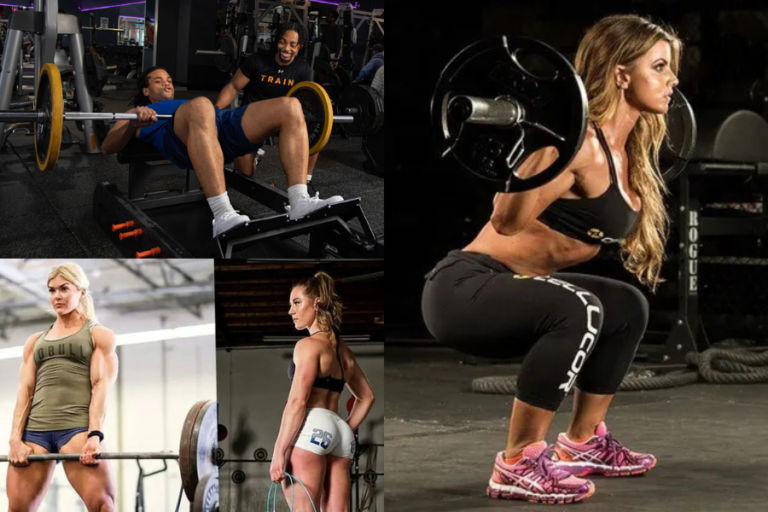
A strong quad workout for knee support can do more than build leg muscles. It can help you walk, climb stairs, and move with less pain and more confidence. Whether your knees already ache or you simply want to protect them as you age, paying attention to your quadriceps is one of the smartest training decisions you can make.
In this guide, you will learn why your quads matter so much for knee health, how they affect your mobility, and which beginner friendly exercises you can start using today.
Why your quads matter for knee support
Your quadriceps are the four muscles on the front of your thigh. Their main job is to straighten your knee so you can walk, run, jump, sit down, and stand back up. Any time you push the ground away or rise from a chair, your quads are working hard to extend and stabilize the knee.
These muscles attach to your kneecap through the quadriceps tendon, which then connects to your shin bone through the patellar ligament. This setup lets your quads control how your knee bends and straightens. When your quads are strong, they help keep the knee joint stable and aligned. When they are weak or tight, your knee has to absorb more impact on its own, which can increase wear and tear.
One part of the quadriceps, the vastus medialis, plays a special role in guiding your kneecap as you extend your leg. It helps counterbalance the pull from the outer quad muscles and supports proper kneecap tracking. If this muscle is underactive, you may be more likely to feel pain around or behind the kneecap during squats, stairs, or long walks.
How quad strength affects your mobility
You use your quadriceps in almost every daily movement that involves your legs. Strong, well coordinated quads help you:
- Walk and stand for longer without fatigue
- Climb stairs with less strain on your knees
- Sit down and stand up smoothly
- Keep your balance, especially on uneven ground
Your quads do more than move you forward. They also provide important feedback to your brain about where your legs are in space. This proprioceptive role helps you maintain posture and react quickly if you trip or slip.
When your quadriceps become weak, tight, or injured, you might notice that your knees feel unstable or painful, your gait changes, or tasks like getting up from low chairs feel harder. Over time, reduced quad strength can contribute to reduced activity levels, which then leads to further weakness and stiffness. That cycle can be especially challenging as you get older or if you live with conditions such as knee osteoarthritis.
Research backs up the importance of strong quads for knee function. A randomized clinical trial in São Paulo, Brazil, found that people with knee osteoarthritis who completed an eight week quadriceps strengthening program twice a week significantly reduced knee pain and improved functional mobility compared with a group that only received education and encouragement without exercise. Participants reported better functional capacity, less pain, and higher quality of life after the program, while the non exercise group did not see meaningful changes.
The link between quad workouts and knee pain
If you already have knee pain, you might worry that working your quads will make things worse. In reality, properly chosen and performed quad exercises usually reduce pain over time rather than causing it.
Weak or tight quadriceps are a common source of knee discomfort because they do not support the joint as they should. When your quads do not absorb shock or guide the kneecap correctly, the joint can become irritated. For some people, this lack of support is linked with a higher risk of developing knee osteoarthritis, especially in women.
There is also good evidence that focused quad strengthening helps manage existing knee osteoarthritis. Studies published in journals such as the Journal of Orthopaedic & Sports Physical Therapy report that people who follow structured quadriceps programs experience meaningful improvements in pain and day to day function. In other words, your workout can become part of your treatment plan, not just a fitness hobby.
The key is to start with low impact, controlled movements and progress gradually. You want your muscles to feel challenged without causing sharp or lasting knee pain. Over time, stronger quads can help you rely less on pain medication and feel more secure during your usual activities.
If any exercise causes sharp, sudden pain or swelling in your knee, stop and speak with a qualified healthcare professional or physical therapist before continuing.
Safe starting points for sensitive knees
If your knees are already sore or you are recovering from an injury, it makes sense to begin with very gentle quad activation. These exercises focus on muscle engagement with little to no movement at the knee joint.
Quad sets
Quad sets are simple, joint friendly exercises that teach you to fully tighten your quadriceps.
- Lie on your back or sit with your leg straight in front of you.
- Gently press the back of your knee toward the floor or bed as if you are trying to flatten it.
- You should feel the muscles on the front of your thigh tighten and your kneecap pull slightly upward.
- Hold for 5 to 10 seconds, then relax.
Aim for 2 to 3 sets of 10 to 15 holds per leg. As you gain control, you can increase the hold time.
Isometric quad holds
Isometric quad holds are another way to switch on your thigh muscles without bending and straightening the knee.
- Lie on your back with your legs straight.
- Gently lift your heels a few inches off the ground while keeping your knees straight.
- You can also lift your head and shoulders slightly to engage your core.
- Hold for 5 to 10 seconds, then lower with control.
Start with 2 sets of 8 to 10 holds. These holds activate your quads with virtually no knee movement, which makes them a good early step if you have very sore joints.
Short arc extensions
Short arcs bridge the gap between static holds and more dynamic movements.
- Lie on your back and place a rolled towel or small foam roller under your knee.
- Keep the back of your knee in contact with the support and slowly straighten your leg by lifting your heel.
- Pause briefly at the top, then lower your foot back down.
Because the knee bends and straightens over a small angle, you get quad strengthening with less stress on the joint. Work up to 3 sets of 10 to 15 repetitions.
Beginner friendly quad exercises for knee support
Once you can contract your quads comfortably, you can move toward more functional exercises that mimic daily movements. The following options are often used in rehab settings and are suitable for many people with sensitive knees.
Straight leg raises
Straight leg raises build strength at the front of the hip and thigh without much bend at the knee.
- Lie on your back with one leg bent and the working leg straight.
- Tighten your quad on the straight leg.
- Slowly lift the straight leg until it is about level with the opposite knee.
- Hold for a second, then lower with control.
Perform 2 to 3 sets of 10 to 12 repetitions per side. If your back feels strained, reduce the height of the lift or rest your hands under your lower back for support.
Wall sits
Wall sits are a simple way to challenge your quads and build endurance.
- Stand with your back against a wall and your feet about 1 to 2 feet in front of you.
- Slide down the wall until your knees are bent slightly or to about a 45 degree angle, depending on comfort.
- Keep your knees over your ankles, not pushed far past your toes.
- Hold for 15 to 30 seconds, then push back up to standing.
Start with 2 holds and work toward 3 to 4 holds as you get stronger. If your knees feel cranky, choose a shallower bend and shorter hold time at first.
Step ups
Step ups mirror the motion of climbing stairs and rely heavily on quad strength.
- Stand facing a low step or sturdy platform.
- Place one foot fully on the step.
- Press through your heel and straighten your knee to lift your body up.
- Gently lower back down with control.
Begin with a low step and perform 2 sets of 8 to 10 repetitions per leg. As this becomes easier, you can increase the height slightly, always checking that your knee does not collapse inward and that pain stays low.
Intermediate moves to build strength and stability
If your knees tolerate the beginner exercises well, you can add a few intermediate movements to increase strength and improve control. Take your time, and do not progress until you feel confident with your form.
Mini squats and supported squats
Squats target your quads, glutes, and core in a way that carries over directly to sitting and standing.
- Stand with your feet about hip width apart.
- Hold on to the back of a chair, countertop, or suspension straps for balance if needed.
- Gently bend your knees and push your hips back as if you are about to sit down.
- Lower only as far as feels comfortable, usually a small range at first.
- Press through your heels to return to standing.
Aim for 2 to 3 sets of 8 to 12 repetitions. TRX assisted squats or bench squats are especially useful if weight bearing bothers your knees. Using a TRX setup on a door or sitting back onto a bench lets you shift some load away from the joint while still working the quads.
Terminal knee extensions with a band
Terminal knee extensions target the final part of knee straightening, which is crucial for stability when you walk and stand.
- Anchor a resistance band to a sturdy object at about knee height.
- Loop the band behind your knee and step back until there is gentle tension.
- Start with your knee slightly bent.
- Straighten the knee by tightening your quad and pushing the back of the knee against the band.
- Slowly allow the knee to bend again.
Perform 2 to 3 sets of 12 to 15 repetitions per leg. Focus on feeling the thigh muscles engage instead of forcing the joint.
Reverse Nordic curls
Reverse Nordic curls are more advanced but can deliver significant quad strengthening and muscle growth.
- Start in a tall kneeling position with your knees hip width apart and your body upright.
- Engage your core and keep your body in a straight line from knees to shoulders.
- Slowly lean backward, hinging from your knees, while keeping your hips extended.
- Go only as far as you can control, then use your quads to pull yourself back up.
Begin with a very small range and a low number of repetitions, such as 2 sets of 5. As your strength improves, you can increase both. Because these place high demand on the quads, they are best used once pain is well controlled and you already have a base level of strength.
How to structure your quad workout for knee support
To get the most benefit from your quad workout for knee support, consistency and progression are essential. You do not need long sessions or heavy weights, but you do need a plan.
Here is a simple way to organize your training 3 days per week:
-
Warm up for 5 to 10 minutes
Walk, cycle gently, or march in place to increase blood flow to your legs. This prepares your muscles and reduces injury risk. -
Activate with 1 to 2 basic moves
Choose from quad sets, isometric holds, or short arcs. Perform 1 to 2 sets to wake up the muscles. -
Strengthen with 3 main exercises
Combine options like straight leg raises, wall sits, step ups, mini squats, or terminal knee extensions. Aim for 2 to 3 sets of 8 to 15 repetitions, or timed holds for wall sits. -
Cool down and stretch
Gently stretch your quads, hamstrings, and calves. Hold each stretch for about 20 to 30 seconds and avoid bouncing.
Try to increase either the number of repetitions, the length of your holds, or the resistance slightly each week. This progressive overload helps your muscles keep adapting. Pay attention to how your knees feel during and after each session. Mild muscle fatigue is normal, but ongoing or sharp joint pain is a sign to back off and adjust.
When to seek professional guidance
While a home based quad workout for knee support works well for many people, it is important to recognize when you might benefit from expert help. Consider seeing a physical therapist or medical provider if:
- Your knee pain is severe or appeared suddenly after an injury
- The knee feels unstable, gives way, or locks in place
- You notice significant swelling, redness, or warmth around the joint
- Pain does not improve after a few weeks of careful exercise and activity changes
A professional can evaluate your movement patterns, check for underlying issues like ligament or cartilage damage, and tailor a program to your specific needs. In some cases, they may also use hands on techniques or additional treatments alongside your exercise routine.
Bringing it all together
Focusing on a quad workout for knee support is one of the most practical ways you can protect your joints and improve your mobility. Strong quadriceps help guide and stabilize your knees, absorb impact, and make everyday movements feel easier. With gentle starter exercises, thoughtful progression, and consistent practice, you can build leg strength without aggravating your knees.
You do not need a full gym or complicated gear to begin. Start with a few of the exercises that feel manageable today, keep your movements slow and controlled, and listen closely to your body. Over time, those small, steady sessions can add up to more comfortable steps, stronger legs, and greater confidence in every move you make.
About the Author