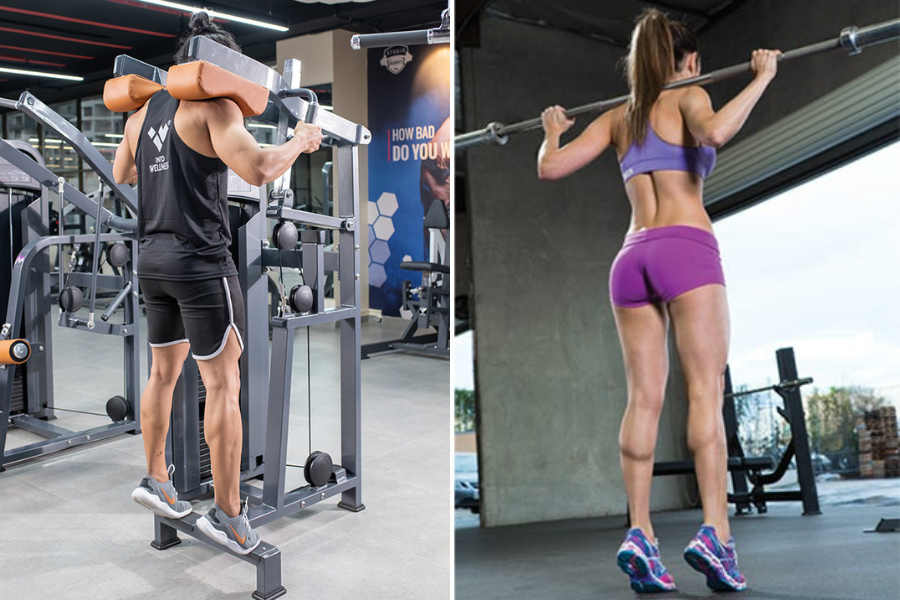
A stronger, more defined lower leg does not require complicated machines or an advanced program. Single leg calf raises are a simple bodyweight exercise you can do almost anywhere, and they are one of the most effective ways to build calf strength, balance, and ankle stability.
Below, you will learn exactly how to perform single leg calf raises, why they work so well, and how to progress them as you get stronger.
What are single leg calf raises?
Single leg calf raises are a unilateral calf exercise where you lift and lower your body using one leg at a time. You push through the ball of your foot to raise your heel, then slowly lower it back down.
This movement primarily works your two main calf muscles, the gastrocnemius and the soleus, along with the smaller muscles and connective tissues around your ankles and feet. Because you are on one leg, your stabilizing muscles work hard too, which improves balance and control.
Compared to doing calf raises on both legs, the single leg version is especially useful for correcting left to right strength imbalances and improving stability. Bilateral calf raises are still helpful for lifting heavier loads and building overall mass, so combining both in your training gives you the best of both worlds.
Benefits of single leg calf raises
When you make single leg calf raises a regular part of your routine, you get more than just stronger calves.
Improve strength and muscle definition
Single leg calf raises isolate each calf and force it to support your full bodyweight. This concentrated load helps you build strength and muscle size in the gastrocnemius and soleus. Research notes that these muscles are responsible for ankle extension and play a key role in lower leg strength and aesthetics as highlighted in a guide from the Hevy app in 2026.
The soleus is rich in slow twitch fibers and responds well to higher repetitions. The gastrocnemius responds better to moderate and higher loads. By mixing bodyweight sets with added resistance later on, you can effectively target both muscles for strength and growth.
Boost balance and stability
Balancing on one leg while moving your heel up and down challenges your entire lower leg and foot. Single leg calf raises enhance ankle stability and neuromuscular control, which means your brain and muscles communicate more efficiently each time you perform a rep.
According to a January 16, 2025 article on GMWD Fitness, these adaptations significantly improve balance performance and help reduce age related mobility loss as you age. Over time, you will notice it becomes easier to stand on one leg, react to uneven surfaces, and stay steady during quick movements.
Reduce injury risk
Stronger calves and ankles provide better support for your knees, hips, and feet. Single leg calf raises help correct side to side imbalances, which is important because uneven strength can increase your risk of strains and overuse issues.
Foot & Ankle Albury in Australia reports that the soleus can absorb 6.5 to 8 times your bodyweight during running, and the gastrocnemius can absorb 2 to 3 times bodyweight. When these muscles are strong and conditioned, they handle impact more effectively and help protect the rest of your lower body during daily activities and sports.
Enhance performance in sports and daily life
Powerful, resilient calves support almost every movement pattern you rely on, from walking and climbing stairs to sprinting and jumping. Because single leg calf raises are unilateral, they translate especially well to:
- Running and jogging
- Jumping and plyometric drills
- Single leg strength moves like lunges and Bulgarian split squats
As your calves get stronger and more fatigue resistant, you will likely feel more drive off the ground, better push off when you walk or run, and more stability when you change direction.
How to do single leg calf raises with perfect form
Starting with proper technique helps you get the most from each rep and avoid unnecessary strain.
Step by step setup
- Stand tall near a wall, sturdy chair, or rail for balance support.
- Shift your weight onto one leg and lightly lift the other foot off the floor.
- Keep your standing leg straight without locking your knee.
You can begin on a flat floor. Once you are comfortable, you can move to a step or raised platform to increase your range of motion.
Performing the repetition
Follow this sequence for each rep:
- Press the ball of your foot into the ground or platform.
- Drive your heel up until you are on your tiptoes. Aim to reach your maximum comfortable heel height.
- Pause briefly at the top and squeeze your calf to fully engage the muscle.
- Slowly lower your heel back down under control. If you are on a step, allow your heel to drop just below the edge for a gentle stretch.
Throughout the movement, keep your core engaged, your torso upright, and your gaze straight ahead. This helps you maintain balance and prevents you from leaning too much on your support.
According to guidance from GMWD Fitness, a controlled tempo and steady breathing improve muscle activation and maximize balance benefits.
Using a raised platform
To deepen the stretch and increase the range:
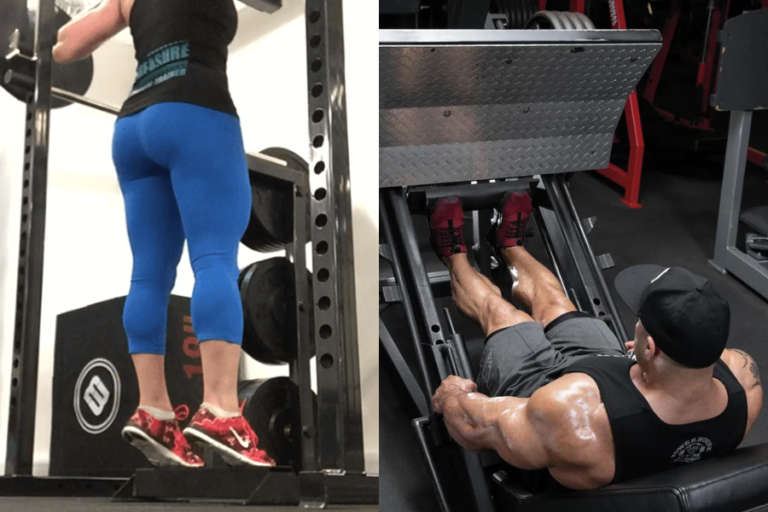
- Step one foot onto a raised platform with your heel hanging off the edge and your toes on the plate.
- Let your heel lower slightly below the platform at the bottom of each rep for a mild calf stretch.
If you are a runner, this extended range of motion can be especially helpful for improving calf flexibility and strength through the angle you use when you push off the ground.
How many reps and sets you should do
If you are new to single leg calf raises, start with bodyweight only. A good beginner plan is:
- 3 sets of 10 to 12 repetitions per leg
- 2 to 3 times per week
This frequency is enough to build strength and control without overloading your calves. Rest about 30 to 60 seconds between sets. As your calves adapt, you can gradually:
- Increase to 15 to 20 reps for more endurance
- Add an extra set
- Introduce light weights once your balance feels solid
Because the soleus responds well to higher repetition work, including at least one higher rep set can be useful, particularly when your weights are lighter.
Variations to keep progressing
Once basic single leg calf raises feel manageable, you can increase difficulty in several ways.
Add weight
Hold a dumbbell in the hand on the same side as your working leg, or use a backpack or weight vest if that feels more comfortable. Start with light resistance, for example around 10 kg, and focus on keeping the weight steady so you do not swing or twist.
Heavier loading challenges the gastrocnemius and helps you build more power and size, as noted in the Hevy app guidance.
Use a step for more range
Performing the exercise on a step or ledge allows a deeper heel drop, so your calf works through a greater range of motion. This can promote flexibility and strength in positions similar to running and jumping.
Be sure to move slowly, especially at the bottom of the rep, so you do not bounce or overstretch.
Eccentric and isometric focus
You can increase intensity without adding more weight by changing how you move:
- Eccentric emphasis: Take 3 to 4 seconds to lower your heel while keeping the upward phase normal.
- Isometric holds: Pause at the top of the raise and hold for 3 to 5 seconds before lowering.
These tweaks increase time under tension and can drive further muscle growth and endurance.
Common mistakes and how to avoid them
A few form errors can reduce the effectiveness of single leg calf raises or shift the work away from your calves.
Moving too fast or bouncing
Rushing through reps or bouncing at the bottom takes tension off the muscles and places more stress on your joints. The Hevy app guide recommends slow, controlled repetitions through a full range of motion to keep the calves engaged throughout.
Aim for a smooth lift, a brief pause at the top, and a controlled lower. If you have to bounce to get up, reduce the weight or number of reps until you can move steadily.
Not using full range of motion
Stopping short and not reaching your full heel height during each rep is a common issue. Clinical practice cited by Foot & Ankle Albury notes that failing to reach full heel height often reflects limited calf capacity and reduces the benefit of the exercise.
Focus on lifting your heel as high as you comfortably can, then lowering it all the way down. If your range feels limited, start on a flat floor and gradually progress to a step as your flexibility improves.
Letting your toes claw or curl
If your toes grip the surface tightly, your long toe flexor muscles may be compensating for a weaker calf. One way to reduce this is to let your toes hang slightly over the edge of a step or weight plate. This makes it easier to load the calf itself rather than the toes.
Keep your toes relaxed and spread, and think about pushing evenly through the ball of your foot.
Poor foot pressure and knee position
Try to maintain equal pressure across the forefoot from the big toe joint to the little toe joint. This even loading helps your ankle track well and prevents you from rolling inward or outward.
Also pay attention to your knee. A bent knee during a standing calf raise often indicates that your gastrocnemius is not working as effectively as it could. Since this muscle is best activated with a straight knee, keep your knee straight but not locked to target it properly. If you want to emphasize the soleus more, you can later add bent knee calf variations separately.
How to fit single leg calf raises into your routine
You can slot single leg calf raises into almost any workout program without much disruption.
- At the end of leg workouts to finish your calves
- On upper body days as a short lower body accessory movement
- During at home sessions with limited equipment
A simple weekly plan might look like this:
2 to 3 days per week, 3 sets of 10 to 15 reps per leg, focusing on slow, controlled reps and full heel height.
As you get stronger, you can alternate between higher rep, lighter sessions and lower rep, heavier sessions, so you challenge both endurance and strength in your calves.
If you are consistent and pay attention to form, you will gradually notice better balance, stronger push off in every step, and more visible definition through your lower legs, all from a straightforward exercise you can do with minimal equipment.
About the Author