A dash diet plan can be one of the simplest ways to support your heart, manage blood pressure, and encourage steady weight loss, all without special products or complicated rules. Instead of counting every calorie, you focus on everyday foods like fruits, vegetables, whole grains, low fat dairy, and lean protein in portions that fit your needs.
The DASH diet, which stands for Dietary Approaches to Stop Hypertension, was created to help prevent and treat high blood pressure, and it has been studied for decades. Research funded by the National Heart, Lung, and Blood Institute (NHLBI) shows that the DASH eating plan can lower blood pressure, improve cholesterol, support weight loss, and reduce the risk of type 2 diabetes and heart disease, especially when you also cut back on sodium (NHLBI).
What the dash diet plan is
The dash diet plan is a flexible eating pattern, not a short term fad diet. It gives you daily and weekly goals for each food group based on about 2,000 calories per day, but it can be adjusted up or down to match your energy needs (NHLBI).
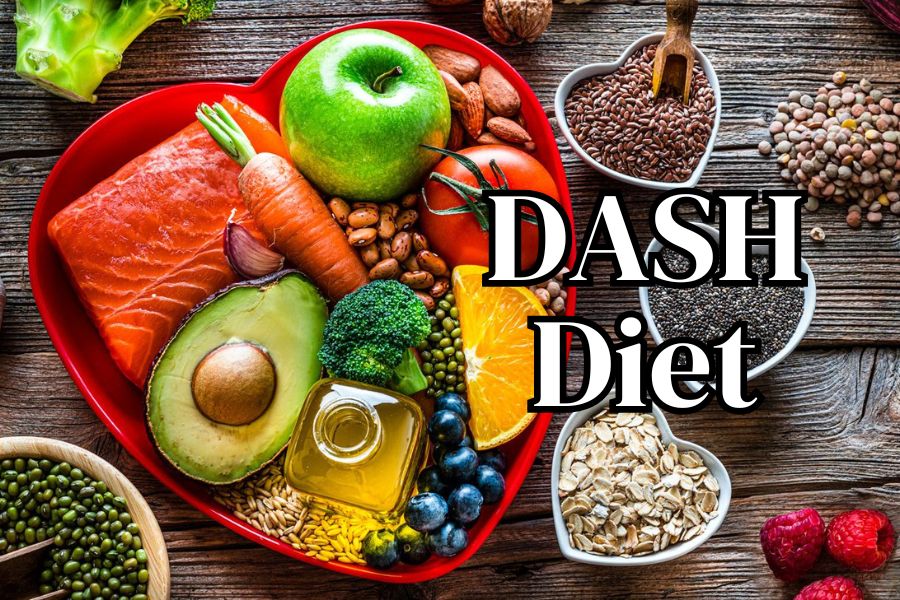
You center your meals on:
- Vegetables and fruits
- Whole grains
- Fat free or low fat dairy
- Lean proteins like fish, poultry, beans, and lentils
- Nuts and seeds
At the same time, you limit foods that are high in sodium, added sugars, and saturated fat, such as processed meats, salty snacks, sugary drinks, and many fast foods (Mayo Clinic).
How the dash diet supports your health
The dash diet plan is designed around nutrients that directly support a healthy heart and blood pressure. You get more potassium, calcium, magnesium, fiber, and lean protein, and less sodium and saturated fat (Mayo Clinic).
Over about three decades of research, scientists have found that this way of eating can:
- Lower blood pressure in people with normal readings and in those with hypertension
- Improve cholesterol numbers
- Help with gradual, sustainable weight loss
- Reduce the risk of type 2 diabetes and heart disease, especially when combined with lower sodium intake (NHLBI)
In the original DASH trial with 459 adults, people who followed the DASH diet had the greatest drop in blood pressure compared with those eating a typical American diet, and benefits appeared within 8 weeks (NHLBI).
Why sodium matters for your results
Salt is one of the biggest levers in the dash diet plan. Many restaurant and packaged foods contain far more sodium than your body needs, which can raise blood pressure in many people.
The standard DASH approach aligns with a goal of less than 2,300 milligrams of sodium per day, about 1 teaspoon of table salt (Mayo Clinic). However, research has shown that you can get even more benefit if you go lower. The NHLBI recommends aiming for 1,500 milligrams per day for greater blood pressure reduction (National Heart, Lung, and Blood Institute).
In the DASH Sodium trial with 412 adults, the greatest blood pressure improvement happened in people who combined the DASH diet with sodium intake as low as 1,500 milligrams per day, especially when they started with elevated blood pressure (NHLBI).
If that number feels intimidating, you can simply begin by trimming back very salty foods and letting your taste buds adjust over time. Mayo Clinic notes that gradually reducing processed and salty foods makes it easier to prefer the low salt DASH pattern long term (Mayo Clinic).
Sample daily servings on dash
The exact number of servings you need from each food group depends on your calorie needs and activity level. The DASH plan provides worksheets and serving guidelines to help you compare your current habits and adjust portions to fit a 2,000 calorie framework or another target that works for you (National Heart, Lung, and Blood Institute).
Here is a simplified example of how a typical 2,000 calorie DASH style day might look:
| Food group | Approximate daily servings* | Examples |
|---|---|---|
| Grains (mostly whole) | 6 to 8 | Oats, brown rice, whole wheat bread |
| Vegetables | 4 to 5 | Leafy greens, carrots, broccoli |
| Fruits | 4 to 5 | Berries, apples, oranges |
| Fat free / low fat dairy | 2 to 3 | Skim milk, low fat yogurt, kefir |
| Lean meats, poultry, fish | up to 6 ounces | Chicken breast, salmon, turkey |
| Nuts, seeds, legumes | 4 to 5 per week | Almonds, lentils, chickpeas |
| Fats and oils | 2 to 3 | Olive oil, canola oil |
| Sweets and added sugars | 5 or fewer per week | Small portions of dessert, jam, candy |
*These ranges are drawn from typical 2,000 calorie DASH recommendations as summarized by Mayo Clinic and NHLBI (Mayo Clinic, NHLBI).
You do not need to be perfect every day. Instead, use these ranges as a steady target and notice which food groups you may want to build up over time, such as vegetables or whole grains.
How dash can help with weight loss
While the dash diet plan was originally designed for blood pressure, it also supports weight management. In the PREMIER clinical trial with 810 participants, people who followed DASH guidelines, received counseling, and increased physical activity lost more weight and had larger blood pressure reductions over 6 months than those given advice only or less intensive interventions (NHLBI).
You may find it easier to lose weight on DASH because:
- High fiber foods like vegetables, fruits, beans, and whole grains keep you full longer
- Lean proteins help you feel satisfied at meals
- Limiting sugary drinks and sweets naturally cuts calories
- Reducing takeout and fast food often lowers both sodium and total calories
If weight loss is a goal for you, you can combine the DASH pattern with a modest calorie deficit. Many people do this by trimming portion sizes slightly, swapping high calorie snacks for fruit or yogurt, and building in regular physical activity that you enjoy.
Everyday foods to enjoy more often
To make a dash diet plan feel natural, you can focus less on what you “cannot” have and more on what you want to add. Over time, your plate can be filled with:
- Colorful vegetables with lunch and dinner
- A couple of servings of fruit spread across your day
- Oatmeal, whole grain toast, or brown rice instead of refined grains
- Low fat or fat free yogurt, milk, or fortified soy alternatives
- Beans, lentils, and chickpeas in soups, salads, or as main dishes
- Fish and poultry more often than red or processed meats
- A small handful of nuts or seeds a few times per week
Keeping these foods visible in your kitchen, prepped and ready, makes it much simpler to reach for them without overthinking.
Simple strategies to lower your sodium
Cutting sodium does not have to mean bland food. With a few habits, you can stay closer to DASH sodium targets and still enjoy your meals.
You might try:
- Cooking more at home so you can control the salt shaker
- Flavoring foods with herbs, spices, garlic, citrus, and vinegar instead of relying on salt
- Rinsing canned beans and vegetables before using them
- Choosing products labeled “no salt added” or “low sodium” when possible
- Checking nutrition labels and comparing brands to find options with less sodium per serving
- Starting with small changes, such as ordering sauces on the side or skipping extra soy sauce
The NHLBI notes that the DASH eating plan does not require special foods. Instead, it guides you to make more supportive choices within the foods you already buy (National Heart, Lung, and Blood Institute).
Adapting dash to your preferences
The dash diet plan is intentionally flexible so that you can tailor it to your culture, tastes, and any health needs. The OmniHeart study, which modified DASH by replacing some carbohydrates with either protein or unsaturated fats, found that these variations further lowered blood pressure and improved cholesterol compared with the original DASH diet, which may reduce heart disease risk even more (NHLBI).
That means you can:
- Emphasize more plant based proteins if you prefer beans, lentils, tofu, and nuts
- Include more fish and heart healthy fats like olive oil and avocado
- Adjust the balance of carbs, protein, and fat under the guidance of your healthcare provider if you have diabetes or other conditions
If you are unsure how to adapt the plan for your situation, your doctor or a registered dietitian can help you personalize it.
Getting started with your dash journey
The DASH diet has been consistently recognized as one of the best heart healthy patterns, including “Best Heart-Healthy Diet” and “Best Diet for High Blood Pressure” in 2025 (National Heart, Lung, and Blood Institute). You do not have to change everything at once to benefit from it.
You could begin by choosing one or two small steps this week, such as:
- Adding one extra serving of vegetables each day
- Swapping a sugary drink for water or sparkling water with fruit
- Cooking a DASH inspired dinner once or twice this week
- Tasting your food before adding salt and using a lighter hand when you do
- Tracking how close you come to the sodium goals of 2,300 or 1,500 milligrams per day
Over time, each of these choices builds on the next. As your meals shift closer to a dash diet plan, you support your blood pressure, your heart, and your long term wellness, often with simple foods that fit easily into your everyday life.
About the Author