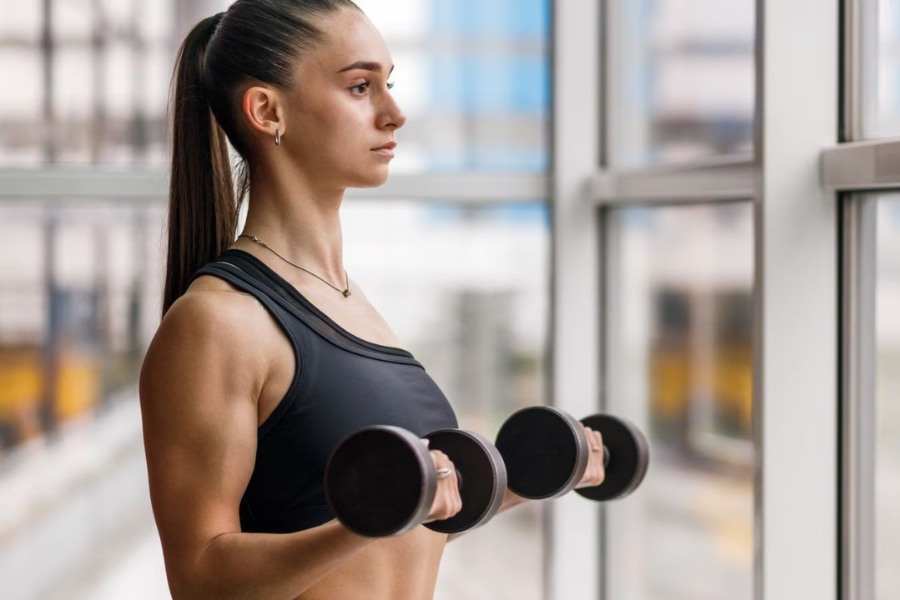
Understand why barbell bicep exercises work
Barbell bicep exercises are one of the most efficient ways to build arm mass because they let you lift more weight than almost any other curl variation. With both hands on a stable bar, you can focus on heavy, controlled reps that overload your biceps and trigger growth.
When you curl a barbell, you primarily work three muscles in your upper and lower arm, according to guidance from March 2023:
- Biceps brachii (short and long heads) for the “peak” and overall bicep size
- Brachialis, a deep muscle that pushes the biceps up and adds thickness
- Brachioradialis, a key forearm muscle that helps stabilize the elbow
Because your arms move together, barbell curls also encourage more balanced strength and allow heavier loading than most dumbbell variations. That is why you will see them in almost every mass-building arm program.
Master the basic barbell bicep curl
Before you try advanced barbell bicep exercises, you want to get the standard standing curl right. Proper form lets you build size while protecting your elbows, shoulders, and lower back.
Setup and starting position
- Stand with your feet shoulder-width apart.
- Grip the bar with an underhand grip, hands just outside your hips or about shoulder-width.
- Keep your chest up, shoulders back, and core engaged.
- Let the bar hang at arm’s length with your elbows tucked by your sides and wrists straight.
This starting position helps you isolate your biceps instead of swinging through the movement.
How to perform each rep
Use this simple step-by-step pattern, based on cues from The Gym Group’s 2024 exercise instructions:
- Curl the bar toward your chest by bending only at your elbows.
- Keep your upper arms still and close to your torso.
- Lift until your forearms are roughly vertical or you feel a strong bicep contraction.
- Pause briefly at the top and squeeze your biceps.
- Lower the bar slowly and with control over 2 to 4 seconds until your elbows are almost fully extended.
The controlled lowering or eccentric phase produces more muscle force than the lifting portion, so fighting gravity on the way down is key for hypertrophy, as noted in August 2022 guidance.
Recommended sets and reps
For building mass, a common starting point is:
- 3 to 4 sets of 8 to 12 reps
If you are newer to lifting, stay closer to 10 to 12 reps with a lighter load so you can focus on your technique. More advanced lifters can push heavier weights for 6 to 8 reps as long as form does not break down.
Use heavier weights without sacrificing form
One of the main reasons barbell bicep exercises work so well is that a bar lets you lift heavier than dumbbells. Both arms share the load, and the bar follows a more fixed path. A 2014 American Council on Exercise (ACE) study highlighted that barbells are highly effective for biceps because they support heavier loads and strong muscle activation.
To turn this into real arm mass, you need to balance weight with control.
Choose the right barbell weight
The “standard” barbell weight sometimes mentioned for curls is around 110 lbs (50 kg), but that is not a rule you need to follow. Instead, use these guidelines:
- Pick a weight where you can complete your target reps
- Your last 2 to 3 reps should feel challenging
- You should still be able to keep your body from swinging
If you have to lean back, jerk the bar, or bend your knees to get the weight up, it is too heavy for quality curls.
Focus on slow, controlled tempo
Bicep specialists such as Jeff Cavaliere of Athlean-X emphasize slow repetition tempos to increase muscle activity and avoid letting your shoulders or forearms take over. He suggests about four seconds up and four seconds down in some training blocks to really load the biceps and protect your joints as of June 2024.
You do not need to count to four every set, but you should:
- Avoid “throwing” the bar up
- Pause briefly at the top
- Lower under full control
Even if you do not increase the weight, slowing your tempo can make a familiar weight feel dramatically harder and more productive.
Try key barbell bicep curl variations
Once you are comfortable with the basic standing curl, you can include other barbell bicep exercises to hit your arms from slightly different angles, add variety, and address weak spots.
Standing barbell curl
This is your main mass builder and should sit at the core of your bicep training.
Why it works:
- Allows heavy overloading for size and strength gains
- Trains the biceps brachii and brachialis effectively
- Builds control and stability in your arms and shoulders
Use this lift early in your workout while your muscles are fresh so you can move the most weight with good form.
EZ bar curl
If straight bars bother your wrists or shoulders, the EZ bar curl is a joint-friendly alternative.
Benefits:
- Ergonomic grip reduces wrist strain
- Less tension on the shoulder joint
- Still targets the biceps effectively
You can experiment with narrow and wide grips to slightly shift the emphasis within the biceps, as described in March 2023 training insights.
Barbell reverse curl
The barbell reverse curl uses an overhand grip to shift emphasis from the main biceps to the muscles that add thickness and improve grip.
What it targets:
- Brachialis
- Brachioradialis
- Forearm muscles
A study in PeerJ found that reverse curls significantly increase brachioradialis activation, which helps elbow flexor hypertrophy and contributes to stronger, more complete-looking arms.
To do it:
- Stand tall and grip the bar with an overhand grip, shoulder-width apart.
- Keep elbows tucked and curl the bar toward your shoulders.
- Control the lowering phase and avoid swinging.
Try adding 2 to 3 light to moderate sets near the end of your arm or back workout.
Barbell drag curl
The drag curl is a twist on the classic curl that emphasizes the long head of the biceps, which influences your bicep “peak.”
How to perform it:
- Grip the bar with an underhand grip, shoulder-width apart.
- As you curl, pull your elbows back and “drag” the bar up close to your torso.
- The bar travels roughly in a straight line up your body instead of arcing out.
- Squeeze at the top, then lower slowly.
This behind-the-body elbow position increases strain on the outer fibers of the biceps and can help with peak and mass development.
Wall-supported barbell curl
Performing curls with your back against a wall removes momentum and forces strict technique.
Benefits:
- Stops you from swinging your hips or leaning back
- Increases isolation on the biceps
- Makes lighter weights feel tougher
To use this variation effectively:
- Stand with your heels, glutes, and upper back against a wall.
- Keep a small natural arch in your lower back, but do not let your upper body move.
- Curl the bar, keeping elbows pinned close to your sides.
- Lower slowly, touching the thighs lightly between reps.
Wall curls are also useful in mechanical drop sets, a strategy Cavaliere recommends where you start with strict reps against the wall, then step away and allow a small amount of controlled “cheat” to extend the set once your biceps are exhausted.
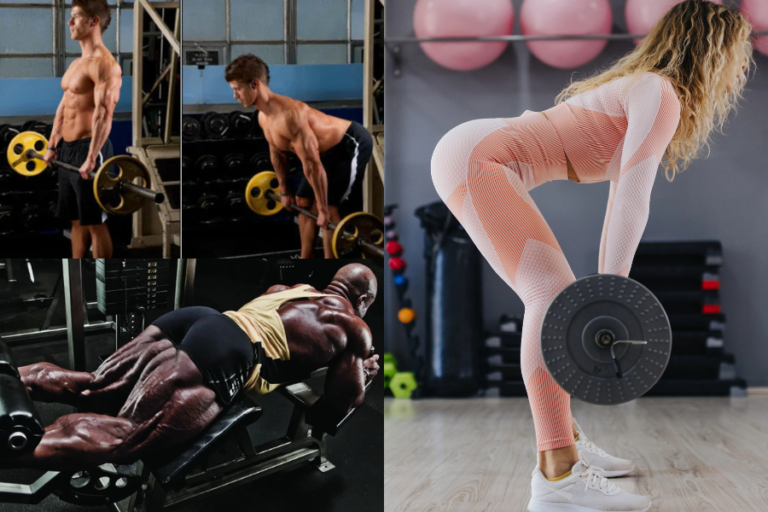
Lying incline “death” curl
Lying incline curls on about a 45 degree bench keep the biceps under constant tension and can give you a strong pump.
How to do it:
- Set an incline bench to roughly 45 degrees.
- Lie face-down with your chest on the backrest and your arms hanging straight down, holding a bar or EZ bar.
- Curl the bar toward your face or upper chest.
- Squeeze hard at the top, then lower under control.
Because your shoulders cannot swing, the tension stays on the biceps throughout the full range of motion, engaging both heads and targeting the bicep peak, as described in late 2024 guidance.
Compare barbells and dumbbells for bicep growth
You do not have to choose between barbell and dumbbell curls. Both have a place in a smart arm routine, and each offers different advantages.
When barbell curls make sense
According to both 2014 ACE findings and March 2023 training insights, barbell curls are ideal when you want to:
- Lift heavier overall and build raw strength
- Take advantage of a stable, fixed path of movement
- Encourage balanced development between arms
Because both arms move together, you can often use more total weight than you could with dumbbells, which is helpful for mass.
When dumbbell curls are helpful
Dumbbells are especially useful when you need:
- To address imbalances between left and right arms
- More wrist freedom and supination (turning your palms upward)
- Different angles such as incline, hammer, or concentration curls
Cavaliere also points out that relying only on bars for curling can sometimes lead to uneven muscle development over time. Alternating barbell work with dumbbell curls lets you use heavier weights yet still give each arm its own attention as of June 2024.
A simple approach is to start your workout with heavy barbell curls, then switch to dumbbells for focused, unilateral work.
Avoid common barbell bicep curl mistakes
Even effective barbell bicep exercises will not deliver much if your form breaks down. Several common issues can limit growth or increase your injury risk.
Using momentum and swinging
If you pick a bar that is too heavy, you will naturally start to:
- Swing your midsection
- Arch your lower back
- Drive through your legs like a mini deadlift
Guidance from August 2022 notes that this kind of momentum reduces the biceps’ workload and shifts stress into your joints. To fix it, lighten the weight and use wall-supported curls to reset your technique.
Partial range of motion
Stopping short at the bottom or top of the curl is another common problem. If you only curl through half the movement, you miss out on a full contraction and stretch.
Focus on:
- Lowering until your elbows are almost fully straight
- Curling until your biceps are fully shortened at the top without rolling your shoulders forward
If you cannot do this for all reps, reduce the load.
Ignoring the eccentric phase
The eccentric or lowering portion of the curl is where your muscles can handle more force and where much of the growth stimulus occurs, as described in August 2022. Dropping the bar quickly wastes that opportunity.
Try this guideline:
- Take 2 to 4 seconds to lower the bar on each rep
- Think of “resisting” the bar on the way down
You can even include an occasional “negative-focused” set with extra slow eccentrics when you feel fresh.
Overtraining your biceps
Because curls are simple and satisfying, it is easy to do too many sets and exercises. Overtraining the biceps can stall or even reverse your progress, according to August 2022 advice.
You can avoid this by:
- Training biceps 1 to 3 times per week, depending on your overall program and recovery
- Keeping your total hard sets for biceps in a reasonable range
- Allowing at least one full rest day between heavy bicep sessions
If your elbows are constantly sore and your performance is dipping, consider reducing volume or intensity for a week.
Misusing equipment and setup
Finally, keep safety in mind:
- Do not perform standing barbell curls inside a squat rack if it blocks others from squatting or could lead to awkward setup positions.
- Choose a clear, open space with room to step away if you lose balance.
- Use collars so plates do not slide off mid-set.
A simple, safe setup with good habits will support years of productive training.
Build a simple barbell bicep workout
Once you understand the key barbell bicep exercises and how to perform them correctly, you can organize them into a straightforward routine. Here is a sample you can tailor to your fitness level.
Sample workout for arm mass
Perform this routine 1 to 2 times per week, with at least one rest day between sessions:
- Standing barbell curl
- 3 to 4 sets of 6 to 10 reps
- Use a challenging weight and strict form
- EZ bar curl or wall-supported barbell curl
- 3 sets of 8 to 12 reps
- Focus on slow tempo and full range of motion
- Barbell reverse curl
- 2 to 3 sets of 10 to 15 reps
- Slightly lighter weight to protect wrists and elbows
- Lying incline “death” curl or barbell drag curl
- 2 to 3 sets of 8 to 12 reps
- Aim for constant tension and strong contractions
You can finish with a mechanical drop set every now and then. For example, do strict wall-supported curls until you are close to failure, step away from the wall, and continue with controlled “cheat” reps to push your biceps a bit further, as suggested in Cavaliere’s June 2024 tips.
Put it all together
If your goal is to build arm mass, barbell bicep exercises give you a powerful mix of heavy loading, simple technique, and flexible variations. By:
- Starting with solid form on the standing curl
- Adding options like EZ bar, reverse, drag, wall, and incline curls
- Controlling your tempo, especially on the way down
- Managing volume so you avoid overtraining
you create a training environment where your biceps can grow consistently.
Begin by choosing two or three of the variations above for your next arm day. Focus on deliberate, controlled reps, track the weights you use, and look to increase load or reps gradually over the coming weeks. Your arms will reflect the effort.
About the Author