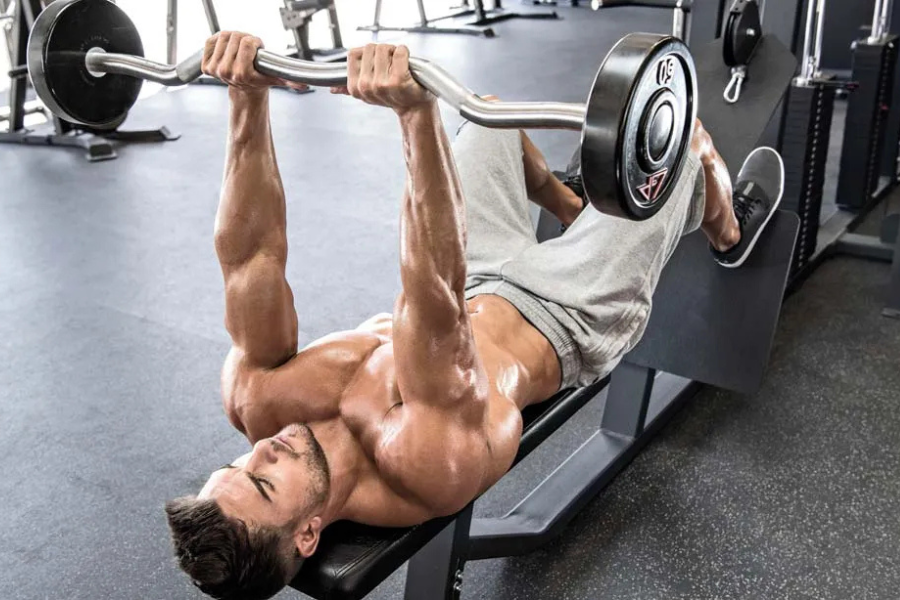
Bench dips used to be a go to move for at home triceps training. They feel simple, require almost no equipment, and leave your arms burning in a few reps. The problem is that you pay for that burn with a lot of unnecessary joint stress. The good news is that you have plenty of bench dip alternatives that build strong triceps without punishing your shoulders and wrists.
In this guide, you will learn why traditional bench dips are not a great choice and how to swap them for safer, more effective tricep workouts you can do at the gym or at home.
Understand the bench dip problem
Before you replace bench dips, it helps to understand what you are avoiding and why it matters for your long term progress.
How bench dips work
A bench dip uses a bench or sturdy chair behind you. You place your hands on the edge, walk your feet forward, and lower your body by bending your elbows. You can:
- Keep your knees bent to make the exercise easier
- Straighten your legs or elevate your feet to make it harder
On paper, it sounds like a convenient triceps builder. In practice, the joint positions are the real issue.
Why bench dips stress your shoulders
According to Men’s Health fitness director Ebenezer Samuel, C.S.C.S., and advisory board member David Otey, C.S.C.S., the bench dip is considered one of the worst exercises for triceps as of 2025 because of how it positions your shoulders. Bench dips force your shoulders into a vulnerable starting position where the front of your upper arm is pushed forward, which they describe as “literally jamming out of the socket.” Once you are in that position, you cannot adjust mid rep to relieve the stress.
That awkward angle is especially risky if you:
- Have a history of shoulder pain or impingement
- Spend a lot of time hunched over a desk
- Lack shoulder mobility and control
Instead of building strength on a stable base, you end up loading a compromised joint position.
Why your wrists and elbows take a hit too
Your shoulders are not the only joints that complain during bench dips. Your wrists are forced into full extension while supporting a large portion of your body weight. Over time, that can lead to discomfort or nagging ache, especially if you already type or text a lot.
On top of that, the fixed hand position can make your elbows flare or track awkwardly. All of this adds up to more wear and tear than the exercise is worth.
The takeaway is simple. There are better ways to train your triceps that respect your joints and still deliver serious results.
Choose safer tricep training principles
When you look at bench dip alternatives, you want exercises that do three things:
- Target the triceps directly
- Keep your shoulders, elbows, and wrists in safer, more natural positions
- Allow you to progress over time with more reps, more resistance, or harder variations
Most of the exercises below share a few common traits.
- Your shoulders stay closer to stacked over your wrists, not cranked behind your body
- Your wrists are neutral or only slightly extended
- You can adjust difficulty without compromising form
Keep these ideas in mind as you try different options. If an exercise feels “pinchy” in the front of your shoulder, your body is telling you to back off and choose a different angle or movement.
Try bodyweight bench dip alternatives
If you like the simplicity of bench dips and prefer to train with minimal equipment, start with bodyweight moves that mimic the muscle emphasis without the joint strain.
Close grip push ups
Close grip push ups are one of the best bench dip alternatives for triceps. They hit the same muscles but keep your joints in a much friendlier position.
How to do it
- Set up in a plank position with your hands slightly closer than shoulder width. Your shoulders should be stacked over your wrists.
- Keep your body in a straight line from head to heels.
- As you bend your elbows, keep them close to your sides. Lower your chest toward the floor.
- Press through the heels of your hands to return to the starting position.
If needed, you can elevate your hands on a bench, box, or step. This makes the movement easier while still keeping your wrists, elbows, and shoulders aligned.
Why it works
Close grip push ups:
- Emphasize the triceps because of your narrower hand position
- Let your shoulders move naturally instead of cranking behind you
- Allow you to adjust difficulty by using an incline or changing your foot position
You can use them for 3 sets of max reps, resting 60 to 90 seconds between sets.
Elevated hand push ups
If standard close grip push ups are too tough or you are returning from an injury, elevate your hands. Place them on a bench, sturdy box, or even a wall.
- Higher surface equals easier push up
- Lower surface equals harder push up
This gradual incline approach lets you maintain good form without overloading your shoulders. As you grow stronger, lower the surface over time until you reach the floor.
Pike and handstand push ups for shoulder friendly strength
When parallel bar dips irritate your shoulders but you still want serious upper body work, push up variations in a more vertical position can help.
Pike push ups
- Start in a downward dog style position with your hips high and your body forming an inverted V.
- Bend your elbows and lower the top of your head toward the floor between your hands.
- Press back up to the starting position.
Handstand push ups
If you are more advanced, you can progress to handstand push ups against a wall. This variation places more emphasis on your shoulders but, for many people, feels more comfortable than dips because your shoulders are not forced behind your torso.
Both variations:
- Build shoulder and tricep strength
- Keep the shoulder joint in a more stacked, stable position
- Can be scaled by adjusting range of motion or elevation
Circuit style bodyweight training
You can also use bodyweight circuits to work your triceps indirectly along with other upper body and core muscles. A simple circuit might include:
- Close grip push ups
- Regular push ups
- Sit ups
- Russian twists
Move from one exercise to the next with minimal rest. Bodyweight circuits give you a full workout, challenge your triceps, and avoid the awkward joint angles of bench dips.
Use gym equipment bench dip alternatives
If you train in a gym or have access to basic equipment, you have even more options to replace bench dips while still prioritizing your triceps.
Cable pressdowns
Cable pressdowns are one of the most joint friendly, targeted tricep exercises you can do. They also appeared in the research as a recommended alternative to bench dips.
How to do it
- Attach a straight bar, rope, or V handle to a high cable pulley.
- Stand facing the machine with your feet hip width apart.
- Grip the attachment and bring your elbows to your sides. Keep them pinned there throughout the set.
- Press the attachment down by straightening your arms until your elbows are fully extended.
- Control the weight back up until your elbows are at about 90 degrees.
Aim for 3 sets of 10 to 12 reps. Focus on driving your arms straight and squeezing your triceps at the bottom.
Why it works
- Your shoulders stay in a neutral, comfortable position
- You can adjust resistance precisely by changing the weight stack
- The cable provides continuous tension through the range of motion
Traditional dips with assistance
Parallel bar dips are tougher than bench dips because you are lifting your full body weight, but they place your shoulders in a more natural position and engage a broad range of muscles, such as:
- Triceps brachii
- Anterior deltoids (front shoulders)
- Pectoralis major and minor (chest)
- Latissimus dorsi (lats)
- Stabilizers in your upper back and core
If full bodyweight dips are too challenging, you can use assistance so you get the muscle building benefits without overstraining your joints.
Assisted dip options
- Machine assisted dips. Use a dip machine where you kneel or stand on a platform. The more weight you select, the more the machine helps.
- Resistance band assisted dips. Loop a band around the dip bars and place one knee or foot in the band. Bands add some instability, so your muscles have to work harder to stabilize.
- Partner assisted dips. A partner can support your legs or hips to reduce the load.
A useful target is 3 sets of 8 to 10 reps with good form. Focus on a controlled descent and a strong press back to the top.
Jumping dips for beginners
Jumping dips can be a smart starting point if you are learning standard dips and want to build strength gradually.
How to do it
- Set up on dip bars with a box or platform under your feet.
- Use your legs to give yourself a small jump as you press up to the top position.
- Lower yourself under control, focusing on the eccentric, or lowering phase.
This variation:
- Requires no extra equipment beyond dip bars and maybe a box
- Lets your legs help on the way up so your upper body is not overloaded
- Emphasizes the lowering portion, which is excellent for building strength and muscle
Gymnastic rings for joint friendly push movements
Gymnastic rings are a versatile tool for both pushing and pulling. Because the rings can rotate freely, your shoulders and wrists are not locked into a fixed position, which can reduce strain.
You can perform:
- Ring push ups with a neutral grip
- Assisted ring dips with your feet on the floor or a box
- Ring rows to balance pressing work with pulling
The adjustable instability of the rings encourages your stabilizing muscles to work harder. It also lets you find a grip and arm path that feels natural for your body.
Add home friendly resistance alternatives
If you train at home with a small amount of equipment, you can still build great triceps without bench dips. Think of resistance bands and adjustable free weights as your allies.
Resistance band push downs and extensions
If you like the feel of cable pressdowns in the gym, you can mimic that pattern at home with a resistance band.
Band push downs
- Anchor a resistance band above head height, for example around a pull up bar or sturdy door anchor.
- Grip the band with both hands and bring your elbows to your sides.
- Press your hands down until your arms are straight, then return with control.
Band overhead extensions
- Anchor the band low or step on it with one or both feet.
- Bring the band behind your head with your elbows pointing up.
- Extend your arms overhead, then lower back to the starting position.
These moves target your triceps while letting your shoulders and wrists find a comfortable path.
Adjustable dumbbells or kettlebells
If you have dumbbells or kettlebells, you can build your triceps effectively with:
- Lying tricep extensions on a bench or the floor
- Overhead tricep extensions seated or standing
- Close grip dumbbell presses
The key is to keep your elbows under control and avoid extreme stretch at the bottom that aggravates your joints.
Compare common bench dip alternatives
To help you decide where to start, here is a quick comparison of popular alternatives and what they offer.
| Exercise | Equipment needed | Joint friendliness | Primary focus | Best for |
|---|---|---|---|---|
| Close grip push ups | None, optional bench for incline | High, if hands and shoulders stacked | Triceps, chest | Home or gym, most fitness levels |
| Elevated hand push ups | Bench, box, or wall | Very high, reduced loading | Triceps, chest | Beginners and those with shoulder issues |
| Pike / handstand push ups | Floor, optional wall | Moderate to high, depending on form | Shoulders, triceps | Intermediate to advanced lifters |
| Cable pressdowns | Cable machine | High, very adjustable | Triceps | Gym users wanting precise loading |
| Machine or band assisted dips | Dip machine or resistance bands | Moderate, depends on shoulder comfort | Triceps, chest | Building toward full parallel bar dips |
| Jumping dips | Dip bars, optional box | Moderate, focus on controlled lowering | Triceps, shoulders | Beginners learning dip mechanics |
| Ring push ups / assisted dips | Gymnastic rings | High, adjustable grip and instability | Triceps, chest, core | Building strength with joint friendly angles |
| Band push downs / extensions | Resistance band, anchor point | High, low impact on joints | Triceps | Home workouts with minimal gear |
Use this table as a guide, then choose moves that fit your equipment, current strength, and how your body feels.
Build a simple tricep focused routine
To replace bench dips in your program, plug in a few of the alternatives above. You do not need a long list. Two or three well chosen exercises performed consistently will serve you much better.
Here are two sample routines you can adapt.
Gym based tricep workout
Try this once or twice per week, leaving at least one rest day between sessions.
- Close grip push ups
- 3 sets of max reps, hands on the floor or an incline
- Cable pressdowns
- 3 sets of 10 to 12 reps
- Assisted parallel bar dips or jumping dips
- 3 sets of 8 to 10 reps, controlled tempo
Rest 60 to 90 seconds between sets. If an exercise causes shoulder discomfort, reduce range of motion or swap it for a different alternative from this guide.
Home based tricep workout
If you train at home, you can combine bodyweight and band work.
- Elevated close grip push ups
- 3 sets of max reps
- Resistance band push downs or overhead extensions
- 3 sets of 10 to 15 reps
- Pike push ups
- 3 sets of 6 to 12 reps, depending on your strength
Again, rest 60 to 90 seconds between sets and adjust hand position or elevation to stay pain free.
Listen to your body and progress safely
The real goal of using bench dip alternatives is not just to avoid discomfort today. It is to set yourself up for long term strength progress without sacrificing joint health.
A few simple habits will help you stay on track.
- Prioritize form over ego. Stop a set when your technique breaks down, even if you feel like you could grind out a few more reps.
- Adjust angles when needed. A small change in hand width or elevation can turn a sketchy movement into a comfortable one.
- Progress gradually. Add a few reps, a small plate on the cable stack, or a slightly lower incline for push ups instead of making big jumps.
- Respect pain signals. Muscle burn is fine. Sharp or pinching pain in your shoulder, elbow, or wrist is not. If that shows up, modify or swap the exercise.
You do not need bench dips to build impressive triceps. With smart, joint friendly alternatives like close grip push ups, cable pressdowns, and assisted dips, you can train hard, stay consistent, and keep your upper body strong for years to come.
About the Author