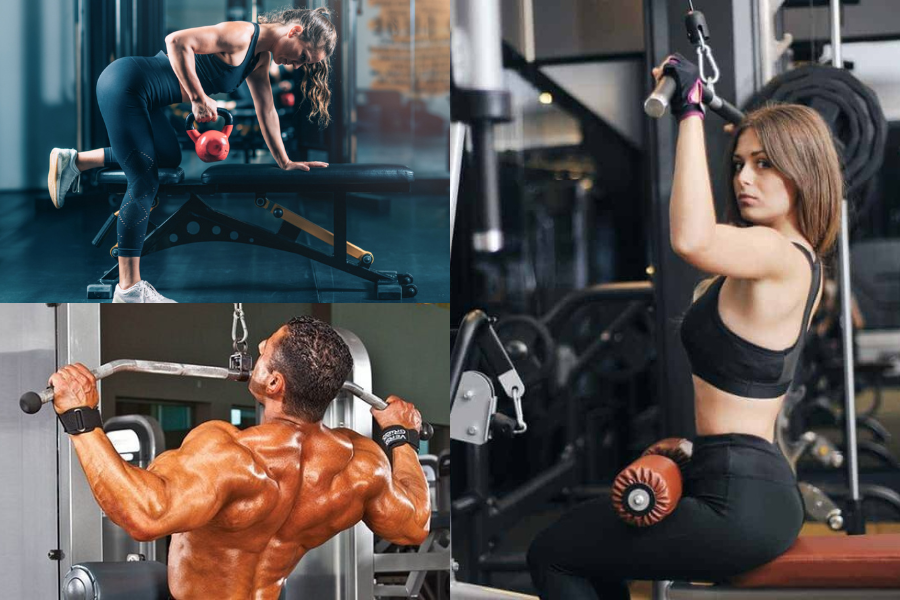
Why a dumbbell back workout is perfect for you
If you want a stronger, better-looking back but only have a pair of dumbbells, you are in the right place. A simple dumbbell back workout can help you build muscle, improve posture, and protect your shoulders, all without a barbell or bulky machines.
Dumbbells are accessible, space friendly, and beginner friendly. They let each side of your body work independently, which helps you spot and fix muscle imbalances that might stay hidden when you use a barbell, as explained in Gymshark’s August 2024 guide to dumbbell back training.
In this guide, you will learn:
- Why training your back with dumbbells is so effective
- How to set up a balanced beginner workout
- Step by step instructions for five key dumbbell back exercises
- How to progress over time without sacrificing form
You can do everything listed here at home or in a busy gym with minimal equipment.
Understand your back muscles
You do not need an anatomy degree to train smart. It helps to know which areas you are targeting so you can feel the right muscles working.
Your back has three main regions:
- Upper back: traps and rhomboids, which help pull your shoulders back and keep your posture tall
- Mid back: lats and mid traps, which handle most rowing and pulling
- Lower back: erector spinae that run along your spine and support posture and hip hinge movements
A good beginner dumbbell back workout touches all three areas so you build strength that looks good and feels good in daily life.
Benefits of back training with dumbbells
Training your back with dumbbells offers unique advantages you might not get from machines or barbells.
Train each side evenly
Dumbbells force each arm to pull its own weight. That unilateral loading:
- Highlights strength differences from side to side
- Helps you correct imbalances over time
- Encourages better muscle fiber recruitment
Gymshark’s August 2024 article notes that this independent work can lead to more balanced strength and better overall development.
Improve posture and shoulder health
Dumbbell rows and shrugs emphasize squeezing your shoulder blades together. This helps:
- Counteract rounded shoulders from long hours at a desk
- Pull your shoulders back into a healthier position
- Support the small stabilizer muscles that protect your shoulder joints
Research and coaching insights show that horizontal pulling and scapular retraction can reduce forward leaning posture and help prevent shoulder injuries.
Get more range of motion and control
Compared to a barbell, dumbbells usually let you move:
- A little deeper at the bottom of the row
- A little further at the top of the pull
This extra range of motion, combined with the need to stabilize each arm, can increase muscle activation and make each rep more effective for strength and growth.
Train safely in small spaces
Dumbbells are ideal if you:
- Work out at home
- Train in a crowded gym
- Often exercise alone
According to Gymshark’s August 2024 publication, dumbbells are safer to drop than a heavy barbell and require less space and setup time.
Get ready for your workout
Before you pick up any weight, take a few minutes to prepare your body. This reduces injury risk and helps your back muscles fire properly.
Warm up in 5 to 8 minutes
- Light cardio, 2 to 3 minutes
- Brisk walk, easy cycling, or marching in place
- Dynamic mobility, 3 to 5 minutes
- Arm circles, front and back
- Cat cow from hands and knees
- Bodyweight good mornings, hands on hips, light hip hinge
- Scapular wall slides or band pull aparts if you have a band
You should feel a little warmer with looser shoulders and hips, not tired.
Choose the right dumbbells
For a beginner dumbbell back workout, pick weights that:
- Let you complete each set with 2 to 3 reps still “in the tank”
- Feel demanding on the last few reps, but do not force you to cheat with lots of momentum
You can always adjust between exercises. For example, you might use heavier dumbbells for Romanian deadlifts and lighter ones for renegade rows.
Follow this beginner dumbbell back workout
This simple routine uses five proven exercises to hit your upper, mid, and lower back, plus your core and hips. You will do:
- 1 exercise for upper back and posture
- 2 rowing exercises for your lats and mid back
- 1 core focused back move
- 1 hip hinge for lower back and posterior chain
Aim to do this workout 1 to 2 times per week with at least one day of rest in between sessions.
Exercise 1: Single arm dumbbell row
The single arm dumbbell row is one of the best dumbbell back exercises you can do. It targets your lats and rhomboids and, when done with good posture, also challenges your core.
Coaches and strength experts consider it a top choice for building mid back strength, and it can be loaded heavier as you get stronger.
How to do it
- Stand beside a flat bench or sturdy surface.
- Hinge at your hips with a flat back and place one hand on the bench for support. Your shoulders should be slightly higher than your hips.
- Hold a dumbbell in your free hand with your arm straight down. Keep your hips square to the ground and your core braced.
- Row the dumbbell up by pulling your elbow toward your hip. Think of your forearm as a hook and focus on driving the elbow up.
- Squeeze your shoulder blade toward your spine at the top, then lower the weight back under control.
Sets and reps
- 3 sets of 8 to 12 reps per side
Rest 45 to 60 seconds between sides or sets.
Form tips
- Do not twist your torso to lift the weight
- Keep your neck in line with your spine, eyes looking at the floor a few feet ahead
- Avoid yanking the weight with your biceps, think “elbow back, shoulder blade squeeze”
Exercise 2: Chest supported dumbbell row
This incline or chest supported row increases strictness because the bench supports your torso. That cuts down on cheating with momentum and lets you focus on your lats and mid back.
Gymshark’s August 2024 guide notes that this move is especially good for the lower lats and mid back.
How to do it
- Set an incline bench to about 30 to 45 degrees.
- Lie face down with your chest against the bench and feet planted on the floor.
- Hold a dumbbell in each hand, arms straight down, palms facing each other.
- Row the dumbbells up toward your ribs, keeping your elbows close to your body.
- Pause for a brief squeeze between your shoulder blades, then slowly lower the weights.
Sets and reps
- 3 sets of 8 to 12 reps
Rest 60 to 75 seconds between sets.
Form tips
- Keep your chest “glued” to the bench
- Do not shrug your shoulders toward your ears, think “shoulders down and back”
- Control the lowering phase, do not just drop the weights
Exercise 3: Kelso shrugs
Kelso shrugs specifically train your upper back, especially the traps and rhomboids. They can help with posture and may ease some neck and shoulder tension by teaching you to pull your shoulder blades back and together.
Gymshark recommends doing them on a 45 degree incline bench for best effect.
How to do it
- Set an incline bench to about 45 degrees.
- Lie face down with your chest supported and hold a dumbbell in each hand, arms hanging straight down.
- Without bending your elbows much, pull your shoulder blades back and slightly down, as if you are trying to pinch them together.
- Hold that squeezed position for a second, then let your shoulder blades relax and return to the start.
Sets and reps
- 2 to 3 sets of 10 to 15 reps
Rest 45 to 60 seconds between sets.
Form tips
- Think of this as a shoulder blade movement, not an arm movement
- Keep your neck long, do not crane your head up
Exercise 4: Renegade row
The renegade row is a full body move. It works your mid back, shoulders, arms, abs, and obliques, because you have to fight rotation while you row. Gymshark calls out its benefits for mid back and core stability.
If regular push ups are already challenging, start with a simpler version on your knees or with a wider stance.
How to do it
- Place two dumbbells on the floor, shoulder width apart, handles parallel.
- Get into a high plank position with your hands gripping the dumbbells. Your body should form a straight line from head to heels.
- Widen your feet to increase stability.
- Brace your core and squeeze your glutes.
- Row one dumbbell up toward your hip without letting your hips twist.
- Lower it under control and repeat on the other side.
Sets and reps
- 3 sets of 6 to 10 reps per side
Rest 60 to 75 seconds between sets.
Easier variations
- Perform from knees while keeping a straight line from head to knees
- Place one hand on a dumbbell and the other hand on the floor if balancing on both dumbbells is too unstable
Form tips
- Think “hips square to the floor” the whole time
- Do not rush, slow and controlled reps are more effective
- Keep your shoulders over your wrists, not far behind or ahead
Exercise 5: Dumbbell Romanian deadlift
The dumbbell Romanian deadlift (RDL) is your main lower back and posterior chain move. It targets the hamstrings and glutes, but it also strengthens the erector spinae that support your spine and posture.
Gymshark’s 2024 guide highlights that RDLs can improve spinal stability and help reduce lower back discomfort when done with a neutral spine.
How to do it
- Stand tall with a dumbbell in each hand, arms straight, palms facing your thighs.
- Soften your knees slightly and keep them at about that angle throughout.
- Hinge at your hips by pushing them back behind you, as if you are closing a car door with your glutes.
- Keep the dumbbells close to your legs as they travel down. Stop when you feel a strong stretch in your hamstrings or when your torso is about parallel to the floor, whichever comes first.
- Keep your spine neutral, not rounded, and your chest gently open.
- Drive your hips forward to stand back up, squeezing your glutes at the top.
Sets and reps
- 3 sets of 8 to 12 reps
Rest 60 to 90 seconds between sets.
Form tips
- If your lower back feels strained, shorten your range of motion and focus on keeping your core braced
- Do not turn this into a squat, the movement should come mostly from your hips moving back
- Imagine holding a straight line from the back of your head to your tailbone
Sample beginner workout plan
Here is how you can put everything together into a simple, repeatable session.
| Order | Exercise | Sets | Reps per set | Rest |
|---|---|---|---|---|
| 1 | Single arm dumbbell row | 3 | 8 to 12 per side | 45 to 60 sec |
| 2 | Chest supported dumbbell row | 3 | 8 to 12 | 60 to 75 sec |
| 3 | Kelso shrugs | 2-3 | 10 to 15 | 45 to 60 sec |
| 4 | Renegade row | 3 | 6 to 10 per side | 60 to 75 sec |
| 5 | Dumbbell Romanian deadlift | 3 | 8 to 12 | 60 to 90 sec |
If this feels like too much at first, start with:
- Single arm dumbbell row
- Renegade row
- Dumbbell Romanian deadlift
Then add Kelso shrugs and chest supported rows as you build confidence.
Progress safely and build strength
You do not have to overhaul your workout every week. A few simple habits will keep you moving forward.
Use the “2 rep rule”
When you can do 2 more reps than the top of your target range, with perfect form, in all sets of an exercise, you can increase the weight slightly next time.
For example:
- You are aiming for 8 to 12 reps
- You hit 14 clean reps in all 3 sets of single arm rows
- Increase the dumbbell by a small amount and work back in the 8 to 12 range
This keeps your dumbbell back workout challenging without jumping too far in weight and risking form breakdown.
Focus on quality over quantity
Especially for back exercises, good form matters more than showing off heavier dumbbells.
Keep checking in with yourself:
- Are you feeling the work in your back, or mostly in your biceps and lower back?
- Are you rounding your spine or twisting to move the weight?
- Can you pause and control the weight at the top of each rep?
If something feels off, reduce the load, shorten the range of motion, or slow down your tempo.
Recover between sessions
Your back works hard through many of your daily tasks, so give it time to adapt.
- Leave at least one rest day between back workouts
- Include gentle stretching or light mobility work on off days
- Prioritize sleep and hydration so your muscles can recover
Cool down and stretch
A short cool down after your dumbbell back workout helps you wind down and maintain mobility.
Spend 3 to 5 minutes on:
- Child’s pose for your lats and lower back
- Doorway chest stretch to open the front of your shoulders
- Seated hamstring stretch for the backs of your legs
Breathe slowly and avoid bouncing. Hold each stretch for 20 to 30 seconds.
Start small and stay consistent
You do not need a full gym to build a strong, resilient back. With a pair of dumbbells, a little floor space, and the routine you just learned, you have everything you need to get started.
Pick one step to take today:
- Learn the single arm dumbbell row with light weights
- Try the dumbbell Romanian deadlift in front of a mirror to practice your hip hinge
- Run through the full beginner workout once this week
Once you feel how much stronger and more stable your back can be, you will be glad you picked up those dumbbells.
About the Author