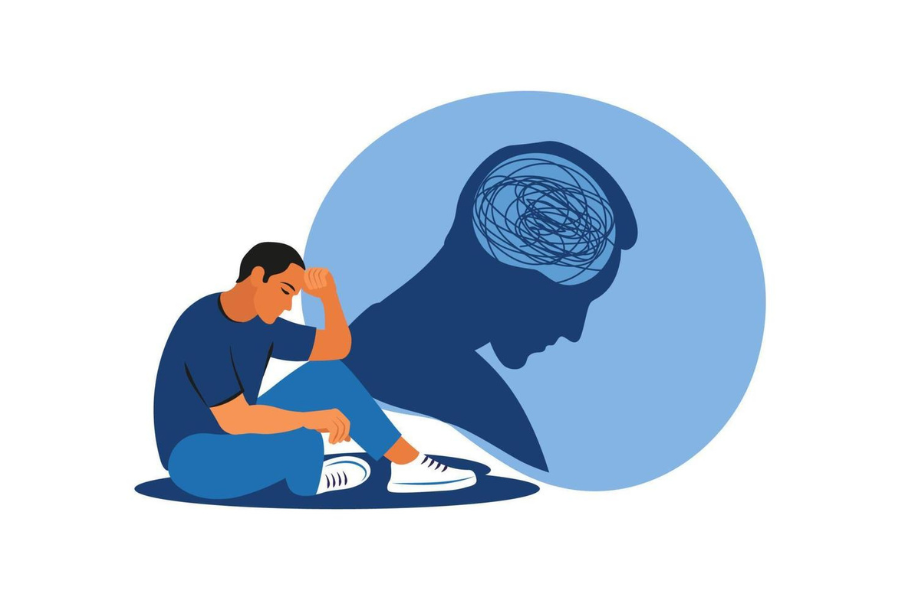
Understand cognitive behavioral strategies
Cognitive behavioral strategies are practical tools that help you notice and change the patterns between your thoughts, feelings, and behaviors. They come from cognitive behavioral therapy (CBT), a structured type of talk therapy that focuses on solving current problems, often in a limited number of sessions (Healthline, Mayo Clinic).
Instead of digging deeply into your past, CBT and related cognitive behavioral strategies focus on what is happening in your life right now. You learn how your thinking influences how you feel and what you do, and then you practice new ways of responding.
Research shows CBT is effective for many concerns, including anxiety, depression, stress, sleep problems, and some physical health conditions (NHS, Cleveland Clinic). Many of the same techniques used in therapy can also be adapted as self-help tools to support your overall mental health.
See how thoughts, feelings, and actions connect
At the heart of cognitive behavioral strategies is a simple idea: what you think affects how you feel, which affects what you do. That loop can either keep you stuck or help you move forward.
Here is a basic example:
- Thought: “I am going to mess up this presentation.”
- Feeling: Anxious and discouraged.
- Behavior: You avoid practicing and consider calling in sick.
Compare that to a more balanced thought:
- Thought: “I am nervous, but I can prepare and do my best.”
- Feeling: Anxious but hopeful.
- Behavior: You rehearse, ask a colleague for feedback, and show up.
CBT focuses on this connection between thoughts, feelings, and behaviors (NCBI Bookshelf). Once you see the pattern, you can start to adjust it in small, realistic steps.
Use cognitive restructuring to challenge unhelpful thoughts
One of the core cognitive behavioral strategies is cognitive restructuring, sometimes called reframing. The idea is not to “think positive” at all costs. Instead, you learn to spot unhelpful thought patterns and replace them with more accurate and helpful ones.
According to CBT research, common distortions include:
- Catastrophizing, expecting the very worst outcome.
- Overgeneralizing, drawing broad conclusions from one event.
- All or nothing thinking, seeing things as complete success or failure only (PositivePsychology.com, NCBI Bookshelf).
A simple reframing process looks like this:
-
Notice the thought
Pause and write down the thought that is running through your mind.
Example: “I blew that report. I am totally useless at my job.” -
Check the facts
Ask yourself:
- What evidence supports this thought?
- What evidence goes against it?
- Have I felt this way before and things turned out differently?
-
Create a more balanced alternative
You are not trying to create a fake positive statement. You are aiming for something realistic.
Example: “That report was not my best work, but I have done good work before and can improve next time.”
This style of reframing is a classic CBT tool (Healthline). -
Notice how you feel and act
When you shift the thought, your feelings and behavior often shift too. You might still feel disappointed, but you are more likely to correct the mistake instead of giving up.
Using this cognitive behavioral strategy regularly trains your mind to be more flexible and less harsh, which supports better emotional balance over time.
Try guided discovery questions
Guided discovery is another cognitive strategy from CBT that helps you gently question your own assumptions. In therapy, a practitioner asks you targeted questions to help you see new perspectives (Healthline). You can adapt this approach on your own by asking yourself similar questions.
When you feel stuck on a certain belief, you might ask:
- “What is another way of looking at this?”
- “If a friend had this thought, what would I say to them?”
- “What would I predict will happen, and how likely is that really?”
- “Have I handled something like this before?”
These questions do not erase your concerns, they widen your view. Over time, guided discovery helps you recognize that your first interpretation of a situation is not always the only or most accurate one.
Practice journaling and thought records
Many cognitive behavioral strategies use some form of journaling. Writing slows your thinking down and lets you see patterns that are hard to notice in your head.
CBT often uses “thought records” to help you track situations, thoughts, feelings, and new responses (Healthline, Mayo Clinic).
You can try a simple thought record format like this:
-
Situation
What happened? Where were you? Who was involved? -
Automatic thought
What went through your mind? -
Emotion
How did you feel? Rate intensity from 0 to 100. -
Evidence for and against
List facts that support your thought and facts that do not. -
Balanced thought
Write a more helpful and realistic way of viewing the situation. -
Outcome
How do you feel now? Rate again from 0 to 100.
Using thought records regularly gives you a clearer picture of your cognitive habits. You may notice certain triggers or recurring themes, which makes it easier to plan supportive strategies for yourself.
Use behavioral strategies to break unhelpful cycles
CBT also focuses strongly on behavior. While thoughts affect feelings, your actions can also shift your mood directly. Behavioral strategies help you step out of patterns that keep problems going, such as avoidance in anxiety or withdrawal in depression (NCBI Bookshelf).
Common behavioral tools include:
- Gradual exposure to feared situations.
- Activity scheduling and behavioral activation.
- Problem solving steps.
- Relaxation and grounding exercises.
These techniques work best when you move in small, realistic steps and track your progress.
Explore exposure strategies for anxiety
If you live with anxiety, you might find yourself avoiding certain situations, places, or activities. Although avoidance reduces anxiety in the short term, it tends to keep fear going over time.
Exposure therapy, a key behavioral technique within CBT, involves slowly and safely facing what you fear so your anxiety can decrease naturally over time (Healthline, NCBI PMC).
The general idea is:
- You create a list of feared situations, from least to most distressing.
- You start with the easier ones and face them for a set amount of time.
- You stay in the situation without using “safety behaviors” like constant reassurance seeking or escape.
- You repeat until your anxiety decreases and you gain confidence in your ability to cope.
For example, if you feel anxious about phone calls, you might:
- Step 1: Read a short script of what you want to say.
- Step 2: Make a brief call to a trusted friend.
- Step 3: Call a customer service line about a simple question.
- Step 4: Make a longer or more complex call.
It is important to do this gradually and, for strong or long-standing fears, to work with a trained professional. Research shows exposure-based CBT is a first-line treatment for many anxiety disorders and can be delivered in person or through digital formats (NCBI PMC).
Use problem solving to handle everyday stress
Some worries are hypothetical, such as “What if I lose my job one day?” Others are practical and can be addressed step by step, such as “My rent is due next week and I am short on money.”
CBT-based self-help resources encourage you to separate real, solvable problems from hypothetical “what if” concerns, then use structured problem solving for the real ones (NHS).
You can try this approach:
-
Define the problem clearly
Be specific. Instead of “Everything is a mess,” try “I am behind on two work projects.” -
Brainstorm possible solutions
List all ideas without judging them at first. -
Weigh pros and cons
Consider what is realistic given your time, energy, and resources. -
Choose one option to try
Break it into small steps and schedule them. -
Review the outcome
What worked? What did not? Adjust and try again.
Problem solving is a straightforward cognitive behavioral strategy, but used regularly, it can reduce feeling overwhelmed and increase your sense of control.
Support your progress with routines and homework
Traditional CBT often runs for about 5 to 20 sessions, and it almost always includes “homework” between sessions so you can practice skills in daily life (Mayo Clinic, Cleveland Clinic).
You can create your own gentle version of CBT homework to support your mental health, for example:
- Doing one thought record each evening.
- Scheduling one small enjoyable or meaningful activity per day.
- Practicing a brief relaxation exercise, such as deep breathing or progressive muscle relaxation, a technique often used in CBT (PositivePsychology.com).
Progress with cognitive behavioral strategies is often gradual. Some days will feel easier than others, and that is expected. What matters most is consistency rather than perfection.
Consider working with a CBT professional
Self-help versions of cognitive behavioral strategies can be useful, especially for milder difficulties. If you notice persistent symptoms or significant distress, working with a licensed mental health professional who uses CBT can offer more structure and support.
Professional CBT typically includes:
- A clear treatment plan and specific goals.
- Education about your condition and how CBT can help.
- Regular sessions, often weekly, usually lasting 12 to 20 weeks, though this can vary (Cleveland Clinic, NCBI Bookshelf).
- Worksheets, in-session exercises, and homework to build new skills.
- A collaborative, nonjudgmental environment that focuses on helping you respond differently to stress and difficult emotions (Cleveland Clinic).
CBT can be used alone or alongside medication and has been shown to be as effective as or more effective than many other treatments for several conditions (Cleveland Clinic). If access is a challenge, you might also explore guided online CBT programs, which research suggests can be helpful for anxiety disorders (NCBI PMC).
Put cognitive behavioral strategies into your daily life
You do not need to change everything at once to benefit from cognitive behavioral strategies. A few small, consistent practices can gradually shift how you respond to stress, low mood, or worry.
To get started, you might:
- Pick one recurring unhelpful thought and practice reframing it each time it shows up.
- Use a simple thought record a few times this week.
- Choose one realistic problem you are facing and walk it through the problem solving steps.
- Notice one situation you are avoiding and imagine the smallest step toward facing it.
You can treat this as an experiment. Notice what helps, what feels difficult, and which strategies you want to keep. Over time, you are building a toolkit you can return to whenever life feels challenging.
About the Author