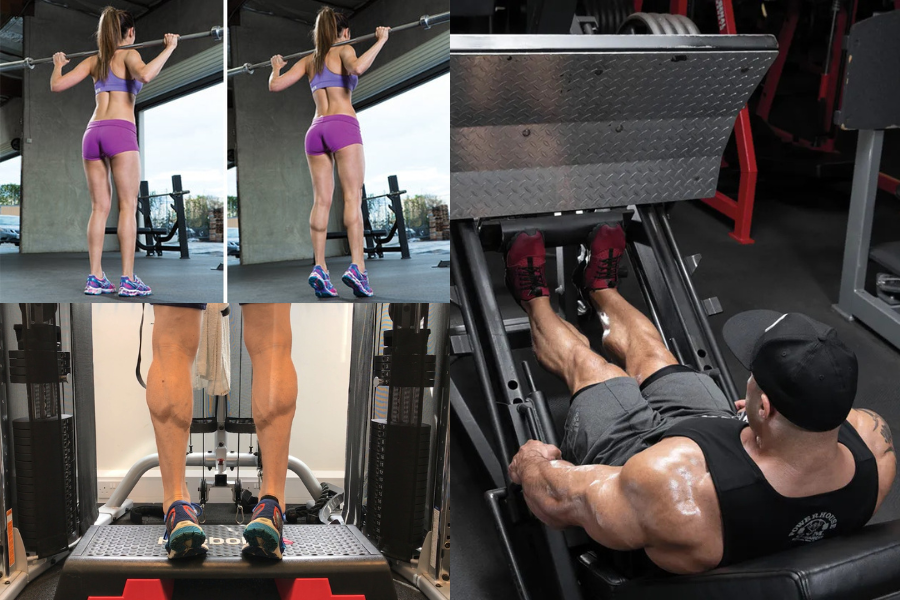
A good calf workout should feel challenging, not crushing. Calf workouts for beginners are all about building strength, balance, and confidence in small, controlled steps so your ankles, knees, and feet feel better in everyday life, not worse.
Below, you will find simple calf exercises, how often to do them, and form tips so you can train your calves without wrecking your joints or your motivation.
Why your calves matter more than you think
Your calves do a lot more than fill out the back of your legs. They help you walk, run, jump, climb stairs, and change direction quickly. They also support your feet, ankles, and knees with every step.
According to Foot & Ankle Albury, calf raises work together with your plantar fascia and Achilles tendon and they even help knee function during walking and running. The soleus muscle in particular can absorb around 6.5 to 8 times your body weight during running, while the gastrocnemius absorbs about 2 to 3 times your body weight. That is a big load for a relatively small area of your body.
When your calves are weak or tight, you are more likely to feel:
- Foot and ankle pain
- Achilles tendon irritation
- Knee discomfort or instability
- Fatigue during walks or runs
The good news is that basic calf workouts for beginners can strengthen these muscles with minimal equipment, often just your body weight and a stable surface for balance.
Calf anatomy in plain language
You do not need an anatomy degree to train your calves well, but knowing the basics helps you pick the right exercises.
The two main calf muscles
You are mainly working with:
- Gastrocnemius: The larger, more visible muscle that forms the curve at the back of your lower leg. It crosses both the knee and ankle joint, so it works hard when your leg is straight, especially during standing calf raises and explosive movements like jumping.
- Soleus: A deeper, flatter muscle that sits underneath the gastrocnemius and shines when your knee is bent, such as in seated calf raises. It is a major endurance and stability muscle and it is critical for walking and running over distance.
A 2023 article on calf exercises for beginners noted that these muscles are key for walking, running, jumping, and even supporting your posture. If one of them is undertrained, your lower body strength and balance suffer.
This is why well designed calf workouts for beginners always include both standing and seated variations.
Form foundations for safe calf workouts
Before you think about sets and reps, focus on how each rep feels. Good form is what keeps calf workouts from breaking you.
Set your feet correctly
When you do calf raises, think about pressing through the whole ball of your foot, not just your big toe.
- Keep equal pressure from the big toe joint to the little toe joint. This helps you load the calf muscles evenly and avoid rolling to one side.
- Avoid letting your ankles collapse inward or outward as you rise.
If your toes tend to curl or claw, it usually means your long toe flexor muscles are trying to do the work. One simple fix is to let your toes hang slightly over the edge of a step or weight plate. This makes it harder for your toes to grip and forces the load back into your calves.
Use a full range of motion
For both strength and muscle development, you want every rep to cover the full distance:
- Start with your heels as low as they comfortably go so you feel a gentle stretch in your calves.
- Press up until you reach full height, meaning your heels are as high as you can comfortably lift them without wobbling.
As you get tired, your heel height often shrinks. Pay attention to this and stop the set once you can no longer hit at least 80 to 90 percent of your starting height with control.
Many strength coaches recommend adding a brief pause to deepen both ends of the movement. MuscularStrength.com advises focusing on a hard contraction at the top of every rep and enjoying a “sweet stretch” at the bottom, rather than blasting through reps quickly.
Control your tempo
Calves often respond well to controlled, slightly slower reps. This gives you time to feel the muscle working and protects your Achilles tendon.
A simple tempo guideline for beginners:
- 1 to 2 seconds up
- Pause 1 second at the top
- 2 seconds down
- Optional 1 second pause at the stretch
Moving this way also makes light or moderate weights feel more challenging, so you do not need huge loads to get results.
Essential calf exercises for beginners
These moves form a solid starter toolkit. You can do most of them at home with just a chair or wall for balance.
1. Double-leg standing calf raise
This is your basic starting point and it will probably be your mainstay for a long time.
How to do it
- Stand near a wall, countertop, or the back of a chair for balance, feet hip-width apart.
- Keep your knees straight but not locked and gently draw your belly button toward your spine to keep your torso upright.
- Press down through the balls of both feet and lift your heels until you are as high on your toes as you can comfortably go.
- Pause at the top and squeeze your calf muscles.
- Lower your heels slowly until you feel a light stretch in your calves.
Mayo Clinic recommends this simple style of calf raise to strengthen the muscles at the back of your lower legs and help protect your Achilles tendon from injury.
2. Seated calf raise
Seated calf raises focus on the soleus muscle and are especially good if you have balance issues or sore knees.
How to do it
- Sit tall on a sturdy chair, feet flat on the floor under your knees.
- Keep your hands either on your thighs or lightly holding the chair.
- Press into the balls of your feet and lift your heels as high as possible without letting your knees drift inward.
- Pause to feel the squeeze in the lower calf, then slowly lower your heels back to the floor.
You can place a light weight or stacked books on your thighs for extra resistance as you get stronger. Gyms often have a seated calf raise machine if you prefer more structure and load.
3. Single-leg standing calf raise
Once two-leg raises feel steady, this move builds more strength and balance by loading one leg at a time.
How to do it
- Stand next to a wall or sturdy surface for support.
- Shift your weight onto one leg and bend the other knee so the foot is off the floor.
- With your standing leg straight but not locked, rise up onto the ball of that foot.
- Pause at the top, then lower with control until you feel a stretch.
This variation not only strengthens the calf, it also reveals left-right imbalances so you can address them early.
4. Calf raise with dumbbells
When your body weight is no longer challenging, you can add dumbbells while keeping the same basic standing calf raise pattern.
How to do it
- Hold a dumbbell in each hand, arms hanging straight down by your sides.
- Stand with feet shoulder-width apart and keep your back straight and knees relaxed.
- Rise onto your toes, pause, then slowly return to the starting position.
Mayo Clinic experts recommend using a chair or pole for stability if your balance feels shaky and stress the importance of keeping your knees straight and movements smooth for best results.
A beginner-friendly calf workout plan
You do not need a long, punishing routine. A focused 10 to 15 minute session done consistently will do far more for you than a single brutal workout.
Here is a simple structure to get you started, three days per week on non-consecutive days, such as Monday, Wednesday, and Friday.
Start at the lower end of the rep ranges. When all sets feel steady and you can hit full height on every rep, add a few reps or a little weight.
Sample routine
- Double-leg standing calf raise
- 3 sets of 10 to 15 reps
- Seated calf raise
- 3 sets of 10 to 15 reps
- Optional: Single-leg standing calf raise (once you are comfortable)
- 2 sets of 8 to 12 reps per side
Rest about 45 to 60 seconds between sets. Aim to feel a moderate burn by the end of each set, but not pain.
Strength guides for beginners often suggest using a weight that lets you complete 8 to 15 controlled reps with good form. Too heavy and you will cut your range of motion short. Too light and your muscles will not get a strong enough signal to grow.
If you enjoy slightly higher rep work, calves usually respond well to both moderate ranges of 10 to 20 and occasional higher rep sets of 20 to 30, as long as all reps are controlled.
How often to train your calves
Your calves are used to working all day when you walk and stand, so they can usually handle more frequent training than some other muscles, as long as you build up gradually.
For most beginners:
- 2 to 3 times per week is a smart starting point
- Keep each session around 10 to 15 minutes
- After 3 to 4 weeks of consistent work, consider a lighter week with fewer sets to let your lower legs fully recover
Some bodybuilders and coaches even recommend training calves three or more days a week to trigger growth, but that level of frequency only works if your form is solid and your joints feel good.
Pay close attention to soreness around your Achilles tendon or sharp pain in your calves. If you notice swelling or intense pain that does not improve with rest, stop and talk with a medical professional before continuing.
Safety tips so your calves do not hate you
Calf workouts for beginners should feel like effort, not punishment. A few simple habits keep you progressing without setbacks.
- Warm up first. A 5 to 10 minute walk, a few ankle circles, and gentle calf stretches can prepare your muscles and joints.
- Move slowly and smoothly. Rushing reps increases the chance of cramping and tendon strain.
- Stay hydrated. Dehydration can make calf cramps more likely, especially in warm environments.
- Stretch after training. A light stretch for 20 to 30 seconds after your sets can help reduce tightness.
- Do not push through sharp pain. Fatigue and a mild burn are expected. Sharp or stabbing pain is a red flag.
If you are returning from an injury or have ongoing foot, ankle, or knee problems, check in with a doctor or physical therapist before starting any new program. They can help you tailor calf work to your history and needs.
When and how to progress
Muscles grow and strengthen when you gently increase the challenge over time. Once your initial routine feels comfortable, you can progress in a few ways:
- Add a few reps per set
- Add a fourth set to one or two exercises
- Hold light dumbbells or wear a backpack with books
- Stand on a step or plate so your heels can drop slightly below your toes for more stretch
- Introduce occasional higher rep sets, such as 20 to 25 reps, with lighter weight
You might also sprinkle in movement-based work like jump rope for 30 seconds on and 30 seconds off for a few rounds once or twice per week. This blends calf strengthening with cardio and power, but only add it after a few weeks of consistent basic training.
Putting it all together
If you focus on good form, consistent practice, and gradual progress, calf workouts for beginners will support your whole lower body instead of overwhelming it.
Start simple:
- Pick 2 or 3 of the exercises above
- Train them 2 to 3 days per week
- Move slowly, use a full range of motion, and stop when form breaks down
Your reward will show up in easier walks and runs, better balance, stronger ankles, and fewer aches during everyday life.
About the Author