If you are looking to build a stronger, shapelier lower body, incorporating glute workouts into your routine is key. Targeted exercises can help you improve daily movement, boost athletic performance, and create a balanced physique. Below, you will find a friendly, step-by-step approach to strengthening and sculpting your glutes.
Understand why glute strength matters
Your glutes are some of the largest and most powerful muscles in your body. They play a major role in activities as simple as climbing stairs or lifting groceries, as well as more intense movements like sprinting and jumping. When your glutes are strong, you typically enjoy better posture and a reduced risk of lower back pain. In addition, strong glutes help stabilize your hips to keep everyday motions smooth and efficient.
Begin with a thorough warm-up
Warming up before glute workouts helps activate the right muscles and prepares your joints for movement. That means you will exercise more effectively and reduce the likelihood of injuries.
- Walk or lightly jog for five minutes to increase blood flow
- Do 10 to 12 bodyweight squats with a slow, controlled tempo
- Add dynamic stretches, like leg swings or hip circles, to loosen up tight areas
Focus on foundational movements
Foundational glute exercises often engage several muscle groups at once. This is a huge advantage if your goal is to build strength in less time. Consider adding one or more of these compound movements to your routine:
Squats
Squats target your glutes, quads, and core. Keep your chest lifted as you lower into a seated position, then drive through your heels to return upright. Experiment with different squat variations, such as wide-stance squats or front squats, to hit your glutes from multiple angles.
Deadlifts
Traditional and Romanian deadlifts challenge your entire posterior chain. Maintain a straight spine, hinge at the hips, and keep the bar (or dumbbells) close to your legs as you lift. You will feel this burn primarily in your hamstrings and glutes.
Hip thrusts
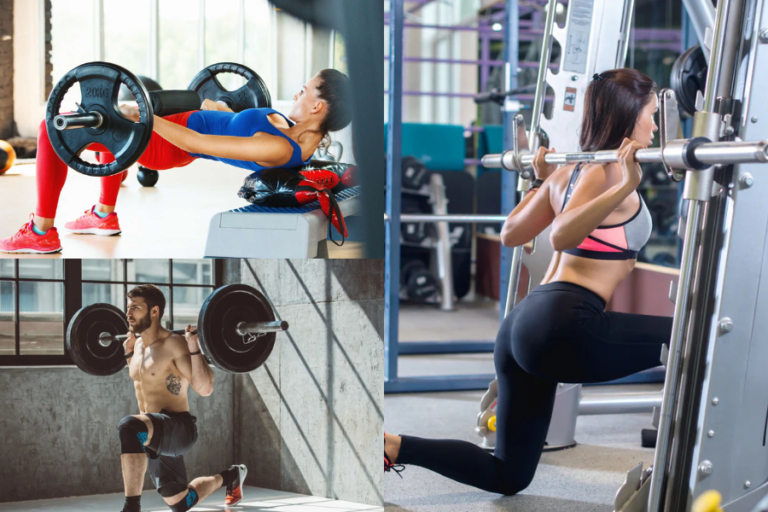
Hip thrusts are among the most effective glute isolation moves, yet they also activate your core and hamstrings. Position your upper back on a bench while keeping your feet planted. Drive your hips up by squeezing your glutes tight at the top of the movement, then lower slowly.
Lunges
Lunges are superb for unilateral leg work, meaning you train each side of your body separately. Step forward with one foot, bend both knees, and focus on pushing through your lead heel. Alternating lunges help you address any imbalances between your legs.
Glute bridges
If you find hip thrusts challenging at first, glute bridges are a great alternative. Simply lie on your back, bend your knees, and lift your hips by squeezing your glutes. This move also adds stability to your lower back.
Explore targeted isolation exercises
Once you have a foundation of compound lifts, it is a good idea to include a few isolation moves in your glute workouts. These exercises concentrate on activating the smaller muscles around your hips, helping you refine shape and symmetry.
Fire hydrants
Kneel on all fours with your hands below your shoulders and your knees under your hips. Lift your right knee out to the side while keeping it bent, then slowly bring it back down. Aim for 12 to 15 reps per side. You will feel this primarily in the outer glute muscles.
Donkey kicks
Starting in the same position as fire hydrants, push your foot upward while keeping your knee bent, as if kicking the ceiling. Maintain a tight core and avoid arching your lower back. Focus on squeezing your glute at the top. Aim for 12 to 15 reps per side.
Side-lying leg raises
Lie on your side and stack your legs. Raise your top leg up without rotating your hips, then lower it in a controlled manner. This exercise isolates your outer hips, which are essential for overall glute stability.
Plan an effective workout schedule
Frequency and variety are both important for seeing results. You can train your glutes two or three times per week, depending on your fitness level and experience. Here are a few tips to stay on track:
- Alternate between heavy, compound-based days and lighter, isolation-focused sessions
- Incrementally increase weight or intensity every few weeks to avoid plateaus
- Keep your form and technique consistent, rather than rushing through heavier loads
Support your progress with recovery
Your muscles rebuild and grow during rest, not only when you perform the exercise. When you prioritize recovery, you give your glutes the time they need to get stronger without overuse injuries.
- Aim for seven to nine hours of quality sleep each night
- Spend time performing gentle stretches or low-impact movement (like yoga) on rest days
- Stay hydrated and consider balanced meals that include protein, healthy fats, and carbs
By learning how to do well-rounded glute workouts, you are setting yourself up for better overall strength and stability. Even small changes in your routine, like adding a set of hip thrusts or focusing on perfecting your squat, can lead to noticeable improvements over time. Remember to stay patient, listen to your body, and celebrate every milestone along the way. Your stronger, more defined glutes are just around the corner!
About the Author