Understand your shoulder muscles
Before you dive into shoulder workout exercises, it helps to know what you are actually training. Your shoulders are more than just one muscle. A smart plan targets several areas so you build strength, size, and long term joint health.
Your main shoulder muscles include:
-
Deltoids
These are the visible “cap” muscles that give your shoulders shape. They have three heads: -
Anterior deltoid (front delt) helps lift your arm in front of you.
-
Lateral deltoid (side delt) raises your arm out to the side and builds shoulder width.
-
Posterior deltoid (rear delt) moves your arm out to the side from in front of your body and supports posture.
-
Rotator cuff group
A set of smaller muscles that stabilize your shoulder joint and control rotation. Keeping these strong lowers your risk of injury and helps you press and pull more weight. -
Traps and upper back
The trapezius and rhomboids support shoulder movement and posture. Many good shoulder exercises recruit these muscles too.
When you choose shoulder workout exercises, you want to hit all three deltoid heads plus the rotator cuff and upper back. That is how you build rounded shoulders that are strong and stable from every angle.
Key benefits of shoulder training
Consistent shoulder training does more than fill out a T shirt. According to Rush University Medical Center, strong shoulders help with everyday movements like lifting, throwing, and carrying, and they play a role in injury prevention by keeping the joint strong and flexible.
When you focus on balanced shoulder workout exercises, you can expect:
-
Better upper body strength
Pressing, pulling, and holding objects overhead becomes easier and safer. -
Improved appearance
Developed delts create a broader upper body and help highlight a V tapered look. -
Healthier posture
Strong rear delts, traps, and rotator cuff muscles help pull your shoulders back and counteract hours of sitting. -
Lower injury risk
Targeted work for weaker areas like the rear delts and external rotators reduces common shoulder issues that come from pressing a lot without balance.
How to structure shoulder workouts
You do not need a complicated routine to grow your shoulders. What matters most is that your shoulder workout exercises:
- Target all parts of the shoulder
- Use good form
- Progress gradually over time
- Allow enough recovery
Here are simple guidelines to follow.
Choose your weekly training frequency
For most people:
- 1 to 2 dedicated shoulder workouts per week is enough
- Leave at least 48 hours between hard shoulder sessions so the muscles and joints can recover
If you train a lot of chest and pressing movements, your shoulders already work hard. In that case, one focused shoulder session plus some lighter accessory work may be plenty.
Decide on total sets and rest time
Research suggests that large muscle groups like the shoulders usually respond well to about 10 to 15 total sets per week. More is not always better. Going far beyond that can lead to soreness, stalled progress, and overuse problems.
Within a single workout:
- Aim for 9 to 12 total sets of shoulder workout exercises
- Rest 90 to 120 seconds between most working sets so you can maintain good form and effort
Use warm up sets wisely
Before your heaviest pressing exercise:
- Do 2 warm up sets, increasing the weight gradually
- Use higher reps and lighter loads to get blood flowing and rehearse your form
For smaller or lighter isolation movements like lateral raises or face pulls, 1 short warm up set is usually enough if you already feel warm.
Apply progressive overload
Your shoulders will not grow if you lift the same weight forever. You need progressive overload, but in a controlled way.
Use this simple rule:
- Pick a rep range, for example 8 to 12 reps.
- When you can complete the top end of that range for all sets with solid form,
- Add a small amount of weight next time or add a rep or two.
The key is to progress without “ego lifting.” If heavier weight forces you to swing, arch your back, or lose control, it is too heavy and no longer helping your shoulders.
Best compound shoulder exercises
Compound movements are multi joint exercises that let you move more weight and build overall strength. Start your shoulder workouts with one of these before you move to isolation work.
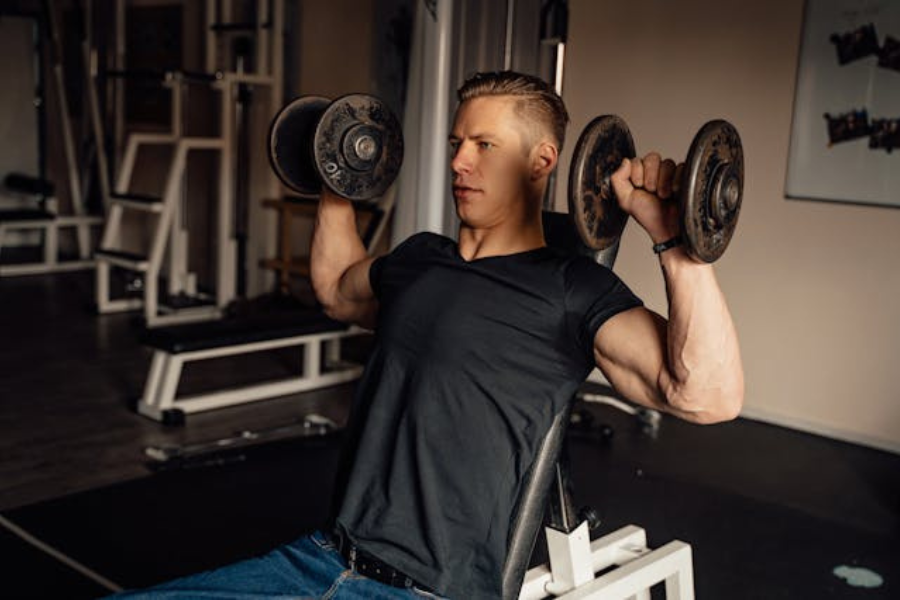
Dumbbell or barbell overhead press
The overhead press is a foundation lift for strong, muscular shoulders. It primarily targets your anterior delts, but also involves your lateral delts, traps, triceps, and even upper chest.
You can perform it:
- Standing or seated
- With dumbbells or a barbell
How to do it
- Sit or stand tall with your core braced and feet firmly planted.
- Hold the weights at shoulder level with your wrists stacked over your elbows.
- Press the weight straight up until your arms are almost locked out.
- Lower under control back to shoulder level.
Form tips
- Keep your forearms vertical under the weight.
- Avoid flaring your elbows directly out to 90 degrees, which can strain the rotator cuff, as noted in a January 2025 article by Doctor Carroll on ShoulderReliever.com.
- Do not over arch your lower back. Think “ribs down” and squeeze your glutes to stabilize.
Landmine press
The landmine press is a shoulder friendly pressing variation that can be easier on the joints. The angled movement pattern engages the front and side delts while also involving your core.
Why use it
- Great if straight overhead pressing bothers your shoulders
- Teaches you to press in a strong, stable path
Basic setup
- Place one end of a barbell in a landmine attachment or securely in a corner.
- Hold the other end at shoulder height with both hands or one hand.
- Press the bar up and slightly forward, then lower with control.
Upright row with EZ curl bar
The upright row targets your lateral delts and upper traps. Using an EZ curl bar often feels more comfortable on the wrists and shoulders than a straight bar.
Key points
- Use a moderate grip, not too narrow.
- Pull the bar up toward your mid chest, keeping it close to your body.
- Stop when your elbows reach shoulder height. Higher is rarely necessary and can irritate some shoulders.
Keep the weight conservative and focus on smooth movement. If you feel pinching or discomfort, swap it for another lateral delt exercise.
Best isolation exercises for each delt head
After your main compound lift, move to isolation shoulder workout exercises. These target specific parts of the deltoids to build shape and balance.
Targeting the front delts
Your front delts already work hard during most pressing exercises. You may not need much direct work, and overdoing it can create imbalances.
Dumbbell front raise
The dumbbell front raise isolates the anterior delts and helps develop the front “cap” of the shoulder.
How to do it
- Stand tall with a dumbbell in each hand, arms down in front of your thighs, palms facing your legs.
- With a slight bend in your elbows, raise the weights in front of you to about shoulder height.
- Pause briefly, then lower slowly.
Start light and avoid swinging. If you already do a lot of bench or overhead pressing, limit front raises so your front delts do not outpace your rear delts and rotator cuff.
Targeting the side delts
Building your lateral delts is key for wider shoulders and a stronger V taper.
Dumbbell lateral raise
The dumbbell lateral raise is a classic for side delts, but it loses tension at the bottom of the movement.
How to do it
- Stand with dumbbells at your sides, palms facing your body.
- With a slight bend in your elbows, raise the weights out to the side until they reach about shoulder height.
- Lower slowly and stop just before the weights touch your sides to keep tension.
Use lighter weights than you think and move with control.
Cable lateral raise
The cable lateral raise can be even better for side delts because the cable provides tension throughout the entire range of motion. The circular resistance helps keep the muscle engaged from start to finish.
Why it is effective
- Constant tension on the lateral delt
- Smooth resistance that is easier on the joints
- Great for focusing on mind muscle connection
If you have access to a cable machine, use this as your primary side delt exercise and save the dumbbells as a variation.
Targeting the rear delts and upper back
Rear delts are often neglected, which can lead to rounded shoulders, neck pain, and higher injury risk. You want at least as much rear delt work as front delt work.
Reverse flyes
Reverse flyes, sometimes called rear delt flyes, hit the posterior delts and upper back.
You can perform them:
- Bent over with dumbbells
- Face down on an incline bench
- On a machine designed for reverse flyes
Key cues
- Keep a slight bend in your elbows.
- Think about pulling the weights out and back, not straight up.
- Focus on squeezing your shoulder blades gently together without yanking.
Face pull
Face pulls are one of the most valuable shoulder workout exercises. They strengthen your rear delts and the external rotators of your rotator cuff, which helps offset heavy pressing and supports shoulder health.
How to do it
- Attach a rope handle to a cable set around upper chest or face height.
- Grab the ends with a thumbs up grip.
- Step back, brace your core, and pull the rope toward your face.
- Lead with your elbows and aim to bring your hands to either side of your nose or forehead.
- Squeeze at the end, then return with control.
According to strength training guides, exercises like cable face pulls do double duty for both muscle development and rotator cuff protection by strengthening your external rotators.
Sample beginner shoulder workout
If you are new to shoulder workout exercises, start with a simple routine that trains all three deltoid heads plus your rotator cuff.
Perform this workout once per week for the first 4 to 6 weeks. Rest 90 to 120 seconds between working sets.
Warm up
- 5 to 10 minutes of light cardio
- 1 to 2 sets of light band pull aparts and arm circles
- 2 warm up sets for your first pressing exercise
Workout
- Seated dumbbell shoulder press
- 3 sets of 8 to 12 reps
- Focus on controlled pressing and a stable torso
- Dumbbell lateral raise or cable lateral raise
- 3 sets of 10 to 15 reps
- Use a light to moderate weight, no swinging
- Reverse flyes or wide reverse flyes
- 2 to 3 sets of 10 to 15 reps
- Squeeze your rear delts and upper back
- Face pulls
- 2 to 3 sets of 12 to 15 reps
- Prioritize technique over load
This totals about 9 to 12 sets, which is a solid starting volume for beginners without overloading your shoulders.
Common shoulder training mistakes to avoid
Good exercises can still cause problems if your technique or program is off. Watch for these common errors when you plan and perform your shoulder workout exercises.
Training shoulders too often
Because shoulder muscles are involved in many upper body lifts, it is easy to overdo them.
- Limit hard shoulder training to 1 to 2 times per week.
- Allow at least 48 hours between intense sessions.
- If your shoulders stay sore or feel irritated, scale back sets or frequency.
Overemphasizing front delts
Pressing exercises like bench press and pushups already hammer your front delts. Spending a lot of time on extra front raises can create imbalances.
To stay balanced:
- Make sure you perform at least as many rear delt sets as front delt sets.
- Include face pulls, reverse flyes, and other rear delt moves in every shoulder workout.
Ego lifting and poor form
Heaving heavy weights with bad form does not build better shoulders. It just moves stress away from the muscles you want to train and into your joints and lower back.
Common form issues include:
- Using momentum to swing dumbbells on raises
- Arching the back excessively during overhead presses
- Letting elbows flare out too wide during pressing
- Lifting beyond a comfortable 6 to 10 rep range with sloppy technique
To protect yourself:
- Choose weights that allow smooth control for all reps.
- Increase weight only when you can complete your target reps with clean form.
- Stop a set if your form breaks down, even if you have reps left in the plan.
Skipping mobility and rotator cuff work
Your shoulders need to move well before they can safely handle heavy loads. Neglecting mobility and rotator cuff strength can lead to stiffness, poor posture, and recurring injuries.
Build these habits into your week:
- Short dynamic warm ups for the shoulders before lifting
- Light external rotation movements with bands or cables
- Regular face pulls and rear delt work
Simple progression plan for strength and size
Once you are comfortable with the basic routine, you can gradually increase the challenge. Here is a straightforward way to progress your shoulder workout exercises over time.
- Start with the beginner routine
- Stick with it for 4 to 6 weeks.
- Focus on nailing form and building mind muscle connection.
- Track your weights and reps
- Keep a simple log of each exercise, set, and weight.
- When you hit the top of your rep range for all sets, increase the weight slightly next session.
- Adjust volume carefully
- If recovery is good and your form stays solid, you can add 1 extra set to one exercise.
- Keep your weekly total under roughly 15 sets for shoulders unless you have experience and your joints feel great.
- Change variations occasionally
- After 6 to 8 weeks, swap one or two exercises. For example:
- Seated dumbbell press to standing barbell press
- Dumbbell lateral raise to cable lateral raise
- This keeps training interesting while hitting the same core muscle groups.
Putting it all together
Effective shoulder workout exercises do not have to be complicated. Your goal is to:
- Train all three heads of the deltoid plus your rotator cuff and upper back
- Start with one solid compound press
- Add 2 or 3 focused isolation movements
- Use realistic weights with clean form
- Progress gradually, not aggressively
Choose one change to make in your next workout, such as adding face pulls or cleaning up your overhead press technique, and pay attention to how your shoulders feel. Over time, those small improvements add up to stronger, broader, and more resilient shoulders that support everything else you do in the gym and in daily life.
About the Author