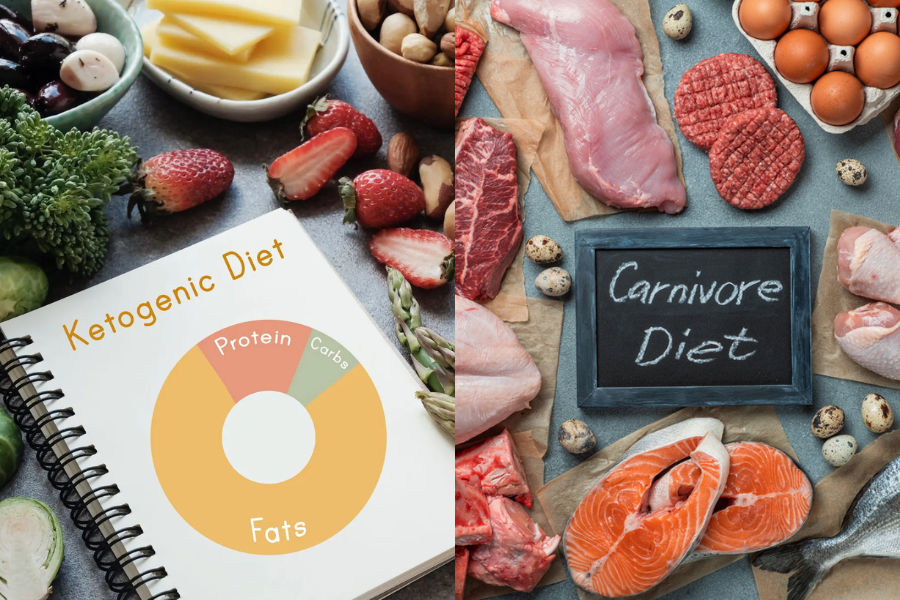
Understand keto vs carnivore diet basics
If you are comparing the keto vs carnivore diet to lose weight and improve your health, it helps to start with the basics. Both eating styles are very low in carbohydrates and can push your body into ketosis, where you burn fat instead of carbs for energy. That is where the similarities end.
Here is how each one works, based on current research.
What the keto diet looks like
On a ketogenic diet, you focus on:
- High fat
- Moderate protein
- Very low carbohydrates
Keto typically limits you to around 20 to 50 grams of carbs per day to trigger ketosis, where your body burns fat for energy instead of glucose (Health, Groovy Keto).
You can still eat a mix of:
- Animal foods such as meat, fish, eggs, cheese
- Plant foods such as avocados, nuts, seeds, and low carb vegetables like broccoli, spinach, and zucchini (Health, Groovy Keto)
The goal is not zero carbs, but low enough carbs and the right fat to protein balance to stay in ketosis.
What the carnivore diet looks like
The carnivore diet takes low carb to the extreme. It is essentially a zero carb diet.
You only eat animal products, such as:
- Meat
- Fish and seafood
- Eggs
- Some dairy like butter and cheese
All plant foods are off the table, including fruits, vegetables, grains, legumes, nuts, and seeds (Health, Groovy Keto).
Because you remove almost all carbs, your body usually reaches ketosis quickly, often within 1 to 3 days (Groovy Keto).
Keto vs carnivore at a glance
| Feature | Keto diet | Carnivore diet |
|---|---|---|
| Main foods | Animal and plant foods, very low carb | Animal foods only, zero carb when strict |
| Carbs | About 20 to 50 g per day | Essentially 0 g per day |
| Focus | High fat, moderate protein, low carb, macro tracking | Animal products, no macro tracking, elimination of plants |
| Ketosis | Primary goal, managed by macros | Often occurs as a side effect of zero carb |
| Variety | Higher, includes low carb vegetables and some fruits | Very low variety |
| Typical use | Long term lifestyle for weight and metabolic health | Short term elimination or experiment for most people |
Compare weight loss and energy benefits
If your main question is which diet will help you lose weight faster, both keto and carnivore can work. What matters more is what you can follow consistently.
How both diets support fat loss
Research shows that both the keto and carnivore diets can lead to significant weight loss by:
- Increasing satiety so you feel full and eat fewer calories
- Shifting your body toward fat burning
On keto, you achieve this through ketosis, driven by high fat and low carb intake (Archer Jerky, People’s Choice Beef Jerky).
On carnivore, you rely mainly on very high protein and fat, which keep you satisfied and naturally reduce snacking and overeating (Archer Jerky).
Some estimates suggest keto may support around 0.5 to 1 kg (about 1 to 2 pounds) of weight loss per week for many people, and carnivore may deliver similar short term results thanks to its extreme carb restriction and satiety effects (Groovy Keto).
How they affect your energy and focus
Once you adapt, both diets can:
- Smooth out blood sugar swings
- Provide more stable energy through fat as a fuel
- Reduce the mid afternoon crash many people get from high carb meals
Because carnivore eliminates all carbohydrates, blood sugar tends to stay very stable. Keto significantly reduces carbs as well and can improve insulin sensitivity (Archer Jerky).
If your priority is both weight loss and all day energy, keto generally gives you a better balance between results and flexibility. Carnivore can be powerful but is usually tougher to maintain.
Look at blood sugar and metabolic health
If you are dealing with prediabetes, insulin resistance, or type 2 diabetes, you are probably wondering how the keto vs carnivore diet stacks up for blood sugar control.
Blood sugar control on keto
The ketogenic diet sharply reduces your carb intake, which naturally lowers the amount of glucose entering your bloodstream. Research shows keto can:
- Improve insulin sensitivity
- Stabilize blood sugar
- Reduce the need for glucose lowering medications in some people when supervised by a medical team (Archer Jerky, Health)
Because you still have access to nutrient rich low carb vegetables and some fruits, keto is often considered more suitable as a sustainable approach for long term blood sugar management (Groovy Keto).
Blood sugar control on carnivore
The carnivore diet eliminates carbohydrates completely, so your blood sugar often becomes very stable by default. This can be appealing if:
- You have large spikes and crashes on a higher carb diet
- You react poorly to even low carb plant foods
Research and expert commentary note that this extreme approach may help some people manage blood sugar, but it is usually recommended only with medical supervision due to its restrictive nature and the risk of deficiencies (Archer Jerky, University Hospitals).
Which is more realistic for metabolic health?
Both diets can improve blood sugar and metabolic markers in the short term. However:
- Keto has stronger research behind it for long term safety and effectiveness for weight loss and blood sugar control (People’s Choice Beef Jerky)
- Carnivore has promising anecdotes, but limited scientific research and more potential downsides when followed for long periods (Health, Baylor Scott & White Health)
If you want a diet you can live with for years, keto usually wins this round.
Consider heart health and long term safety
Choosing between the keto vs carnivore diet is not just about short term weight loss. You also want to protect your heart and organs as you go.
How keto can affect your heart
Research suggests that a well designed ketogenic diet can:
- Increase HDL (the so called good cholesterol)
- Improve triglycerides
- Sometimes reduce LDL cholesterol, depending on your specific food choices (Archer Jerky)
You have the option of focusing on:
- Healthy fats such as olive oil, avocado, nuts, and fatty fish
- Leaner cuts of meat if you need to watch saturated fat
Because you can include heart friendly plant foods, many experts view keto as safer and more sustainable for long term heart health when done thoughtfully (People’s Choice Beef Jerky).
How carnivore can affect your heart
The carnivore diet raises more concerns for heart health. It tends to be:
- Very high in saturated fat
- High in cholesterol
- High in sodium, especially if you rely heavily on processed or cured meats
Experts warn that this pattern can increase the risk of heart disease and other problems over time (Baylor Scott & White Health, University Hospitals). There are also concerns about increased risks of colon and rectal cancer with frequent intake of red and processed meats (Baylor Scott & White Health).
Kidney and organ stress
Both diets are high in protein and fat. For most healthy people this may be manageable, but if you have:
- Kidney disease or reduced kidney function
- A history of kidney stones
- Existing nutrient deficiencies
you need to be very cautious. Research and expert reviews note that both keto and carnivore can increase stress on the kidneys and may hasten kidney problems in susceptible individuals (Bearded Butchers, Baylor Scott & White Health).
If you have heart disease, kidney issues, or a compromised immune system, experts advise that you either avoid the carnivore diet or approach it with significant caution and supervision (University Hospitals).
Weigh nutrient density and potential deficiencies
For your health to truly improve, weight loss alone is not enough. You need vitamins, minerals, and fiber as well.
Nutrient strengths of keto
Keto lets you combine:
- Animal products for complete protein, iron, B12, and other nutrients
- Low carb vegetables for vitamin C, vitamin K, folate, magnesium, and antioxidants
- Nuts, seeds, and avocados for healthy fats and additional micronutrients
This variety makes it easier to cover your nutrient bases. Even so, a strict keto diet can still fall short on some micronutrients if your food choices are limited (Archer Jerky).
Nutrient risks of carnivore
The carnivore diet cuts out all plant foods, so you lose:
- Fiber
- Vitamin C and E from fruits and vegetables
- Many phytonutrients and antioxidants
Research and expert commentary highlight several concerns:
- Increased risk of constipation and digestive issues because there is no dietary fiber (Archer Jerky, Baylor Scott & White Health)
- Potential deficiencies in vitamins A, C, and some B vitamins over time, especially if you eat a narrow range of animal foods (Baylor Scott & White Health)
- Loss of fiber’s benefits like lowering cholesterol, stabilizing blood sugar, promoting weight loss, and reducing colon cancer risk (Baylor Scott & White Health)
This is why several experts consider keto healthier and more sustainable long term, while positioning carnivore more as a short term elimination diet rather than a permanent lifestyle (People’s Choice Beef Jerky).
Think about lifestyle, cravings, and social life
When you evaluate the keto vs carnivore diet, it is easy to get lost in macros and lab values. Your day to day lifestyle matters just as much for sticking with any plan.
How realistic keto feels
You might find keto more livable because:
- You can include a variety of flavors and textures
- Eating out is usually manageable if you focus on protein, veggies, and healthy fats
- You can still enjoy low carb versions of many favorite dishes
Keto does require some tracking at the start so you stay within your carb range and get your fat and protein balance right. Many people find that after the first few weeks, it becomes second nature.
How realistic carnivore feels
Carnivore can feel simple in one sense, since you only eat animal products. You do not have to:
- Count carbs
- Track macros
- Worry about ingredients lists as long as the food is animal based
However, the simplicity comes at a cost:
- Very little variety, which can make you feel bored or socially isolated
- Eating out becomes challenging outside of steak and eggs style options
- You may miss fruits, vegetables, and plant based comforts that add color and freshness to your plate
Research and expert reviews repeatedly point out that due to its restrictive nature, carnivore is hard to sustain long term and may lead to weight regain once you go back to a broader way of eating (Health).
Who might temporarily benefit from carnivore
Despite the concerns, some people do report short term improvements in:
- Digestive symptoms
- Autoimmune or inflammatory flares
- Reactions to specific plant foods
This can happen because carnivore removes many common allergens and irritants such as gluten, certain dairy components, lectins, and oxalates (University Hospitals).
If you are considering carnivore for symptom relief, it is especially important to:
- Work with a healthcare professional
- Plan a structured reintroduction of foods
- Monitor your labs and overall health along the way
Decide which diet fits your goals
By now, you have seen how the keto vs carnivore diet compares for weight loss, blood sugar, heart health, nutrients, and lifestyle. The right choice depends on your body, your history, and how you like to eat.
Here is a quick summary to help you decide.
When keto may be your best choice
Keto is likely a better fit if you:
- Want steady weight loss without eliminating entire food groups
- Care about long term metabolic and heart health
- Prefer having low carb vegetables and some fruits on your plate
- Need a plan that can blend into family meals and social events
- Are interested in strong research support behind your diet
Keto gives you structure and metabolic benefits with enough flexibility to feel like a lifestyle instead of a short lived crash diet.
When carnivore may make sense short term
Carnivore might be worth a carefully planned trial, with medical support, if you:
- Have tried keto or other low carb diets and still struggle with digestive or inflammatory issues
- Suspect that you are reacting to many plant foods
- Want a short term elimination diet to identify triggers
Even then, experts usually recommend treating carnivore as temporary, rather than a permanent way of eating, due to concerns about nutrient deficiencies, heart health, kidney stress, and long term sustainability (Baylor Scott & White Health, University Hospitals).
Take your next small step
Comparing the keto vs carnivore diet can feel overwhelming, but you do not need to overhaul your life overnight. You can start with one small change that moves you toward a lower carb, higher nutrient way of eating.
For example, you might:
- Swap your sugary breakfast for eggs cooked in butter with avocado
- Replace your usual side of fries with a leafy green salad and olive oil dressing
- Cut out sweet drinks and add water, tea, or coffee without sugar
If you are curious about either diet and you have medical conditions such as diabetes, heart disease, kidney problems, or an autoimmune condition, talk with your healthcare provider before you begin. They can help you tailor a keto style plan, or supervise a short carnivore trial if needed, so you support your health instead of accidentally working against it.
From there, you can watch how your body responds, adjust your approach, and build a way of eating that helps you lose weight, feel energized, and protect your long term health.
About the Author