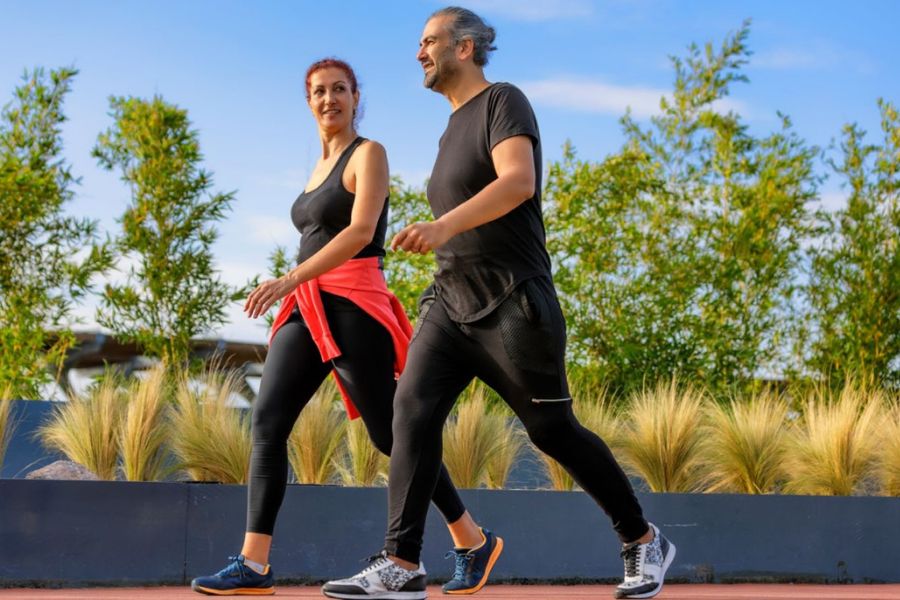
Walking workouts for seniors are a simple way to protect your balance, keep your joints moving, and support a healthy weight without high-impact exercise. With the right plan, you can turn everyday walks into safe, effective workouts that help you feel steadier on your feet and more confident doing what you love.
Understand why walking helps as you age
Walking is the most popular form of exercise for older adults and for good reason. It is convenient, low impact, and adaptable to almost any fitness level. Health organizations consistently recommend walking workouts for seniors as a great option for staying active and independent (National Institute on Aging, Better Health Victoria).
Regular walking can help you:
- Improve heart and lung health
- Maintain a healthy weight when paired with a balanced diet
- Strengthen muscles, bones, and connective tissues
- Support balance and mobility so daily tasks feel easier
- Boost mood and sleep quality
Research on older adults shows that walking most days of the week can lower blood pressure and improve body weight, BMI, and body fat percentage, which all support healthier aging (PMC).
Aim for safe, realistic activity goals
You do not need intense workouts to see benefits. Guidelines for older adults suggest:
- About 30 minutes of moderate activity most days of the week, such as a steady or brisk walk, which can be done in one session or broken into shorter bouts (Better Health Victoria)
- Around 150 minutes per week of brisk walking, or roughly 25 minutes per day, according to the CDC and other public health groups (TheHealthy)
If you are new to exercise or coming back after a break, you are encouraged to:
- Start with just 5 to 10 minutes at a time
- Build up gradually to 30 minutes per day
- Aim for a pace that feels like climbing stairs but still lets you talk comfortably with a friend (National Institute on Aging)
Talk with your doctor first
Before beginning new walking workouts for seniors, check in with your doctor, especially if you:
- Have heart, lung, or joint conditions
- Have been inactive for a while
- Take medications that affect balance or heart rate
Your doctor can help you choose a safe starting level and may suggest a podiatrist or physical therapist if you have foot, knee, or balance concerns (Better Health Victoria).
Prepare for comfortable, confident walking
A little preparation goes a long way toward safe and enjoyable walking workouts.
Choose the right footwear and support
Your shoes should feel comfortable from the first step, with:
- Cushioned soles
- Good arch support
- A secure heel that does not slip
- Enough room for your toes
If you have foot problems, bunions, or diabetes, consider visiting a podiatrist. They can suggest shoe types, insoles, and, if needed, walking aids like canes or walkers that improve balance and reduce joint load (Better Health Victoria).
If your doctor recommends it, using a cane or walker is not a step backward. Assistive devices are encouraged because they can ease pain, help you feel steady, and allow you to walk farther and more often (National Institute on Aging).
Pick safe walking environments
Start where you feel secure:
- Smooth, even surfaces such as indoor malls, community centers, or flat neighborhood sidewalks
- Well-lit routes for early morning or evening walks
- Local parks or paths with benches where you can rest
Many town parks, shopping malls, and senior centers host walking programs that are especially welcoming to older adults (National Institute on Aging).
Start with a simple beginner walking routine
If you are easing into walking workouts for seniors, use the first couple of weeks to build consistency and confidence.
Week 1 to 2: Learn form and build a base
Aim for 10 minutes of walking most days. Focus on:
- Standing tall, with your head up and shoulders relaxed
- Gently swinging your arms by your sides
- Rolling through your foot from heel to toe
A helpful structure is:
- 2 minutes easy walking to warm up
- 6 minutes at a steady, comfortable pace
- 2 minutes easy walking to cool down
If 10 minutes feels like too much, start with 5 minutes and add 1 to 2 minutes every few days, as you feel ready (National Institute on Aging).
Progress to brisk and interval walking
Once basic walking feels comfortable, gradually make your workouts more challenging to support fitness, weight management, and heart health.
Week 3 to 4: Add gentle intervals
Increase your walks to about 15 to 20 minutes and introduce short bursts of faster walking, sometimes called interval walking. For example (BetterMe, TheHealthy):
- 3 minutes easy warm-up
- 2 minutes brisk walking, where you breathe a bit harder but can still talk
- 3 minutes comfortable pace
- Repeat steps 2 and 3 two or three times
- 3 minutes easy cool-down
Intervals help you:
- Burn more calories in the same amount of time
- Improve cardiovascular fitness
- Make walks more interesting
Adjust the work and rest times to your comfort. If you feel breathless or unsteady, slow down. You should be able to talk in full sentences.
Week 5 to 6: Extend time and add variety
Work toward 30 minutes per session, 5 or more days per week. You can:
- Include gentle hills or ramps for short sections
- Keep using intervals, for example 3 minutes brisk, 3 minutes easy
- Vary your routes to stay motivated (BetterMe)
If outdoor conditions are poor, swap in an indoor walk of similar length. Even 10-minute indoor sessions count.
Include balance-focused walking drills
Age-related walking difficulties are often more about timing and coordination than just strength or endurance. Researchers have found that practicing specific walking skills, with clear movement goals and small variations, can improve motor planning, gait quality, and walking confidence in older adults (NCBI PMC).
You can borrow these ideas with simple drills that fit into your routine.
Side steps
Side stepping trains your hips and improves lateral balance.
- Stand tall with your hands on a counter or sturdy chair for support
- Step to the right with your right foot, then bring your left foot to meet it
- Take 10 to 15 steps to the right, then 10 to 15 back to the left
Move slowly and keep your toes pointed forward. You can do this before or after your regular walk.
Heel to toe walk
This exercise strengthens your ankles and challenges your balance.
- Stand near a wall or counter
- Place your right foot directly in front of your left so the heel touches the toes
- Step forward so your left heel lands just in front of your right toes
- Continue for 10 to 20 steps
If you feel wobbly, lightly rest your fingertips on the wall.
Marching in place
Marching builds hip strength and stability.
- Stand tall and lift one knee as if you are marching
- Lower it and lift the other knee
- March in place for 30 to 60 seconds
To increase the challenge, march more slowly and lift your knees a little higher, always within a comfortable range.
These walking-related drills emphasize coordination and timing, which research suggests can lead to better walking efficiency and confidence than focusing only on strength and endurance (NCBI PMC).
Try indoor walking workouts on bad weather days
You do not have to skip walking when it is too hot, too cold, raining, or icy. Indoor walking workouts for seniors can be just as effective.
Simple indoor walking routine
You can create a 10 to 20 minute indoor circuit with:
- 2 minutes marching in place
- 2 minutes walking around your home or a hallway
- 1 minute side steps along a counter
- 1 minute heel to toe walking
- 2 minutes easy walking
- Repeat the circuit 2 to 3 times
Research shows that short indoor sessions such as marching in place, treadmill walking, or balance drills can still promote cardiovascular health and muscle strength, especially if you do them most days of the week (BetterMe).
If you have access to a treadmill, start slowly, hold the handrails lightly for safety, and keep the incline flat until you are comfortable.
Pair walking with gentle strength and core moves
Stronger core and leg muscles help you stay steady and reduce fall risk. You can blend simple strength and balance exercises into or around your walks.
Easy add-ons before or after a walk
Try one or two of these movements:
-
Seated marches
-
Sit tall in a chair
-
Lift one knee, then the other, as if walking
-
Continue for 30 to 60 seconds
-
Chair stands
-
Sit on a sturdy chair with your feet flat
-
Lean slightly forward and stand up using your legs as much as possible
-
Sit back down with control
-
Repeat 8 to 10 times
-
Standing torso twists
-
Stand with feet hip-width apart
-
Gently rotate your upper body right and left, keeping your hips facing forward
-
Repeat 10 to 15 times per side
These simple additions help build full-body strength and stability, which supports independent living and reduces fall risk (BetterMe).
Stay motivated with social support
You are more likely to stick with walking workouts for seniors if you enjoy them and feel supported. Studies have found that walking with others improves mental health, mood, and the chances that you will continue your routine (National Institute on Aging, TheHealthy).
Ideas to keep you going:
- Walk with a friend or family member a few days a week
- Join a local walking group or programs like Heart Foundation Walking through community or health organizations (Better Health Victoria)
- Try mall walking groups for a safe indoor option
- Keep a simple log of how long you walk and how you feel afterward
Even a 12 minute walk can lift your mood, and the social time can be as beneficial as the exercise itself (TheHealthy).
Protect yourself from common walking aches
Listening to your body is essential. Some muscle tiredness is normal when you start a new routine, but sharp or persistent pain is not.
Older adults are more prone to overuse issues such as:
- Plantar fasciitis in the bottom of the foot
- Tendinitis
- Blisters
- Shin splints
- Pain in the ball of the foot (metatarsalgia)
To lower your risk (TheHealthy):
- Increase your time and distance gradually
- Wear well-fitted shoes and moisture-wicking socks
- Rest and ice any sore areas
- Take an extra day off if you feel unusually tired or stiff
- Call your doctor if pain persists or worsens
Using a cane or walker when recommended can also reduce strain on painful joints and help you walk more comfortably (National Institute on Aging).
Connect walking with healthy weight and longevity
If weight loss or weight management is your goal, consistent walking combined with balanced eating can help you:
- Burn extra calories
- Maintain muscle mass, which supports metabolism
- Reduce body fat over time
Walking briskly for about 30 minutes a day, 5 days a week, aligns with physical activity guidelines and is associated with a lower risk of several age-related diseases as well as longer life expectancy in older adults (PMC). Studies of older adults also suggest that higher daily step counts, in the range of roughly 4400 to 10,000 steps, are linked with substantially reduced mortality risk, especially when combined with a brisk walking pace (PMC).
You do not need to hit a specific step number on day one. Focus on:
- Moving more than you did last week
- Gradually adding a few minutes or a few hundred steps at a time
- Choosing a pace that feels purposeful but still lets you hold a conversation
Put it all together
You can think of your walking workouts as a flexible weekly plan:
- Most days:
- 10 to 30 minutes of walking at a comfortable to brisk pace
- Two or three days:
- Short intervals of faster walking
- A few times per week:
- Simple balance drills like side steps or heel to toe walking
- Light strength and core exercises such as chair stands or seated marches
- Any day:
- Indoor walking when the weather keeps you inside
Start with one small change today, such as a 5 or 10 minute walk at a pace where you can talk easily. As you build the habit, you will be supporting your balance, your mobility, and your overall health in a way that fits naturally into everyday life.
About the Author