A good hamstring workout does more than build the back of your thighs. Strong hamstrings support your knees and hips, improve your sprinting and jumping, and lower your risk of painful pulls and strains. With the right mix of exercises, you can build strength, size, and resilience at the same time.
Below, you will learn how your hamstrings work, the best hamstring exercises for different goals, and how to put them together into simple, effective hamstring workouts you can start using this week.
Understand how your hamstrings work
Your hamstrings are a group of three muscles on the back of your thigh: the semitendinosus, semimembranosus, and biceps femoris. They run from your hip to just below your knee and control two main movements: extending your hip and bending your knee, which you use every time you walk, run, or squat.
When your hamstrings are weak or tight, you are more likely to deal with:
- Knee pain and instability
- Hip and low back discomfort
- Poor running mechanics and slower sprint speed
- Pulled hamstrings during sports or workouts
Balanced hamstring workouts help you fix those issues by training both hip extension and knee flexion through a full range of motion.
Why hamstring workouts matter
Hamstring injuries are very common in sports that involve sprinting, cutting, or sudden acceleration. In soccer, for example, hamstring strains account for about 12 percent of all injuries. These injuries often happen when the muscle is not prepared to handle rapid force.
Consistent hamstring training helps you:
- Reduce your risk of pulls and tears by building stronger, more resilient muscle
- Support your knees by improving balance between your quadriceps in front and hamstrings in back
- Move better in daily life, especially when bending, lifting, and climbing stairs
- Perform better in lifting, sprinting, and jumping
If you spend long hours sitting, your hip flexors tend to get tight while your hamstrings stay elongated and weak, which can set you up for pain and injury. A focused hamstring routine is one of the simplest ways to undo some of that daily wear.
Warm up properly before hamstring training
A good warmup prepares your hamstrings for work without tiring them out. Dynamic movements are more effective than long static stretches right before lifting or sprinting.
Aim for 5 to 10 minutes of:
- Light cardio such as brisk walking, cycling, or easy jogging
- Dynamic leg moves that stretch and activate your hamstrings and core
You can choose 2 or 3 of these warmup drills and do 20 to 30 yards or 8 to 10 reps each:
- Monster Walk: Walk forward while kicking one leg up to a comfortable height and reaching for the toes with the opposite hand to stretch the hamstrings.
- Inch Worm: Start in a pushup position, walk your feet toward your hands while keeping your knees straight, pause in the stretch, then walk your hands back out.
- Ground Sweeps: Step one foot forward, keep the front leg straight, hinge at the hips, and sweep your fingertips toward the ground in front of your foot, then alternate sides.
- Spider Man Walks: From a pushup position, step one foot outside the same-side hand, pause in a light split stance, then alternate sides while keeping your core tight.
During every warmup drill, focus on standing tall, keeping your belly tight, and moving with control. This combination of core activation and posture improves your stretch and reduces injury risk.
Best hamstring exercises for strength and muscle
The most effective hamstring workouts mix exercises that train both of the hamstrings’ jobs: hip extension and knee flexion. You also want a blend of open-chain moves, where your foot is off the ground, and closed-chain moves, where your foot stays planted.
Hip-dominant hamstring exercises
These moves emphasize hip extension and often hit your glutes as well.
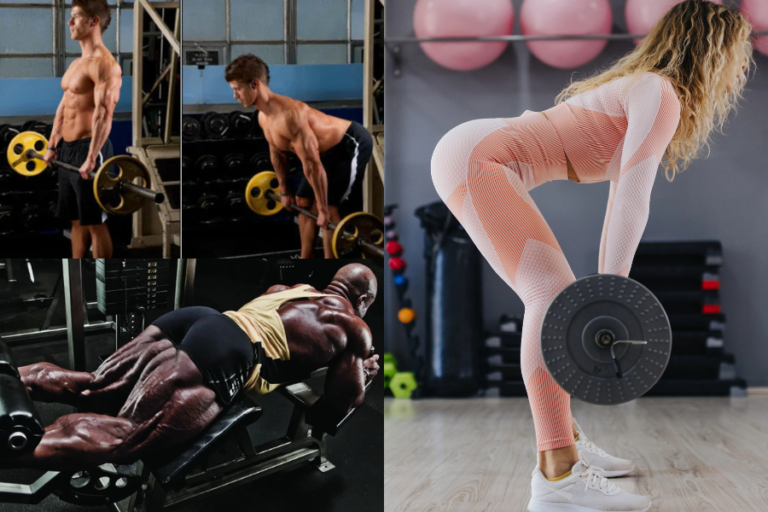
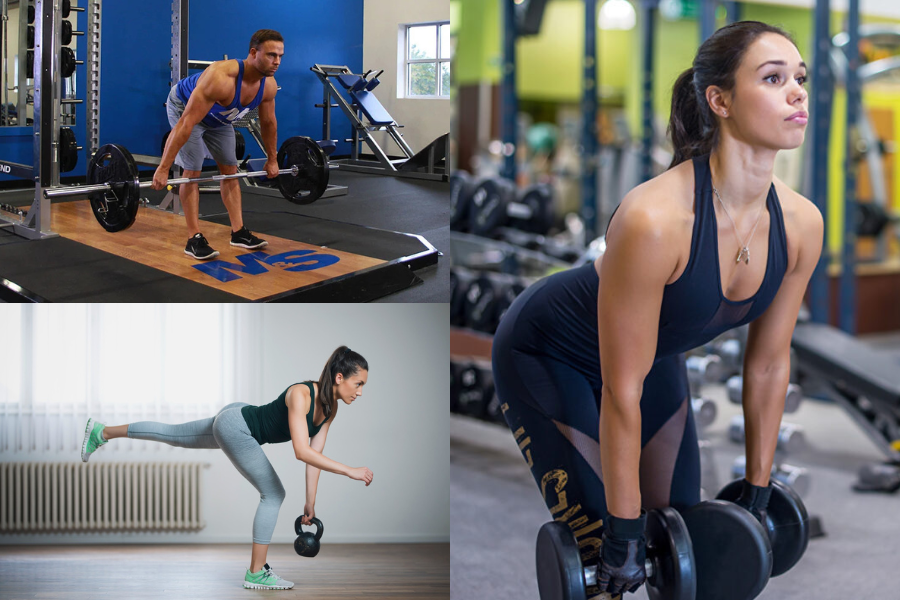
Romanian deadlift (RDL)
The RDL is one of the classic hamstring builders and is highly effective for activating and strengthening the hamstrings.
- Hold dumbbells or a barbell in front of your thighs.
- Soften your knees and hinge at your hips, sending them back while keeping your back flat.
- Lower until you feel a strong stretch along the back of your thighs, then drive your hips forward to stand.
You can progress to single-leg RDLs, which challenge your balance and also improve foot strength and hip stability. A wall or chair for light support lets you focus on form.
Good mornings
Good mornings train your hamstrings from a lengthened position and build coordination in your entire posterior chain. You can start with a dowel or light bar across your upper back.
- Stand tall, feet hip-width apart.
- Hinge at the hips with a flat back until your torso is at about a 45 degree angle.
- Squeeze your glutes and hamstrings to return to standing.
Kettlebell swings
Kettlebell swings are a powerful hip hinge exercise. A study from the American Council on Exercise found that swings, RDLs, and single-leg RDLs are among the most effective moves for quickly activating and strengthening the hamstrings in young adults.
- Hike the kettlebell back between your legs, keeping your back flat.
- Snap your hips forward to swing the bell up to chest height.
- Let it fall back down with control and repeat.
Knee-dominant hamstring exercises
These moves emphasize bending the knee, similar to leg curl machines.
Banded hamstring curls
Banded curls mimic a machine curl with the added challenge of growing resistance as the band stretches, which increases time under tension and can support growth.
- Anchor a band to a sturdy object and loop it around your ankles or heels.
- Lie face down or stand and hold onto a support for balance.
- Curl your heels toward your glutes, pause, and slowly lower.
Bridge curl on sliders or towels
The bridge curl engages your hamstrings in both knee flexion and hip extension and provides a strong stabilizing challenge.
- Lie on your back with your heels on sliders or small towels on a smooth floor.
- Lift your hips into a glute bridge position.
- Slowly slide your heels away to straighten your legs, then curl them back in while keeping your hips off the ground.
You can progress by focusing on slow eccentric (lengthening) phases or trying single-leg variations once you are strong and pain free.
Nordic hamstring curl or floor glute ham raise
The Nordic curl can be done with a partner or by anchoring your heels under something sturdy. It is one of the most challenging and effective bodyweight hamstring moves.
Functional MRI research shows that Nordic exercises recruit the hamstrings strongly at both the knee and hip, particularly the semitendinosus muscle, which plays a key role in stabilizing the knee and protecting the ACL. Nordic and slide leg exercises also produce very high activation levels, at or above 80 percent of maximal effort, even without heavy weights.
- Kneel on a pad and anchor your feet.
- Keep your body in a straight line from head to knees.
- Slowly lean forward, resisting with your hamstrings as long as you can.
- Catch yourself with your hands, then push lightly off the floor and pull yourself back up with your hamstrings.
Start with a small range of motion and gradually increase as your strength improves.
Glute bridges and hip thrusts
Glute bridges and hip thrusts are excellent for training the hamstrings in a shortened position and are easy to adjust for different levels.
The basic glute bridge activates both your glutes and hamstrings and can be progressed by changing tempo, adding pauses, or increasing load with bands, dumbbells, or a barbell. A single-leg variation is a tough progression once you are comfortable with the standard movement.
You can also use a physioball for extra instability:
- Physio Ball Bridges and Physio Ball Leg Curls both strengthen your hamstrings, glutes, and lower back. Lying on your back with your heels on the ball, you bridge your hips up, then either hold or curl the ball toward you, as recommended protocols typically suggest 2 sets of 10 reps with short rests.
Sample hamstring workouts you can follow
You do not need a complicated plan. Choose one of these simple structures 2 times per week, with at least one rest day between workouts. Start with lighter weights and fewer sets, then increase gradually.
Beginner hamstring workout (bodyweight or light resistance)
Do this routine if you are new to hamstring training or coming back from a break.
- Glute bridge
- 3 sets of 10 to 12 reps
- Romanian deadlift with light dumbbells or a kettlebell
- 3 sets of 8 to 10 reps
- Banded hamstring curl
- 3 sets of 10 to 12 reps
- Monster Walk or Ground Sweeps as a cool down
- 2 passes of 20 yards
Rest 60 to 90 seconds between sets. Focus on clean form and feeling your hamstrings work.
Intermediate hamstring workout (strength and muscle)
Once basic movements feel solid and pain free, you can increase the challenge.
- Romanian deadlift
- 4 sets of 6 to 8 reps
- Glute bridge or hip thrust (barbell or banded)
- 3 sets of 8 to 10 reps
- Bridge curl with sliders or towels
- 3 sets of 8 to 10 reps
- Single-leg RDL with light support
- 2 sets of 8 reps per leg
Rest 90 seconds between heavy sets and 60 seconds between lighter accessory sets.
Advanced hamstring workout (performance and injury prevention)
Use this option if you are experienced, have no current hamstring issues, and want to build power and resilience for sports.
- Kettlebell swings
- 3 sets of 12 to 15 reps
- Romanian deadlift or trap bar deadlift
- 4 sets of 5 to 6 reps at challenging weight
- Nordic hamstring curl
- 3 sets of 4 to 6 slow reps
- Single-leg RDL or Bulgarian split squat
- 3 sets of 6 to 8 reps per leg
Keep your technique strict. High intensity moves like Nordics can produce soreness, so build volume slowly and pair them with adequate recovery.
If you feel sharp pain, sudden pulling, or a popping sensation during any exercise, stop immediately and consult a medical professional before returning to hamstring workouts.
Add sprinting and conditioning for stronger hamstrings
Strength work is only one side of the equation. Your hamstrings also need to tolerate high-speed efforts if you play sports or enjoy running.
Regular sprint training, especially in preseason, helps your hamstrings adapt to the forces of fast running and reduces injury risk. High intensity interval training, or HIIT, can support sprint capacity and endurance, which prepares your body for repeated bursts of speed.
You can start with:
- 6 to 8 short sprints of 20 to 40 yards, walking back to recover
- A simple HIIT session like 30 seconds fast cycling and 90 seconds easy, repeated 6 to 8 times
Build up gradually and always include a thorough warmup and cool down on sprint days.
Recovery and flexibility for healthy hamstrings
Stronger muscles still need time to recover. To support growth and reduce soreness, include:
- At least one rest or light movement day between hard hamstring sessions
- Gentle daily stretching to counteract tightness from sitting and training, since prolonged sitting can keep hamstrings shortened and stiff over time
- Foam rolling, which can ease muscle spasms and mimic some benefits of massage. A simple protocol is 2 sets of 20 seconds of rolling each hamstring with 30 seconds rest in between.
If you have a history of recurring hamstring strains or feel nervous about training through past injuries, working with a physical therapist can be very helpful. Tailored programs that combine strengthening and flexibility work have been shown to reduce pain significantly and improve function, and digital physical therapy programs, such as those reported by Hinge Health, have documented large pain reductions within the first 12 weeks.
Putting it all together
Effective hamstring workouts are not about doing every exercise you see online. They are about choosing a small group of movements that:
- Train both hip extension and knee flexion
- Use a full but comfortable range of motion
- Match your current strength and injury history
- Fit consistently into your week
Start by picking one warmup, one hip-dominant move, one knee-dominant move, and one bridge variation. Do them twice per week, track your progress, and add weight or reps slowly.
Over time, you will feel more powerful when you run, more stable when you lift, and more comfortable in everyday movements, all because you committed to regular, thoughtful hamstring workouts.
About the Author