Calf workouts for ankle strength are one of the simplest ways to feel more stable when you walk, run, or change direction quickly. Strong calves support your ankle joints, help absorb impact, and reduce the risk of sprains and overuse injuries like Achilles tendonitis.
Below, you will learn why your calves matter so much for balance and injury prevention, then you will walk through a simple routine of calf workouts for ankle strength that you can do at home with minimal equipment.
Understand how your calves protect your ankles
Your calf is made up of two main muscles: the gastrocnemius and the soleus. Together, they point your toes down, a movement called plantar flexion, and they help control your ankle when you walk, climb stairs, land from a jump, or push off to run.
When these muscles are strong and flexible, they help:
- Support the ankle when it carries several times your body weight during running and jumping
- Stabilize your lower leg so your foot does not roll in or out as easily
- Reduce strain on the Achilles tendon and surrounding tissues
Hinge Health physical therapist Julianne Payton explains that calf raises strengthen the muscles right above your ankles, which in turn improves lower body strength and mobility and helps lower the risk of ankle sprains. Strong calves also help the ankle handle sudden stops and starts, which is important in sports that involve sprinting and jumping.
If you often feel unsteady on uneven ground, get recurring ankle tweaks, or fatigue quickly when you run, your calves are likely a weak link.
Prepare safely before you start
Before you jump into calf workouts for ankle strength, take a few minutes to set your body up for success. A short warm up and a quick check on how your ankle feels can make your session more effective and safer.
Warm up with light movement
A brief warm up increases blood flow and prepares your muscles and tendons for work. Aim for 5 to 10 minutes of low impact movement such as:
- Easy walking around your home or outside
- Gentle cycling on a stationary bike
- Marching in place with relaxed ankles
This type of warm up is recommended before stretching and strengthening to improve performance and help prevent injury.
Use the pain scale as a guide
If you are coming back from an ankle or calf issue, it is important to monitor how things feel. A simple 0 to 10 pain scale can help:
- 0 means no pain
- 10 means the worst pain you can imagine
When you try new calf and ankle exercises, you want to stay in the 0 to 5 range. Mild discomfort is acceptable, especially at first, but your pain should not spike during the exercise, should not get worse overall, and should not be more intense the next day.
If anything feels sharp, sudden, or quickly escalating, stop that exercise and consider speaking with a healthcare professional.
Start with basic calf strengthening
You do not need a gym to build solid calf muscles. You can begin with simple heel raises that use your body weight, then gradually increase difficulty as your ankles grow stronger.
According to guidance from Hinge Health physical therapists, a common progression is:
Double leg calf raises on a step, then single leg calf raises, then single leg bent knee calf raises that target the soleus muscle.
Standing double leg calf raises
This is your foundation move. It targets both the gastrocnemius and soleus and helps you learn control.
- Stand facing a wall, counter, or sturdy railing for balance.
- Place your feet hip width apart with weight evenly distributed.
- Press through the balls of your feet and lift your heels as high as you comfortably can so you are on your toes.
- Pause briefly at the top, then lower your heels slowly to the floor.
Start with 2 to 3 repetitions, performed frequently through the day, then build up to 2 sets of 10 to 15 repetitions as your strength improves. NHS Inform suggests this gradual increase in repetitions to support tissue healing and build strength effectively after ankle or calf problems.
Progress to step calf raises
Once basic floor raises feel easy, move to a small step or sturdy platform. This allows your heel to drop slightly below your forefoot, increasing the range of motion.
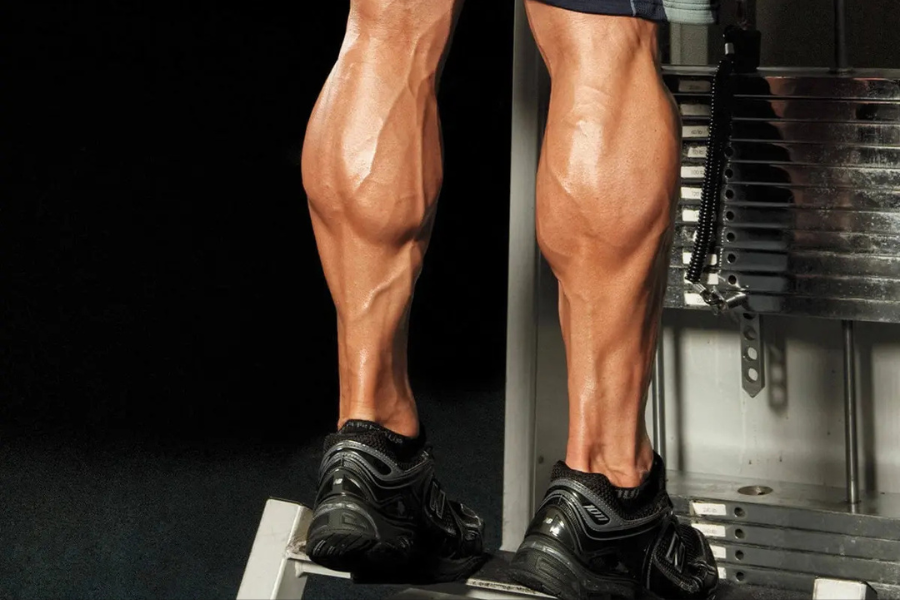
- Stand on the edge of a step with the balls of your feet on the step and your heels hanging off.
- Hold a railing or banister for stability.
- Slowly lower your heels below the step until you feel a stretch in your calves.
- Press up onto your toes as high as possible, then lower back down in a controlled way.
The Cleveland Clinic recommends standing calf raises on a step, performed for about 10 repetitions once a day, to help build calf strength and improve ankle stability. This exercise teaches your ankles to control movement through a fuller range, which translates to better control in everyday life.
Add single leg work for stability
When you are comfortable with double leg calf raises, it is time to challenge your balance and ankle stability further by working one leg at a time. This mimics real life demands such as walking, running, and going up stairs, where one leg often bears most of your weight.
Single leg calf raises
Single leg calf raises demand more from the muscles and stabilizers around your ankle.
- Stand on one leg next to a wall or counter for support if needed.
- Keep a slight bend in your standing knee and engage your core.
- Slowly rise up onto the ball of your foot, lifting your heel as high as you comfortably can.
- Lower your heel slowly back to the starting position.
Start with fewer repetitions such as 5 to 8 per side and build toward 2 sets of 10 to 15 as you get stronger. According to Hinge Health, single leg calf raises are particularly helpful because they directly train ankle stability and balance when you are on one leg.
Soleus focused bent knee raises
To better target the deeper soleus muscle, you can do calf raises with your knees bent. This muscle plays a key role in ankle stability and is heavily involved in walking and standing for long periods.
- Stand with feet hip width apart and knees slightly bent. Hold onto a counter or wall for support.
- Maintain that slight bend in both knees throughout the movement.
- Lift your heels to come up onto the balls of your feet.
- Lower your heels back down slowly.
You can also try this in a single leg version once the double leg version feels solid. Hinge Health physical therapists highlight soleus raises as an important exercise for improving ankle strength and stability.
Include seated and ankle focused exercises
Calf workouts for ankle strength are not limited to standing moves. Seated exercises and smaller ankle motions help recruit different parts of the muscles and tendons, and they can be easier to tolerate if you are early in rehab or feeling sore.
Seated heel raises
Seated heel raises are a gentle way to strengthen your lower calves and Achilles tendon, especially if standing is uncomfortable.
- Sit in a chair with your feet flat on the floor and knees bent at about 90 degrees.
- Keeping your toes on the floor, lift your heels as high as you comfortably can.
- Pause briefly, then lower your heels with control.
You can add light weight such as a backpack or dumbbell on your thighs as this becomes easier. This type of exercise is often included in calf workouts for ankle strength because it keeps the ankle in a relatively safe position while still challenging the muscles.
Ankle bends and tilts
Controlled ankle movements can strengthen smaller supporting muscles and tune up your ankle coordination.
Try these simple moves, seated or lying down:
- Ankle bends: Slowly point your toes away from you, then pull them back toward your shin.
- Ankle tilts: Gently tilt the soles of your feet toward each other, then away from each other, like you are rolling in and out slightly.
Research on ankle rehab notes that small, frequent bouts of movement help support tissue healing and restore mobility after injury. Start with 2 to 3 repetitions, several times per day, and gradually increase toward 2 sets of 15 repetitions as your ankle tolerates more work.
Balance calf strength with stretching
Strong calves are helpful, but if they are tight, they can limit ankle mobility and change how you walk or run. This can increase stress on your ankles, feet, and even your knees and hips. Stretching your gastrocnemius and soleus muscles helps maintain both strength and flexibility.
Standing calf stretch for gastrocnemius
The classic standing calf stretch targets the larger gastrocnemius muscle.
- Stand facing a wall with your hands on the wall for support.
- Step one leg back and keep that back knee straight with the heel on the floor.
- Lean your body toward the wall until you feel a stretch in the upper calf of your back leg.
- Hold for 20 to 30 seconds, then switch legs.
Aim to repeat this 2 to 3 times per leg, 2 to 3 times per day to gradually improve mobility and ankle range of motion. This type of stretch is commonly recommended to complement calf workouts and improve flexibility over time.
Standing soleus stretch
To reach the deeper soleus muscle, you adjust your position slightly.
- Stand facing a wall, hands resting on it for balance.
- Step one leg back, then bend both knees, keeping the back heel pressed into the floor.
- Lean forward gently until you feel a stretch lower down in the back of your calf and near your Achilles.
- Hold for about 30 seconds, then switch sides.
Repeat 3 times per leg. The standing soleus stretch is useful if your lower calf and Achilles feel particularly tight after walking, running, or doing calf raises.
Use props for a deeper stretch
If you want to gently increase the stretch on your calves and Achilles tendon, you can use a towel or resistance band.
- Towel stretch: Sit with one leg extended. Loop a towel around the ball of your foot and gently pull the ends toward you while keeping your knee straight.
- Band stretch: Do the same with a resistance band if you have one.
These props let you control the intensity very precisely and can be helpful on days when standing stretches feel too intense.
Progress gradually and listen to your body
Consistency and patience make the biggest difference with calf workouts for ankle strength. Research on ankle rehab and strengthening recommends slow, steady increases in exercise volume. For many people, this looks like:
- Starting with 2 to 3 repetitions of each exercise
- Spreading these mini sets through your day
- Adding a few repetitions every few days as exercises feel easier
- Building toward 2 sets of 10 to 15 repetitions for strengthening work
Throughout this process, keep using the 0 to 5 pain guideline. Some muscle fatigue or mild soreness is expected as you get stronger, but your overall pain and function should gradually improve, not decline.
If you ever feel unsure, or if your pain spikes, consider consulting with a physical therapist or healthcare provider who can tailor these exercises to your specific situation.
Put it all together into a simple routine
You can start with a short routine three days per week, then adjust frequency based on how your body responds. For example:
- Warm up: 5 to 10 minutes of easy walking.
- Standing double leg calf raises: 2 sets of 10 to 15 reps.
- Step calf raises: 1 to 2 sets of 10 reps.
- Single leg calf raises: 1 to 2 sets of 8 to 10 reps per side.
- Seated heel raises: 2 sets of 10 to 15 reps.
- Ankle bends and tilts: 1 to 2 sets of 10 reps each direction.
- Standing calf and soleus stretches: 2 to 3 rounds of 20 to 30 second holds per leg.
You can do fewer sets or repetitions at first and build up as your calves and ankles handle more work.
With a few weeks of consistent practice, you are likely to notice steadier ankles, better balance, and more confidence when you move. Calf workouts for ankle strength are a small investment in time that pay off every time you step off a curb, change direction in a game, or simply walk without worrying about your ankle giving way.
About the Author