A focused calf routine at home can do more than make your lower legs look defined. Well planned calf workouts improve ankle mobility, boost your power for running and jumping, and help protect you from common overuse injuries like shin splints and Achilles issues. You do not need a gym, heavy weights, or fancy machines to get meaningful results.
Below, you will find simple calf exercises you can do in a small space, how to combine them into effective calf workouts, and easy warm up and recovery habits that keep your lower legs feeling strong instead of tight.
Understand your calf muscles
Strong calves are about function as much as appearance. When you walk, climb stairs, jump, or push off to sprint, your calves are doing a lot of the work behind the scenes.
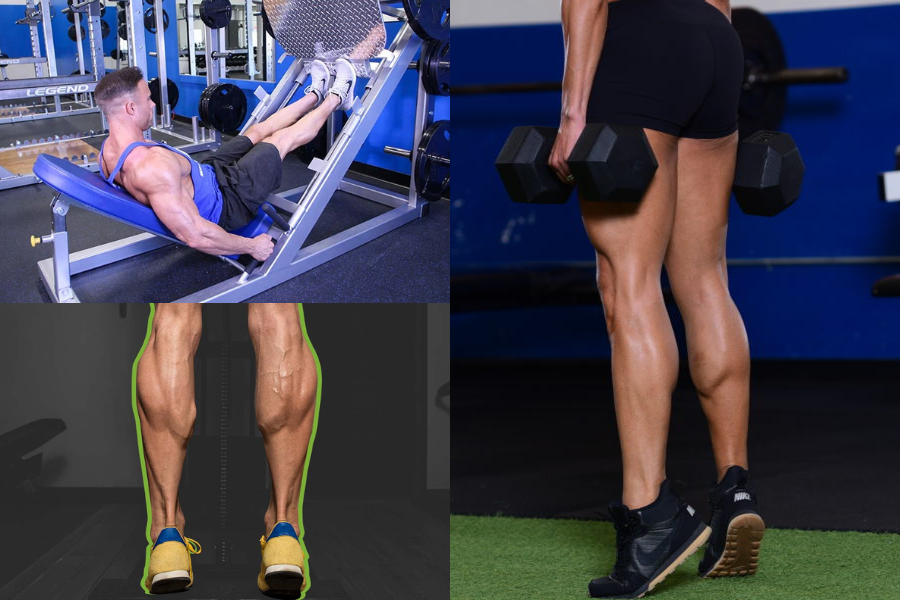
Your lower leg has three key muscles that work together, often called the triceps surae:
- Gastrocnemius, the larger, two headed muscle you see when you flex your calf
- Soleus, a deeper muscle that sits underneath and is active when your knee is bent
- Plantaris, a small muscle that assists the other two with ankle movement and stability
Together they help control posture, support balance, and power every step you take. Because these muscles are used all day, they tend to be dominated by slow twitch fibers, which respond well to high repetition, lower load training rather than only heavy weights. Research summarized by Brad Schoenfeld and colleagues suggests that effort and volume matter more than simply piling on weight for calf growth and strength.
Warm up your calves the right way
Before you start any calf workouts, you want your muscles warm and responsive, not stiff. Dynamic stretching prepares your calves and hamstrings better than just holding still stretches.
You can use a short three to five minute warm up such as:
-
Leg swings
Hold on to a wall or chair. Swing one leg forward and back in a controlled motion for 10 to 15 swings, then repeat side to side. Switch legs. -
Walking lunges
Take a step forward into a lunge, then push off your back foot strongly so your calf activates. Walk across the room and back. -
High knees
Jog in place and bring your knees toward hip height. Land softly on the balls of your feet so your calves wake up without pounding.
Dynamic movements like these improve flexibility and muscle activation for your calves and hamstrings before workouts, which sets you up for smoother, safer training.
Essential bodyweight calf exercises
If you are new to calf workouts, your own body weight is enough to start building strength and endurance. These moves need minimal space and no equipment.
Standing calf raises
Standing calf raises are one of the simplest ways to target both the gastrocnemius and soleus.
How to do them:
- Stand tall with your feet hip width apart, hands on a wall or chair for balance if needed.
- Press down through the balls of both feet and lift your heels as high as you comfortably can.
- Pause briefly at the top and squeeze your calves.
- Lower your heels slowly back to the floor, aiming for a full, controlled stretch at the bottom.
You can progress standing bodyweight calf raises by:
- Doing them on a step so your heels drop below your toes for more range of motion
- Slowing down the lowering phase to emphasize a deep stretch
- Moving to single leg variations once both legs feel easy
Single leg calf raises
Single leg calf raises increase the challenge because your full body weight is on one leg.
To perform them:
- Stand near a wall or hold a chair. Lift one foot off the floor.
- On the standing leg, press through the ball of your foot and raise your heel up as high as you can.
- Pause briefly, then lower slowly until you feel a stretch in your calf.
- Complete your reps, then switch legs.
A common prescription is 2 sets of 15 reps per leg with about 30 seconds rest. When that feels manageable, you can hold a dumbbell in the hand on the same side as your working leg to keep pushing your progress.
Squat into calf raise
This combination move works your quads and glutes, then finishes with a strong push through the calves.
- Stand with your feet a bit wider than hip width.
- Sit back into a bodyweight squat.
- As you stand up, keep going so you rise onto the balls of your feet in a calf raise.
- Lower your heels with control and repeat.
This is a simple way to sneak calf training into full body home workouts.
Effective weighted calf options at home
Once bodyweight work starts to feel easy, you can add resistance without a full gym setup. A backpack, dumbbells, or even household items can turn basic moves into effective strength work.
Weighted standing calf raises
You can do these on flat ground or off a step.
- Hold a dumbbell in one hand or wear a loaded backpack.
- Stand tall with your feet hip width apart.
- Lift your heels as high as possible, pause, then lower under control to a deep stretch.
- Repeat for your target reps.
To keep your hands free for balance, many people prefer to attach a kettlebell or weight to a belt when they have access to one. At home, a weighted backpack often works just as well.
Seated calf raises
Seated calf raises put more emphasis on the soleus because your knees are bent.
You do not need a machine to replicate the effect:
- Sit on a sturdy chair with your feet flat on the floor, knees bent at about 90 degrees.
- Place a heavy book, backpack, or dumbbell across your thighs just above your knees.
- Press through the balls of your feet and lift your heels as high as you can.
- Hold briefly, then lower slowly until you feel a stretch in your lower calves and Achilles.
If you have access to a gym, a seated calf raise machine or a seated barbell calf raise can add even more load. Beginners can start with no weight at all to learn the movement and build balance before adding resistance.
Tiptoe farmer’s carry
The tiptoe farmer’s carry adds a stability challenge to calf strengthening.
- Hold a weight in each hand, such as dumbbells or filled grocery bags.
- Rise onto the balls of your feet.
- Walk forward steadily for 20 to 40 seconds while staying tall and keeping your heels lifted.
- Rest, then repeat.
This move challenges your calves, ankles, and balance all at once, which is especially helpful if you play sports that require quick changes of direction.
Use different angles and ranges of motion
Varying how you bend your knees and position your feet helps you train all parts of your calves over time.
- Knee angle: Standing calf raises with straight legs emphasize the gastrocnemius. Seated or bent knee variations put more work on the soleus.
- Foot position: Pointing your toes slightly outward tends to load the inner, or medial, head of the gastrocnemius. Pointing them slightly inward hits the outer, or lateral, head. Keeping them straight shares the work between both.
One simple approach is to perform 4 sets of a given exercise where you keep your feet straight for the first 2 sets, then turn them slightly inward for the third set and slightly outward for the fourth set. Always move within a comfortable range and avoid any positions that feel painful.
You can also emphasize a deep stretch at the bottom of each rep for up to about 2 seconds. This painful, but controlled, stretch can promote muscle growth and safer training, although you should ease into this technique gradually because it can cause intense delayed soreness.
Sample home calf workouts
You do not need marathon sessions to strengthen your calves. With focused effort, 10 to 15 minutes two or three times per week can make a noticeable difference.
Here is a simple structure you can adapt:
Aim for 2 to 3 different calf exercises per workout and 2 to 4 different exercises across the week. This keeps your training fresh without needless variation.
Beginner routine (no equipment)
Do this 2 to 3 times per week on non consecutive days.
- Warm up: 3 minutes of leg swings, walking lunges, and high knees
- Standing calf raises, 3 sets of 15 to 20 reps
- Squat into calf raise, 3 sets of 10 to 12 reps
- Wall calf stretch, 2 sets of 30 seconds per side
Rest about 30 to 45 seconds between sets, or longer if you need it.
Intermediate routine (some weight)
Do this 2 or 3 times per week. You can alternate it with the beginner routine.
- Warm up: 3 to 5 minutes of dynamic stretching
- Single leg calf raises, 3 sets of 12 to 15 reps per leg
- Weighted standing calf raises, 3 sets of 10 to 15 reps
- Seated calf raises, 2 sets of 15 to 20 reps
- Foam rolling, 2 sets of 1 minute per calf
Calves recover quickly between sets because they are far from most of your major muscle groups, so you might only need to rest until the burning sensation fades, sometimes as little as 10 to 20 seconds. Still, take enough time that you can perform your next set with solid technique.
Across the week, you can mix in heavier sets of 5 to 10 reps, moderate sets of 10 to 20 reps, and lighter sets of 20 to 30 reps. Let the moderate range make up about half of your weekly work, then fill in with a mix of heavier and lighter sets based on how your legs feel.
Stretching and recovery for healthy calves
Regular stretching and soft tissue work help keep your calves supple instead of tight. That matters for more than comfort. Calf muscles that stay flexible support better ankle mobility, and that is key if you want to run faster, jump higher, and move well in daily life.
You can add a short cool down after your calf workouts:
- Wall calf stretch: Stand facing a wall, one foot forward and one back. Press your back heel into the floor and lean toward the wall until you feel a stretch in your rear calf. Hold for 20 to 30 seconds, then switch sides.
- Calf and ankle stretch: From the same position, bend your back knee slightly while keeping the heel down. You should feel the stretch lower, closer to your Achilles.
- Foam rolling: Sit on the floor with a foam roller under one calf. Lift your hips and slowly roll from the back of your knee to your Achilles tendon for about a minute per side. This is especially helpful for loosening notoriously tight calf areas.
Research and coaching experience suggest that most people can train their calves between three and six times per week at maintenance to higher volumes, as long as you pay attention to your recovery. If your calves feel heavy, sore, or weaker than usual, take an extra rest day or scale back your sets.
Injury prevention and smart progress
Properly planned calf workouts do more than build muscle. They also protect your shins, Achilles tendon, and knees.
Sports medicine physician Jordan D. Metzl, MD, recommends runners include calf strength training two to three times a week to maintain healthy shins, calves, and Achilles tendons and to prevent injury, as highlighted in a strength plan for runners featured by Runner’s World. Weak calf muscles can increase stress on the Achilles tendon and contribute to issues like shin splints and stress fractures, especially when combined with other imbalances like unstable hips and core.
To stay on the safe side as you train at home:
- Increase your total sets and reps slowly instead of jumping suddenly in volume
- Choose supportive footwear when you do impact activities or higher volume calf work
- Listen to your body and plan rest days when your calves feel unusually tight or fatigued
Overtraining your calves is difficult for most people, but ignoring pain or pushing hard through sharp discomfort is never a good idea. If you feel a sudden pinch, pop, or strong pulling sensation, stop, ease off your training, and consider talking with a medical professional.
Bringing it all together
At home calf workouts do not need to be complicated. A short warm up, a handful of targeted moves that use different knee angles and foot positions, and a few minutes of stretching will steadily build stronger, more resilient lower legs.
Start with just one or two exercises such as standing and seated calf raises, then build to a small weekly routine that you enjoy and can stick with. Over time, your calves will support smoother runs, more powerful jumps, and more comfortable movement in everyday life.
About the Author