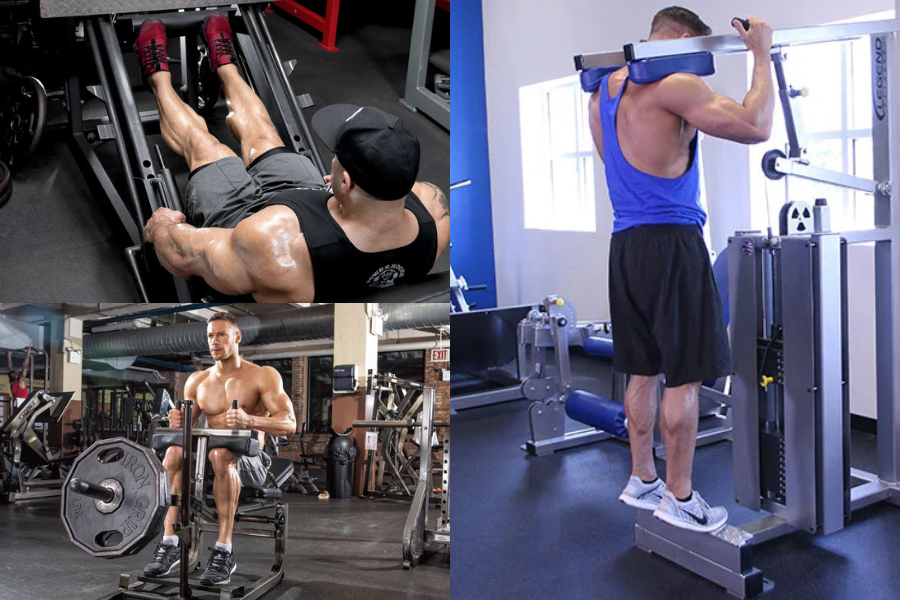
A strong pair of calves does much more than fill out your jeans. Effective calf exercises help you walk, run, jump, and balance with less effort and less risk of injury. With a simple routine, you can build power, stability, and endurance in your lower legs without fancy equipment.
Understand your calf muscles
Before you start doing calf exercises, it helps to know what you are training.
Your calf muscle group, often called the triceps surae, is made up of three muscles: the gastrocnemius, the soleus, and the smaller plantaris. These muscles join together into the Achilles tendon, which attaches to your heel bone and lets you push the ground away when you walk, run, or jump. They also support your posture and help you stay balanced when you change direction or move on uneven ground.
The gastrocnemius is the larger, more visible muscle that sits just under the skin. It works hardest during explosive movements like sprinting and jumping. The soleus lies underneath and is smaller, but it is packed with endurance focused fibers that keep you standing and moving for longer periods. When you train both, you improve everything from daily walking to high intensity sports.
Why calf strength matters
Strong calves do a lot of quiet work in the background. Each time you run, your calves can absorb an internal force of up to eight times your body weight with every step, which is especially important for long distance runners who take thousands of strides in a session. When these muscles are strong and conditioned, they help protect your Achilles tendon, feet, and knees from excessive stress.
Good calf strength supports ankle stability, so your ankle can handle sudden changes in direction or uneven surfaces without rolling. This lowers your risk of ankle sprains and other lower leg injuries, particularly if you play sports that involve jumping and cutting, such as basketball, soccer, or netball, as noted by Coast Sport in 2024. Strong calves also act as your “gas and brakes” during exercise, providing the power to run uphill and the control to avoid falling when you move downhill, according to foot specialists at Metroplex Foot & Ankle in 2026.
On the flip side, weak or tight calves can set you up for problems. You might notice more frequent calf strains, shin splints, plantar fasciitis, or general aches around your ankles and knees. Regular calf exercises, combined with stretching and foam rolling, help maintain supple and resilient muscles that are less prone to fatigue and injury.
Warm up and stretch safely
You should not stretch or load cold muscles aggressively. A short warm up prepares your calves for work and makes your training more effective.
Start with 5 to 10 minutes of light movement like brisk walking, easy cycling, or marching in place. Follow that with dynamic stretching that moves your calves and hamstrings through a comfortable range of motion. Leg swings, walking lunges, and high knees are all good options to increase blood flow and gently activate these muscles before you start your main set of calf exercises.
Once your workout is finished, shift your focus to static stretching and soft tissue work. Classic wall calf stretches help lengthen both the gastrocnemius and soleus, especially if you adjust your knee position from straight to slightly bent. Foam rolling along the back of your lower legs can reduce tightness that might otherwise build up and lead to strains or discomfort. If you feel sharp pain at any point while stretching, stop and speak with a health professional before continuing.
Foundational standing calf raises
Standing calf raises are one of the simplest and most effective calf exercises you can do. They strengthen both the gastrocnemius and soleus and they do not require much space or equipment.
To perform a basic double leg calf raise, stand with your feet about shoulder width apart, toes pointing forward. Hold a dumbbell in each hand if you want extra resistance, or place your hands lightly on a wall or chair for balance. Keeping your back and knees straight, rise up onto the balls of your feet as high as you can, pause briefly at the top, then slowly lower your heels back down in a controlled way. According to Mayo Clinic guidance, one set of 12 to 15 repetitions is enough for most people to gain benefits, and smooth, controlled movements with straight knees are key for good form.
Common mistakes include moving too fast, letting your chest fold forward, or doing very few repetitions. Aim for a slow tempo that you can feel, with your chest up and eyes forward. If balancing is difficult, using a chair or pole for stability is recommended for safety, as Nicole L. Campbell and Edward R. Laskowski from Mayo Clinic advise. Over time, you can add a second or third set, or increase the load to continue progressing.
Tip: If you stand on a step with your heels hanging off the edge, you can increase the range of motion by lowering your heels slightly below foot level before rising up again. This variation helps you develop strength through a fuller movement.
Single leg calf raises for intensity
Once double leg raises start to feel easy, you can move on to single leg calf raises to further challenge your muscles. Training one leg at a time increases the load on each calf, which can boost strength more quickly and also expose any imbalances between sides.
Stand near a wall or sturdy surface you can hold onto lightly. Shift your weight onto one leg and lift the other foot off the floor. With your working leg straight but not locked, press up onto the ball of your foot and lift your heel as high as possible. Pause briefly, then lower slowly until your heel returns to the ground. Because this variation is more demanding, you can start with lower repetitions, such as 8 to 10 reps per side, and build up.
Single leg calf raises require good alignment of your ankle, knee, and hip. Focus on keeping your knee tracking over your second toe instead of collapsing inward. If you notice wobbling, reduce the range of motion a little at first and use more support from your hands to maintain control.
Seated calf raises to target the soleus
Seated calf raises are valuable because they place more focus on your soleus, the deeper muscle that plays a big role in endurance and postural support. This makes them especially useful if you walk or stand all day or if you are a distance runner.
You can do a basic version at home by sitting on a sturdy chair with your feet flat on the floor. Place a weight, such as a dumbbell or heavy book, across your knees for resistance. Keeping your heels on the ground to start, raise them as high as you can so your weight shifts to the balls of your feet. Pause, then lower your heels back to the floor slowly. Aim for 12 to 20 repetitions with smooth control.
In the gym, a dedicated seated calf raise machine lets you add more load safely and comfortably. The same movement pattern applies: full lift, brief pause, and controlled descent. Since the soleus is naturally built for endurance, slightly higher rep ranges work well for this exercise.
Dynamic moves and loaded walks
Static raises are excellent, but adding dynamic calf exercises improves power, balance, and coordination.
One effective option is the Farmers’ Walk on Toes. Hold heavy dumbbells at your sides, rise up onto your toes, and walk forward for about 60 seconds while staying as tall as possible. Repeat this up to three times per session. This move trains your calves to work while you move, which is more like real life and sport situations.
Loaded toe walks are a similar concept and are often recommended for runners. By staying on your toes with added weight, you train your calves to support your body through every step and you build both balance and strength. Over time, this can support better running stability and endurance.
Hopping drills are another way to mimic the functional demands of running and sprinting. Start with small, controlled hops in place on two legs, then progress to single leg hops once you feel comfortable. You can increase speed, height, or reduce ground contact time to make these drills harder. These explosive movements train the fast twitch fibers in your gastrocnemius and prepare your calves for quick, powerful actions.
How sports naturally train your calves
If you enjoy sports, you may already be doing more calf work than you realize. Activities that involve running, jumping, stepping, or moving through water all recruit your calf muscles strongly.
Running, especially uphill, forces your calves to work harder with each push off. Sports like soccer, basketball, and tennis demand quick sprints, sudden stops, and frequent jumps, which all build calf strength and power. Step classes use repeated stepping motions that fatigue and tone the calves over time. Swimming also engages your lower legs as you kick through the water, offering a low impact way to strengthen and condition them.
For marathon runners in particular, the calves are essential. They act as your final push in every stride and help maintain form over long distances. A mix of strength sessions that include straight knee calf raises, bent knee calf raises, seated calf raises, and loaded toe walks, combined with your regular running, can help improve performance and reduce the risk of issues such as calf strains and Achilles tendonitis.
Form, footwear, and injury prevention
Technique and equipment choices matter just as much as the exercises you pick. Proper form keeps the stress where you want it, on the muscles, and not on your joints.
For calf exercises and other lower body moves like squats and deadlifts, keep your posture tall and your knees tracking in line with your toes. Avoid leaning excessively forward during raises, which can throw off your balance. Use a slow and controlled tempo instead of bouncing at the bottom of the movement. According to 2024 expert guidance, many people rush their standing calf raises or perform too few repetitions, so paying attention to these details can set you apart.
Footwear plays a big role too. Shoes with poor support can increase stress on your calves and hamstrings and contribute to overuse injuries. Choose footwear that matches your activity, such as running shoes designed for your gait if you run regularly, and replace worn out pairs in a timely way. Good support helps your ankles stay stable and lets your calf muscles work more efficiently.
If you have a recent or existing lower body injury, consult a healthcare provider before adding new calf exercises. Stretch or use a foam roller before and after sessions to manage tightness, particularly if you spend long hours sitting or standing. Pain that is sharp, sudden, or persistent is a sign to stop and seek professional advice.
Putting together your calf routine
You do not need a complex plan to start benefiting from calf exercises. A simple structure that you can stick with consistently is more effective than a long list of moves that you rarely complete.
A basic weekly plan could include:
- Two strength focused sessions on nonconsecutive days
- A mix of straight knee and bent knee calf raises
- One seated raise variation to hit the soleus
- One dynamic option such as toe walks or hopping drills
For example, you might perform 2 to 3 calf exercises per session, with 2 to 3 sets of 12 to 20 repetitions for each. Adjust the volume based on your fitness level and how your calves feel the next day. If you are very sore, scale back slightly and build up more gradually.
As your strength and control improve, you can progress by adding weight, increasing repetitions, or moving to single leg variations. Over time, you should notice better balance, smoother walking and running, and fewer nagging aches in your lower legs.
By understanding how your calves work and training them with smart, well executed exercises, you give your entire lower body a stronger foundation. Start with a couple of the movements that feel approachable today, and your legs will thank you each time you climb stairs, head out for a run, or simply move through your day with more ease.
About the Author